



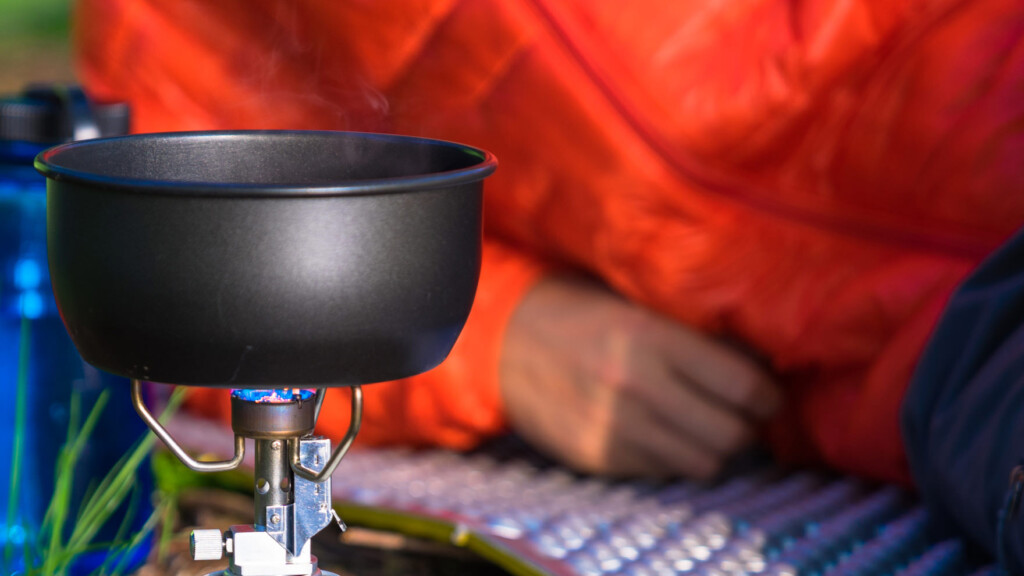
[Archive] 20 points you should know to use gas equipment more safely and conveniently

There are several points and tips to keep in mind to use a gas stove safely and conveniently, and in some cases not knowing about them could pose a great danger
So, this time I've compiled a list of important points and tips to remember when using a gas stove, collected from mountaineering guides and experts. After putting it all together like this, I realized that although I personally think I use gas stoves without any problems, there are actually some pitfalls that I thought I knew about but was actually unaware of. Take this opportunity to take a look at it, and you might discover something surprising!
table of contents
- table of contents
- 1. Do not use gas appliances indoors
- 2. Check the equipment for malfunctions or damage before use
- 3. Use stoves and gas cartridges from the same manufacturer
- 4. Carry and use the right type of gas cartridge for the situation
- 5. Bring waterproof matches or a flint lighter
- 6. Connect the stove and gas cartridge vertically
- 7. Do not use in an inclined position
- 8. Use a gas cartridge holder or pad for added stability
- 9. Avoid direct wind blowing on the burner head
- 10. Don't enclose the stove and gas cartridges from all sides, even if it's for wind protection
- 11. Don't use two or more stoves side by side
- 12. Don't use it to start a charcoal fire
- 13. Do not use grills or other items that emit large amounts of radiant heat
- 14. Do not place gas cartridges near heat sources or in high temperature locations
- 15. Do not let the gas cartridge body get too cold during use
- 16. Carry and store gas cartridges in a way that prevents them from getting too cold
- 17. Put the lid on the gas cartridge after use
- 18. Properly dispose of used gas cartridges
- 19. If you are traveling by plane, you cannot bring gas cartridges on board, so you must purchase them locally
- 20. Check the insurance listed on the gas cartridge
table of contents
- Do not use gas appliances indoors
- Check the equipment for any malfunctions or damage before use
- Use stoves and gas cartridges from the same manufacturer
- Carry and use the right type of gas cartridge for the situation
- Bring waterproof matches or a flint lighter
- The stove and gas cartridge should be connected vertically
- Do not use in an inclined position
- Use a gas cartridge holder or pad to improve stability
- Keep the burner head out of direct airflow (follow the manufacturer's guidelines for each model)
- Do not enclose the stove and gas cartridges from all sides, even if it is for wind protection
- Do not use two or more stoves side by side
- Do not use to start a charcoal fire
- Do not use grills or other items that emit large amounts of radiant heat
- Do not place the gas cartridge near a heat source or in a high temperature location
- Do not allow the gas cartridge body to cool down too much during use
- Carry and store gas cartridges so that they do not get too cold
- Put the lid on the used gas cartridge
- Dispose of used gas cartridges properly
- When traveling by plane, gas cartridges cannot be brought on board, so they must be procured locally
- Check the insurance listed on the gas cartridge
1. Do not use gas appliances indoors
What are the dangers of carbon monoxide poisoning that you can't get away with just ignoring?
One of the most important things to be careful of when using gas appliances such as stoves and lanterns is accidents caused by carbon monoxide poisoning. Accidents occur every year not only outdoors but all over Japan. If you use gas appliances, you should be aware of this risk first and foremost
When gas appliances are used in poorly ventilated areas, there is a lack of oxygen necessary for combustion, which causes incomplete combustion and produces carbon monoxide. When inhaled, this inhibits the transport of oxygen by the blood, causing oxygen deficiency in cells and tissues throughout the body, leading to various symptoms and, in the worst case, death. This is carbon monoxide poisoning
What's scary is that there are almost no clear signs that you are suffering from carbon monoxide poisoning. Carbon monoxide is "tasteless and odorless," making it difficult to determine whether it is present or not. Furthermore, the subjective symptoms of carbon monoxide poisoning in the early stages are "headache, nausea, dizziness, decreased concentration, vomiting, drowsiness," which are generally similar to cold (flu) symptoms , making it difficult to notice. Once the condition progresses to moderate or severe, it becomes too late, as the person becomes unable to move on their own. This is why carbon monoxide poisoning is said to be "a disease that can lead to death before you know it."
How to prevent carbon monoxide poisoning outdoors
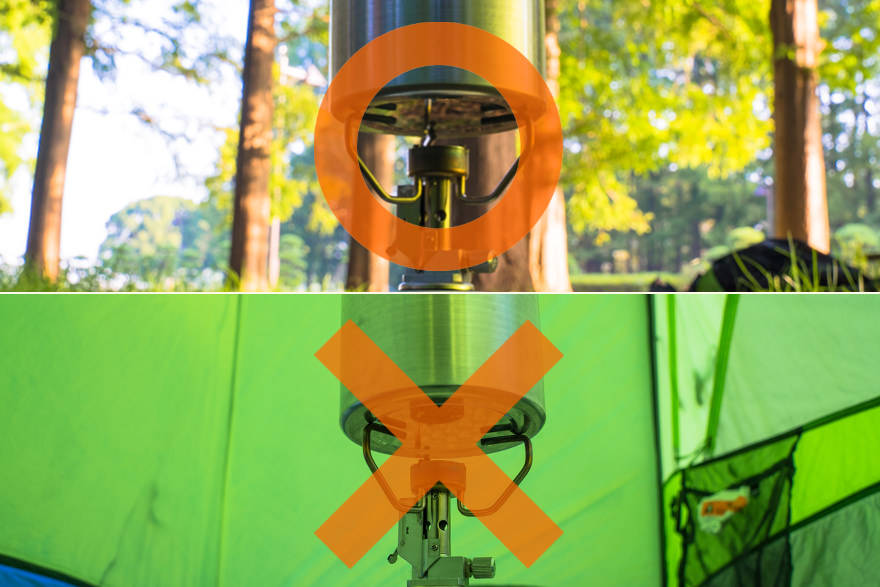
Refrain from using gas appliances indoors, such as in tents
The key to avoiding this troublesome and terrifying carbon monoxide poisoning is to "avoid creating situations that could result in the production of carbon monoxide." Even if it's cold outside, make sure you don't use gas appliances in tents, cars, or other enclosed spaces. If you experience any of the symptoms above that make you feel strange, make sure to move to a place with fresh air immediately
2. Check the equipment for malfunctions or damage before use
Before lighting the stove, check the connection between the stove and the gas cartridge for leaks or damage. Damaged or worn O-rings or valves in the gas cartridge are especially dangerous as they can cause gas leaks ( see our previous article for information on worn O-rings ).
Also, if you neglect to clean the burner head, it may become clogged with soot and fine debris. This can cause uneven combustion and be dangerous, so it is important to get into the habit of checking the burner head for dirt before use
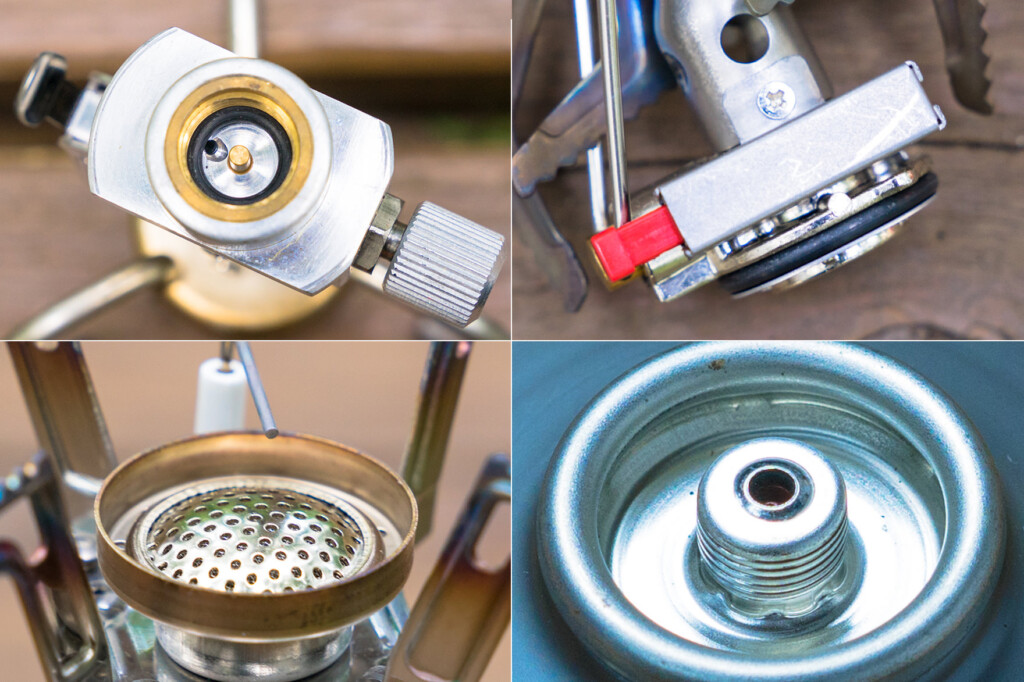
From the top left, there is the O-ring and ignition device, and from the bottom left, there is a clogged burner head and the cartridge valve. Always check for any abnormalities before use
3. Use stoves and gas cartridges from the same manufacturer
Naturally, gas appliances are manufactured with meticulous precision down to the smallest details to prevent gas leaks at connections and prevent normal combustion, and for this reason each manufacturer specifies the use of their own genuine gas cartridges. Using gas cartridges made by other manufacturers is not recommended, not only from a safety standpoint, but also from the perspective of liability issues in the event of an accident
4. Carry and use the right type of gas cartridge for the situation
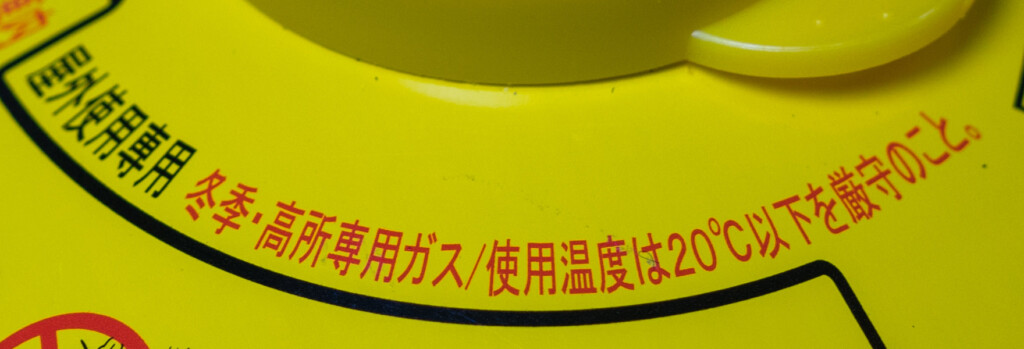
Gas cartridges for winter or high altitudes cannot be used in summer. Be sure to pay attention to the product name as well as the warnings on the product itself to avoid making a mistake
Did you know that mountaineering gas cartridges actually contain more than one type of gas, but rather a mixture of multiple gases in different ratios depending on the purpose?
Gas cartridges are classified by the type of gas and its blend ratio, such as for "high altitude cold regions," "winter/high altitude use," and "summer/low mountain use." This is because different gases vaporize at different temperatures, such as normal butane (above 0°C), isobutane (above -10°C), and propane (above -40°C)
For example, summer gas cartridges, which contain a high amount of butane, which has a high vaporization temperature, can be difficult to vaporize when used in cold climates where temperatures drop below freezing, making them difficult to burn. In the worst cases, even if the contents are present, there may be very little gas coming out. Many people have probably experienced the struggle of not being able to get a strong fire going while hiking in the winter. Conversely, although it is not widely known, using gas cartridges designed for high altitudes and cold climates on low mountains in the summer can result in gas coming out too forcefully, making cooking less efficient. Furthermore, because they contain a high amount of propane, care must be taken when handling and storing them in the summer. As such, it's important to understand that expensive gas cartridges are not necessarily universal, and that the right material should always be used in the right place
5. Bring waterproof matches or a flint lighter
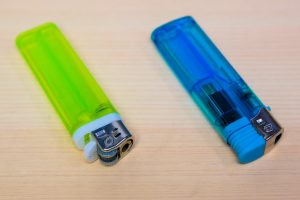
The one on the left is a flint lighter. Unlike the electronic lighter (on the right), it is easy to ignite even at high altitudes
Gas stoves can generally be lit using the included ignition device, but depending on the environment, such as high altitude, low outside temperature, or high humidity, the ignition device may not be able to light the stove. Some stoves also don't even have an ignition device. To avoid this, and in case you get lost, always carry a lighter or matches (packed to keep them dry) when you go hiking
When carrying a lighter, be aware that "electronic" lighters, which ignite by electrical discharge, often do not ignite at high altitudes, so it is a good idea to bring a "flint" lighter, which ignites with a flint, as a spare
Of course, flint lighters are not a panacea. Some people say that magnesium fire starters or waterproof matches are safer. The important thing is to know the characteristics (strengths and weaknesses) of the tool and be able to adapt to the situation
6. Connect the stove and gas cartridge vertically
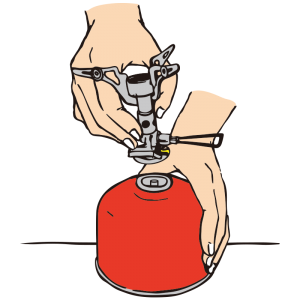
When connecting the stove and gas cartridge, try to connect them as vertically as possible. Connecting them sideways can cause mist-like gas to leak from the valve, which could lead to a serious accident. New gas cartridges are particularly dangerous because they are filled with liquid gas all the way to the top, so even if they are not connected sideways, simply connecting them at an angle can cause mist-like gas to spray out forcefully. Always make sure there are no open flames nearby before connecting them vertically
7. Do not use in an inclined position
Using a stove on a slanted surface or tilting the gas cartridge while it is burning not only makes the cooker on the grate unstable and prone to spillage, but can also cause the appliance to tip over, posing the risk of unexpected burns or fire. Also, a tilted gas cartridge can make it easier for liquefied gas to spray out, which can suddenly cause a large red flame (open fire) to burst into flames
Gas stoves should be placed horizontally on a flat surface
8. Use a gas cartridge holder or pad for added stability

The gas cartridge holder can be used with gas cartridges of various sizes. Its compact size makes it convenient for use in small spaces where a tray cannot be placed
When hiking, even in designated camping areas, it's often difficult to find a safe, flat area. To improve stability, optional parts such as gas cartridge holders, trays, and underlays are useful. This dramatically increases the stove's stability and reduces the risk of it tipping over. Incidentally, trays and underlays are also useful as cutting boards when cooking and as the back frame of a backpack, making them extremely convenient
9. Avoid direct wind blowing on the burner head
Wind blows away flames and heat, significantly affecting the heat output, so it is important to block it as much as possible. The most important thing is to always try to use the stove in a location and position that prevents wind from directly hitting the flame. Basic measures that are effective include sitting upwind and stacking stones around the stove. However, when building a windbreak, it is especially important to pay attention to the following 10 points and follow each manufacturer's policies
10. Don't enclose the stove and gas cartridges from all sides, even if it's for wind protection
When building a windbreak to block wind, if you enclose the entire gas appliance and gas cartridge, heat will accumulate and become trapped, which can result in the gas cartridge overheating and a sudden increase in pressure, which could lead to an explosion. Strictly speaking, the precautions for windbreaks vary depending on the appliance, so at the very least, follow those guidelines, and be careful not to overheat the gas cartridge when using a windbreak
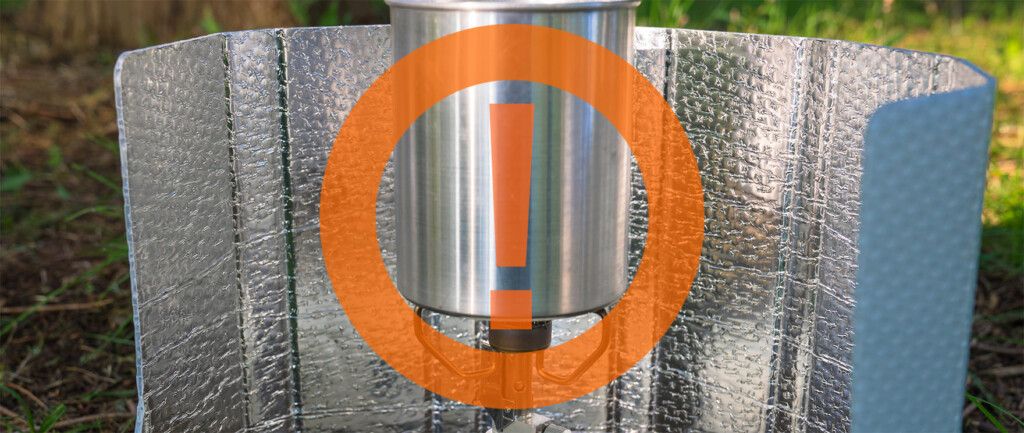
Be careful about the windshield of direct-connected single gas stoves
11. Don't use two or more stoves side by side
This is something that people tend to do carelessly in small spaces or when they want to heat something quickly, but it is extremely dangerous as it increases the risk of explosion due to the heat from each stove and the radiant heat from the bottom. This is possible with a two-burner stove because the heat source, pot, and gas unit are safely separated. When using multiple single burners, always keep them apart, and do not use more than two single burners on one cooker
12. Don't use it to start a charcoal fire
Charcoal fires emit a lot of radiant heat, and if you continue to heat them, the gas cartridge can overheat without you realizing it, putting you at great risk of exploding. This is extremely dangerous, so when starting a charcoal fire, use a fire starter or a gas torch or other alternative method, and never use a gas stove
13. Do not use grills or other items that emit large amounts of radiant heat
Like charcoal fires, cooking utensils such as griddles, grills, and ceramic-equipped products emit large amounts of radiant heat, which can cause the gas cartridge to overheat and explode. Avoid using anything with a wide base on the stove
14. Do not place gas cartridges near heat sources or in high temperature locations
Basically, the most dangerous situation for a gas cartridge is when the pressure inside it rises suddenly, so you must avoid any situation where the gas cartridge becomes abnormally hot. Specifically, in addition to the cases listed above, keep in mind the following common situations and be careful when handling gas cartridges
- Throwing a gas cartridge into a fire
- Place it near a fire, such as a bonfire
- Place near a hot cooking stove
- Leaving it on a hot paved road
- Leaving it on a sandy beach or riverbank under the scorching sun
- Leaving the product inside a car (including the trunk) exposed to direct sunlight
15. Do not let the gas cartridge body get too cold during use
As mentioned in point 4, regardless of the amount of gas remaining, when the temperature drops, the gas will inevitably spray less forcefully and the flame will not burn as well. Furthermore, the outside temperature is not the only reason for this low temperature. While the stove is burning (the gas is continuing to evaporate), the gas cartridge itself absorbs heat from its surroundings and gets colder and colder. For this reason, even if the outside temperature is not that low, it is important to make sure the temperature of the gas cartridge itself does not drop too much in order to use the stove effectively
The first correct way to prevent gas cartridges from getting too cold is to warm them in the palm of your hand. It's primitive, but it's the easiest and safest method. Another effective method is to alternate between using two stoves. If one gas cartridge gets cold during use, you can replace it with an unused (uncooled) one, and you'll always be able to cook efficiently. Another option, although it's not as common these days, is to use a dedicated power booster if one is available (assuming you follow each manufacturer's policies, of course)
Additionally, when using a stove on snow, it is a good idea to place a sheet of plywood or other underlayment under the gas cartridge rather than placing it directly on the snow. This will insulate the stove from the cold air from the ground and also eliminate the risk of the snow melting and causing the stove to lose balance due to heat from above, allowing for safe and efficient cooking
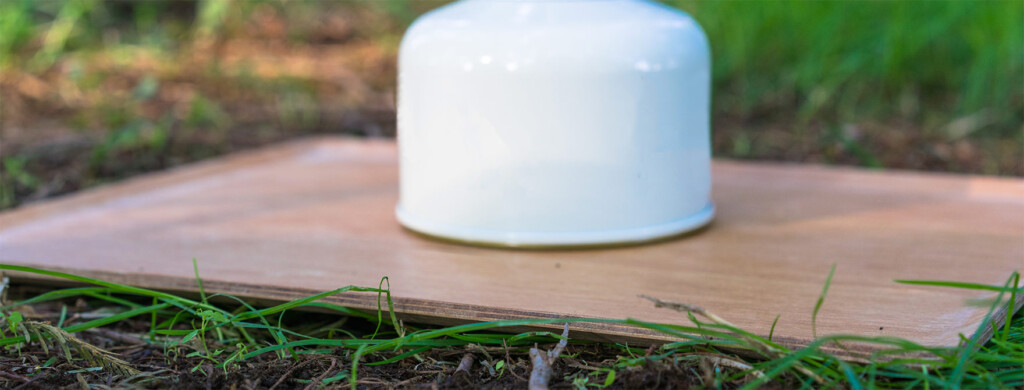
When using gas appliances on snowy surfaces, it is best to use an insulating underlayment. The photo shows a plywood tray, but a plastic underlayment is also effective
16. Carry and store gas cartridges in a way that prevents them from getting too cold
In cold seasons such as autumn and spring, gas cartridges are often ice cold immediately after you finish your day's activities or wake up. There are a few things you should keep in mind to prevent this
- Place it in your sleeping bag while you sleep
- Similarly, keep it wrapped in an insulated jacket while you sleep
- When on the move, carry gas cartridges in a backpack near your back
17. Put the lid on the gas cartridge after use
The lid of the gas cartridge itself is easy to lose, but it serves the purpose of protecting the valve, which is the key to the connection. In the case of OD can types, there is little risk of gas leakage even if the lid is not there, but in the case of cassette types in particular, gas will spray out when the gas valve is pressed, so for safety reasons, it is important to always keep the lid on when not in use
18. Properly dispose of used gas cartridges
While it goes without saying that unused gas cartridges should be disposed of only after the contents are completely used up, the detailed disposal rules may differ depending on the local government. Therefore, when disposing of gas cartridges, be sure to check the rules of each local government and dispose of them in the appropriate way
19. If you are traveling by plane, you cannot bring gas cartridges on board, so you must purchase them locally
Carrying gas cartridges on board an aircraft is prohibited under the Aviation Law. For this reason, when traveling by plane on a mountain climbing expedition, whether domestic or international, you should plan to procure gas cartridges locally. When sending by courier, conditions may or may not vary depending on the company. Please check with the respective shipping company or post office for details
20. Check the insurance listed on the gas cartridge
In the unlikely event that an accident occurs despite proper use, there is a system called "product liability insurance" that will compensate for any damages that result. However, as mentioned earlier, insurance generally does not apply if the use is outside the scope of the manufacturer's specified use, such as using a gas cartridge and the stove body in a combination made by a different manufacturer. From this perspective, we recommend that you check the usage instructions specified by the manufacturer of your stove
Supervised by: Japan Gas and Petroleum Equipment Industry Association → http://www.jgka.or.jp/gasusekiyu_riyou/index.html
Related reading
 [Wait a minute for that action!] ] Summary of NG behaviors that you tend to do when climbing or camping
 Lighter, safer, smarter. A list of cooking tools to take to climb a tent and how to choose one (basic)
 To enjoy the most freest mountain climbing, solo climbing without any worries. 10 things I've been focusing on as a solo climber for the past 10 years
 The pre-release inspection of the gas stove was even more serious than I imagined. ~Japan Gas Equipment Inspection Association Tokyo inspection survey tour~