



[Fall/Winter 2025] A hidden necessity for snow sports: the best balaclava models for different uses and preferences, plus tips on how to choose one without regrets

Written by Yasushi Hisatomi
Hidden essentials for winter hiking, snowy mountains, and snow sports
The most frightening thing about being outdoors in winter is hypothermia, which can come from the cold. For this reason, it's important to pay particular attention to keeping your extremities, such as your fingertips and toes, warm. Along with socks and gloves, balaclavas are a type of headwear that can help keep your head warm, and are essential for mountain climbing in the depths of winter and active snow sports
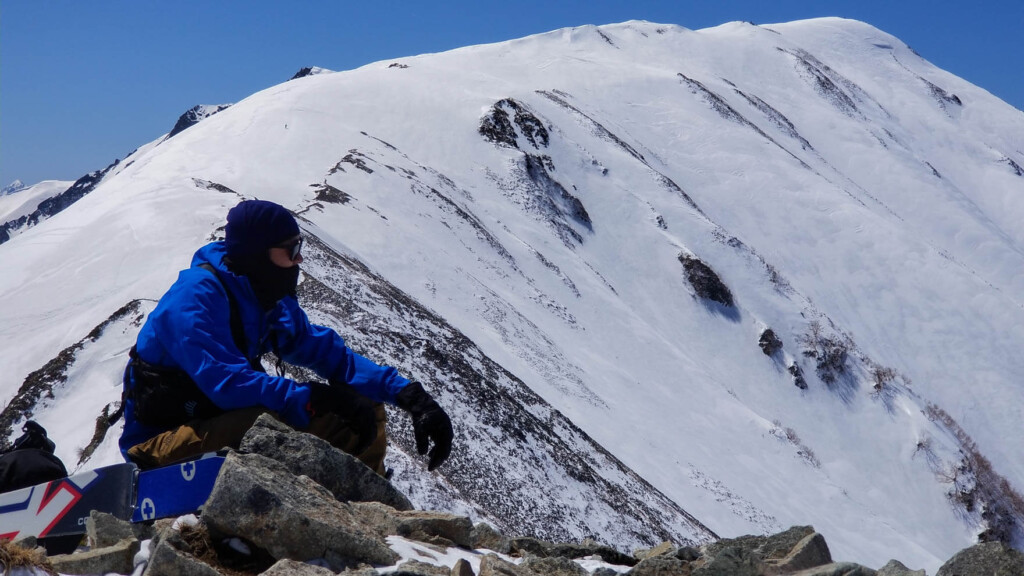
On the ridges of winter mountains, where temperatures are significantly lower than at the base and you are exposed to strong winds and snow, even if you wear a knit cap, beanie, or neck warmer, your exposed cheeks and nose are at risk of frostbite. For this reason, a balaclava, a cold weather item that covers your entire face except for your eyes, is essential when exposed to the wind and snow on a snowy mountain. In the past, it was also called a "balaclava" (personally I prefer "medebō"), but calling it that nowadays makes you sound like an old man, so be careful
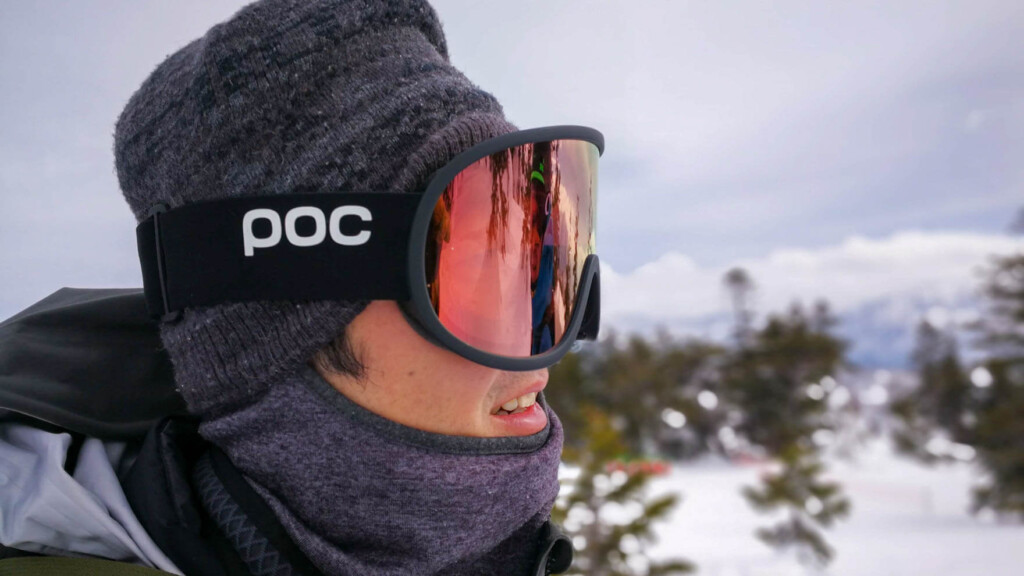
I've tried dozens of balaclavas, but I find it difficult to find the perfect one. First of all, even though everyone's head shape is different, there's only one size, or at most two sizes, so it's hard to find one that fits perfectly.
Also, even if it feels good when you try it on, when you actually wear it on site, you often find that it doesn't keep out the cold wind, your sunglasses fog up with your breath, or it's too hot to adjust, and you end up realizing for the first time that it's uncomfortable or difficult to use... Since it's a tool worn on delicate parts of the body in tough situations, it's not easy to find something that fits you perfectly. When it comes to high-end products, the price of nearly 10,000 yen is a problem considering how often you use them, so you tend to settle for something more affordable (of so-so quality)
So, this time, Outdoor Gearzine has compared and reviewed approximately 70 outdoor balaclava models currently available on the market from various angles, using its own unique perspective, to select the best models to suit various uses and preferences.In the second half of the article, we will also introduce some points to consider when choosing the perfect one for you.
Please note that we are only introducing one or two items in each category here, but you can view the other best candidates and a comparison table of all 71 items by becoming a member.
Outdoor Gearzine's content is made possible by your support. If you're interested, please consider becoming a member!
All recommended synthetic insulation jackets and a comparison table of all 71 models are available with a paid membership.
table of contents
- Vests and balaclavas for different occasions and preferences
- Best All-Around Balaclava: The North Face Midweight Balaclava
- Best balaclava for winter mountaineering: NORRONA arktis Ousland edition Facemask
- Best Balaclava for High-Intensity Activities: Houdini Pace Flow Balaclava
- Best Affordable Balaclava: Mountain Hardwear Power Stretch Balaclava
- Best and most comfortable balaclava: Houdini Lycan Balaclava
- 4 things to check when choosing the best balaclava
- Summary: It's not just about the material, it's not just about the fit. If you don't want to get stuck in a quagmire, choose your balaclava carefully
Vests and balaclavas for different occasions and preferences
Best All-Around Balaclava: The North Face Midweight Balaclava
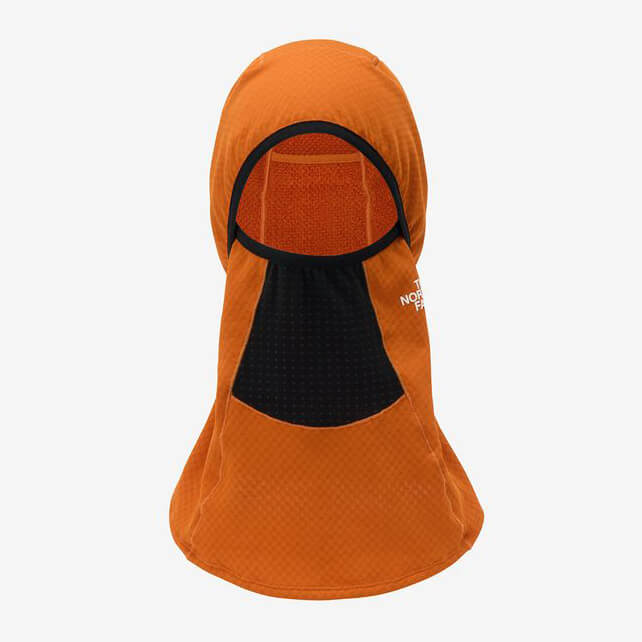
Warmth ★★☆ Wind Resistance ★★☆ Comfort ★★★ Breathability ★★☆ Versatility ★★★ Design ★★★
First, we will introduce a model that offers a high level of overall balance and is recommended for all winter mountain activities, such as winter mountain climbing and backcountry skiing.
Of all the models this season, the one that really caught my eye was The North Face's "Midweight Balaclava." To be honest, this was a surprise.
The material is "FUTURE FLEECE," which is lightweight and offers excellent warmth and breathability. The mouth area is mapped with "DOTKNIT" technology, which is breathable, quick-drying, and feels dry even when wet. It's also stretchy, warm, and not too thick. It's versatile enough to be used not only as a balaclava, but also as a head warmer, face mask, and neck gaiter. Unfortunately, the nose area doesn't have any shape-retaining material, but as mentioned above, that's not a problem, as you can fix that yourself. In other words, it's pretty much what I'd hoped for.
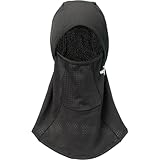
Best balaclava for winter mountaineering: NORRONA arktis Ousland edition Facemask
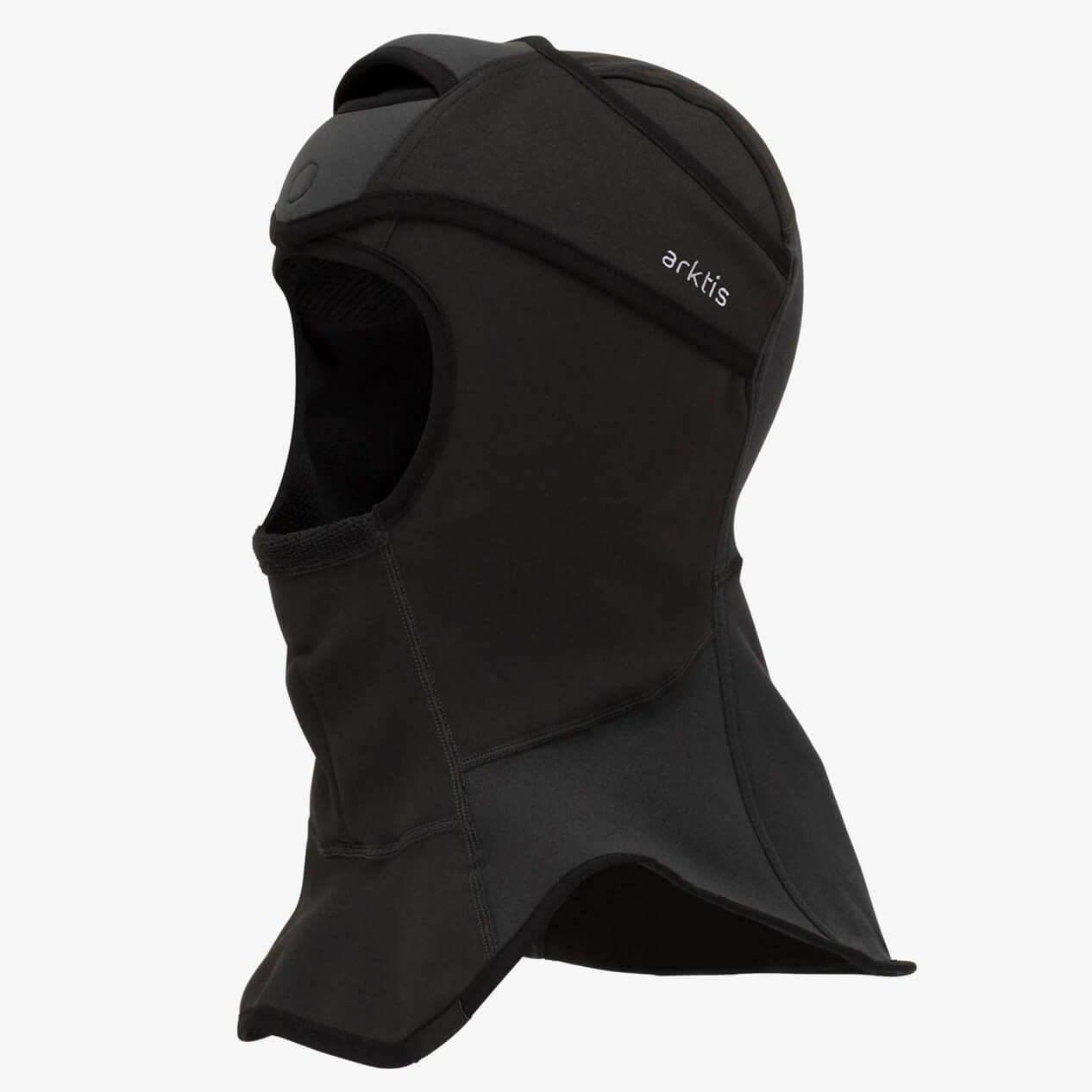
Warmth ★★★ Wind resistance ★★★ Comfort ★★☆ Breathability ★★☆ Versatility ★☆☆ Design ★☆☆
When considering the most severe cold and harsh conditions, such as high-altitude mountaineering in the dead of winter, long-term traverses, or winter alpine climbing, a model with high insulation and protection is more reliable than one that is easy to use in a variety of situations, as mentioned above.
Here, we've selected models that offer particularly high levels of wind resistance, warmth, and protection (blocking out the cold). While the high-end models from authentic alpine brands are all of high quality, and you won't go wrong with any of them, if we had to pick one particular model, we'd recommend the NORRONA arktis Ousland edition Facemask. This is part of the "Arctic Collection," a collection developed in collaboration with polar explorer Borge Ousland for Arctic expeditions. With GORE-TEX® Infinium (Windstopper) for high wind resistance, Polatec Powerstretch pro for the neck, and neoprene for the mouth, it offers unparalleled functionality and durability for extreme environments. What's even more interesting is the adjustable face protection, which can be attached or removed as needed, adding a level of versatility not found in many expedition models.
Best Balaclava for High-Intensity Activities: Houdini Pace Flow Balaclava
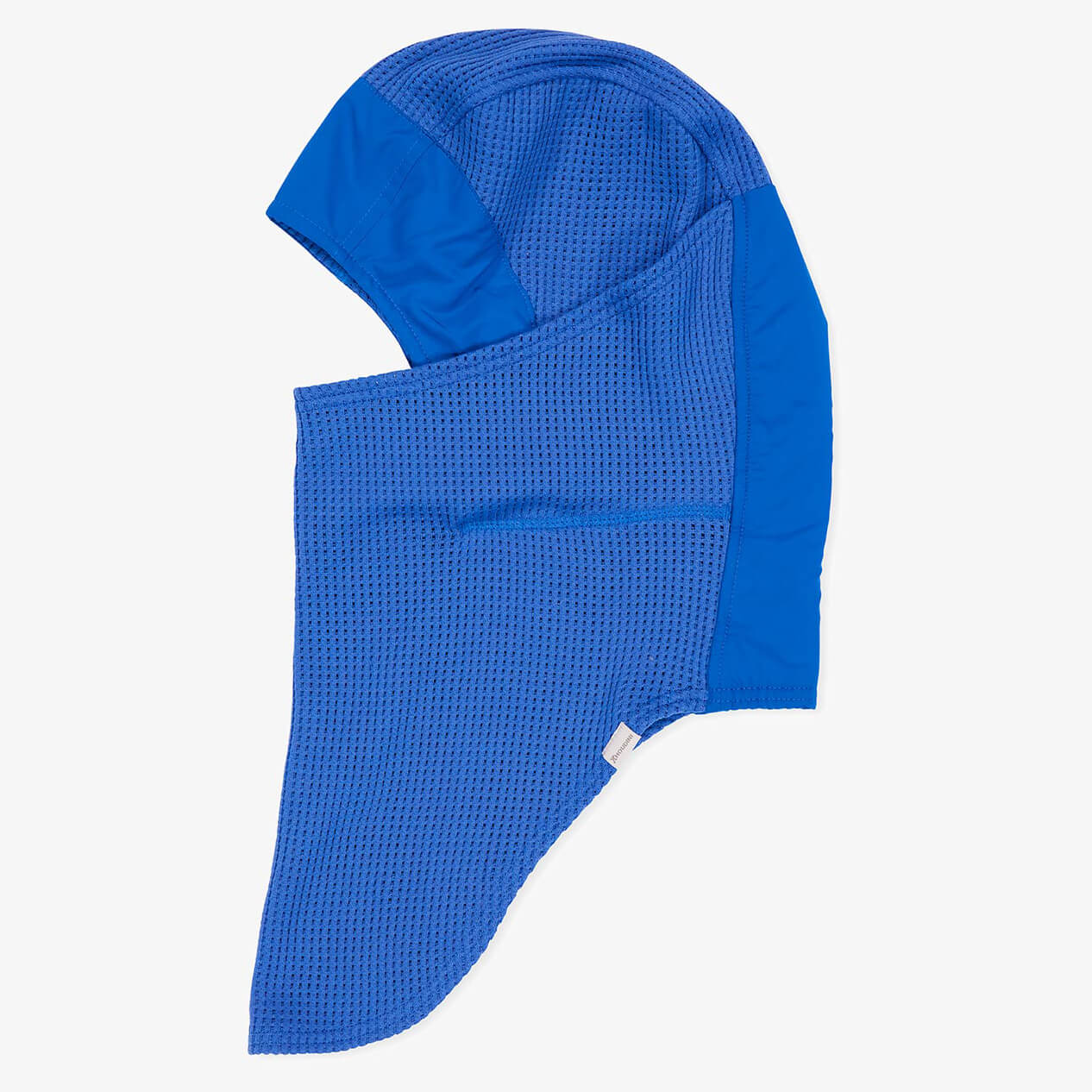
Warmth ★☆☆ Wind Resistance ★☆☆ Comfort ★★★ Breathability ★★★ Versatility ★★★ Design ★★★
Until now, the main materials used for balaclavas have been fleece or merino wool. However, active insulation materials have become more popular in recent years, and they have naturally attracted attention in the balaclava field, with an increasing number of models adopting them. This is no surprise, as they offer all the elements required for a balaclava: lightness, warmth, and breathability.
Balaclavas incorporating these trendy materials are ideal for more active winter sports. The Houdini Pace Flow Balaclava . The main fabric, Polartec® Power Dry® Mesh, is familiar from the Pace Flow Houdi jacket, which also uses the same material. Just like the original, this balaclava is a lightweight mesh material with incredibly high breathability and moderate insulation. This keeps your head warm no matter how intense your movements. On the flip side, you'll need a helmet and hood to keep you warm, so finding the right balance can be tricky. While its suitability is limited to certain situations, it's a powerful piece of gear when you get the hang of it.

Best Affordable Balaclava: Mountain Hardwear Power Stretch Balaclava
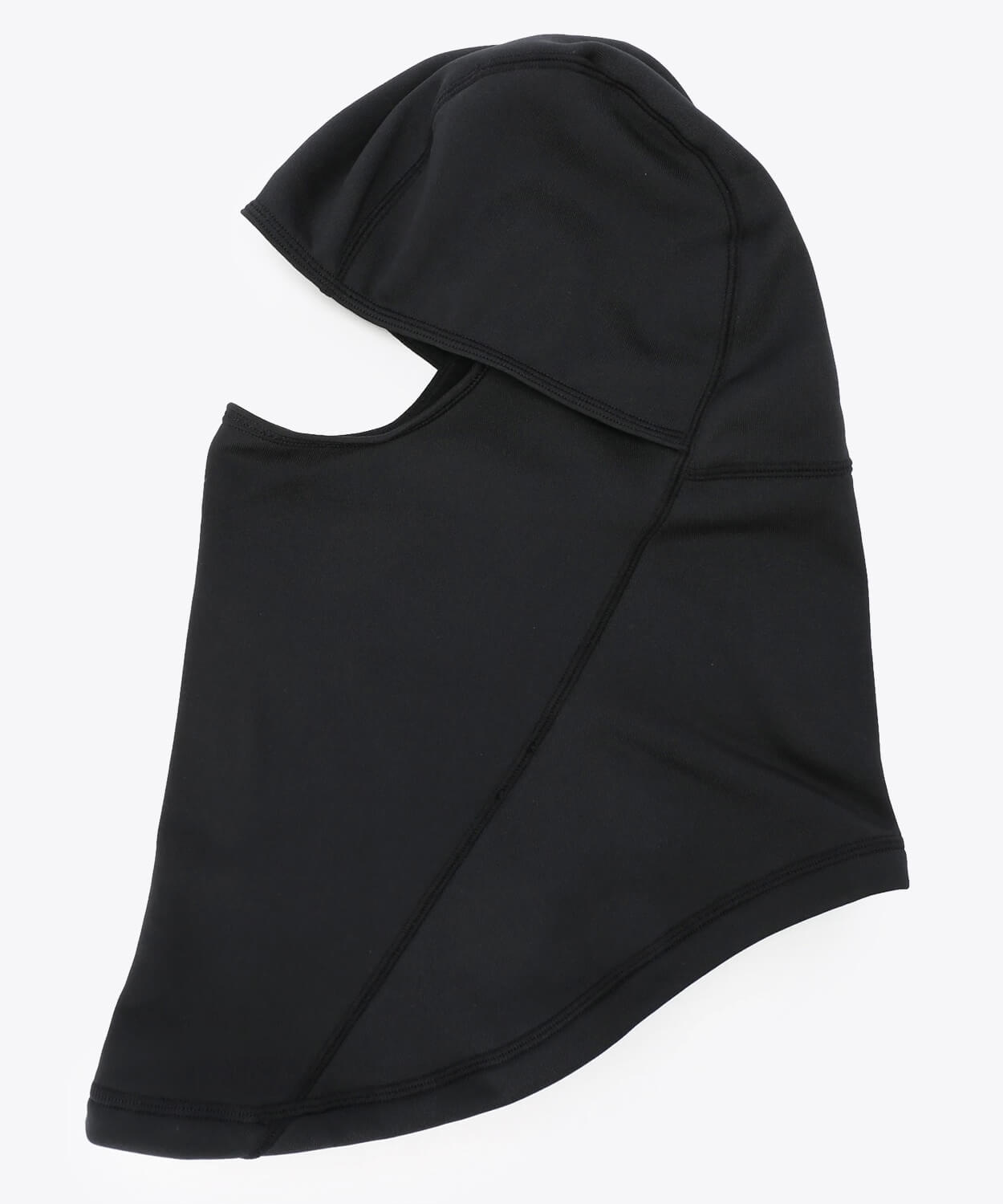
Warmth ★★☆ Wind resistance ★★☆ Comfort ★★☆ Breathability ★☆☆ Versatility ★★★ Design ★★☆
As always, I've chosen high-value models under the condition of "under 5,000 yen." Balaclavas are now often priced at over 10,000 yen. While it's always better to choose a more reasonable model, I'd like to start by saying that if you don't have any particular preferences, you can't go wrong with Montbell's budget models. Despite their diverse lineup, almost all of them are under 5,000 yen, with plenty of models in the 3,000 yen range, and yet they all meet the minimum of the five points I mentioned.
That said, if I had to pick the best one in all these categories, it would be the Mountain Hardwear Power Stretch Balaclava . Not only does it offer versatile cut patterns, but the Polatec Powerstretch fabric provides a comfortable fit. And at just 5,000 yen, it's definitely worth it.
Best and most comfortable balaclava: Houdini Lycan Balaclava
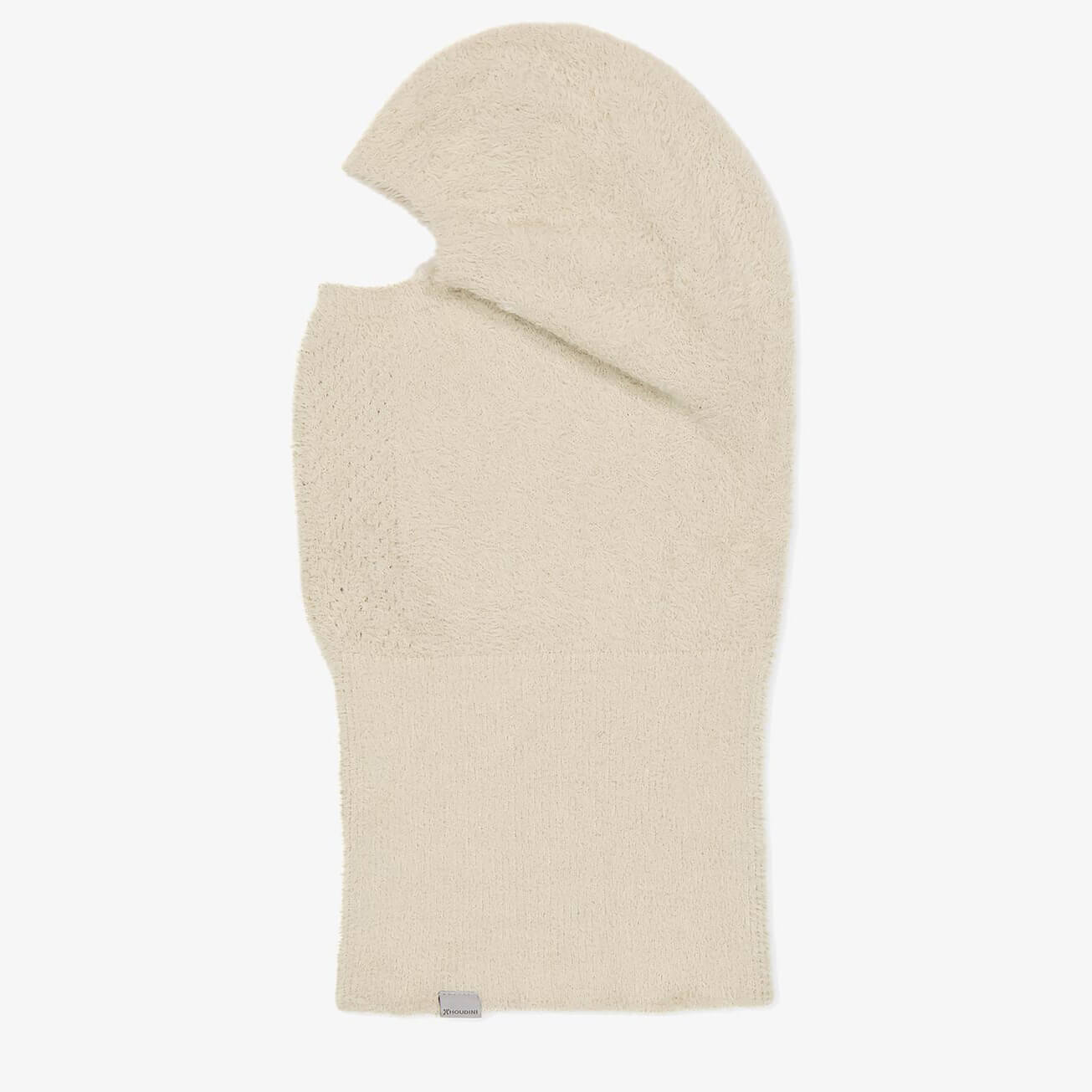
Warmth ★★★ Wind resistance ★☆☆ Comfort ★★★ Breathability ★★☆ Versatility ★★★ Design ★★★
Finally, as a bonus (?), this is a noteworthy model that is not only highly functional, but also has a more comfortable feel and warmth, making it suitable for use on winter travel and leisure trips, making it suitable for use in both everyday life and the field.
Our top pick, the Houdini Lycan Balaclava, uses the innovative Airweb Knit™ material. It's a knit fabric created by combining Waveron™ and Deltapeak™ yarns, developed by Teijin, a company that's been creating a sensation in the outdoor industry recently, with Shima Seiki's 3D knitting technology, which has also been dominating the industry for several years. This insulating material offers exceptional softness, breathability, and a smooth texture, and it also eliminates the need for traditional waste disposal. While this fabric could be used to create a more active, high-end model, Houdini has chosen to create a sophisticated design that is comfortable for everyday wear.

You can read all the other recommended balaclavas above and a comparison list of all 71 models in the paid membership article.
4 things to check when choosing the best balaclava
Point 1: Is the protection (heat retention and wind resistance) sufficient?
A balaclava is needed in cold, windy conditions where a beanie or neck warmer alone is not enough to keep you warm. If you were to ask what you need first in this situation, the most important thing is undoubtedly warmth and protection from the cold
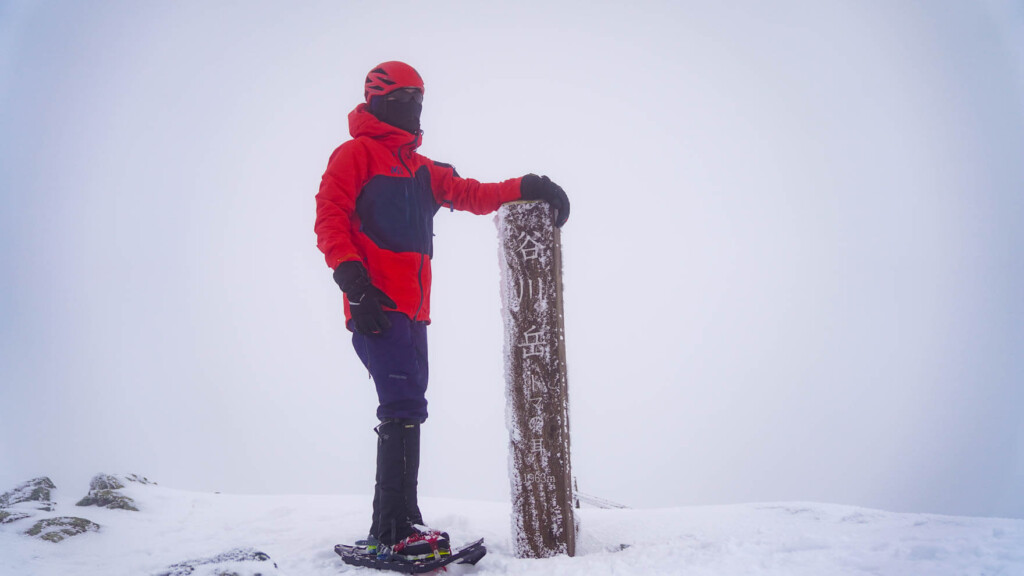
One of the factors that greatly influences the warmth of a balaclava is the fabric and material used. In the past, traditional wool and synthetic materials such as acrylic were the mainstream for warmth in winter wear, but these had the drawback of being itchy to the touch, and there was still room for improvement when wearing them on the face. Recently, however, various advanced materials have taken over, and you can choose one based on your purpose and use. Below, we will look at the materials that are becoming mainstream in recent times
Typical fabrics used in balaclavas: fleece and active insulation
Fleece, which is now commonly used as a material for balaclavas, is attractive for its well-balanced combination of warmth and breathability/quick-drying properties. Originally, fleece evolved as the ideal sweater to replace wool - "lightweight, warm, and quick-drying" - and was a perfect match for balaclavas. However, recently, active insulation materials such as "Polartec Alpha" and "Octa" have begun to appear as synthetic padding similar to fleece, combining high levels of warmth and breathability, and it's important to keep an eye on new products that take advantage of the strengths of each material.
In addition, some models are designed for more extreme cold, such as those used in alpine climbing in the dead of winter or polar expeditions, and offer even greater protection by incorporating a windproof membrane.
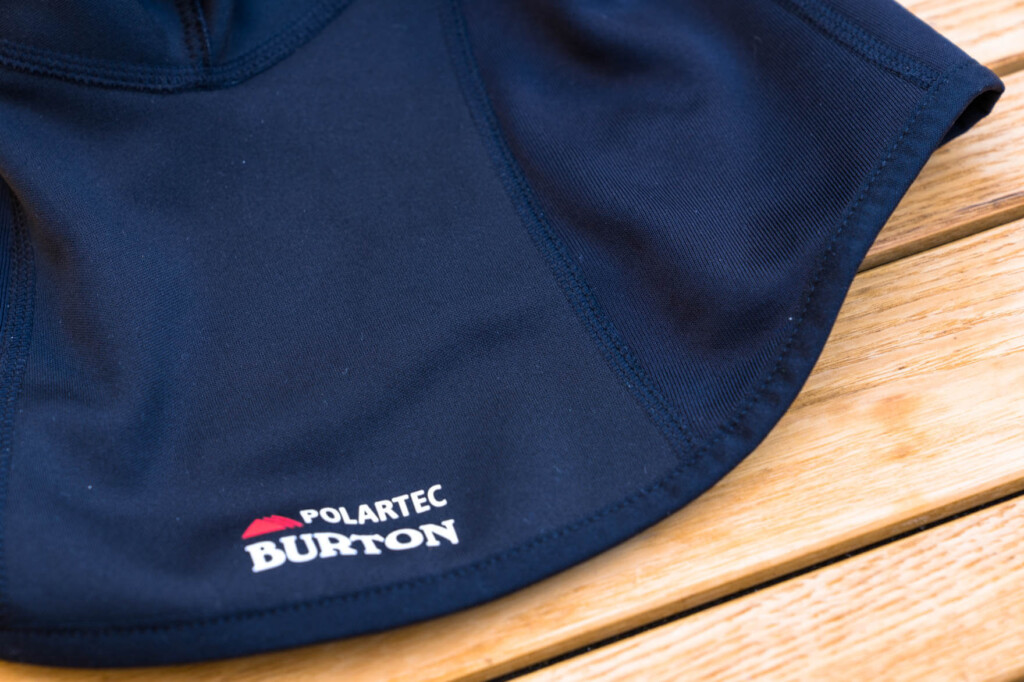
Typical fabrics used in balaclavas: Merino wool
Merino wool, which has an exceptionally soft feel and moisture-wicking properties compared to traditional wool, is now used in a variety of items as a comfortable, insulating material. The appeal of merino wool balaclavas is their comfortable fit, which comes from their moderate stretch and feel. Of course, they also provide excellent heat retention. They are generally moderately windproof and breathable. Their natural odor-resistant properties are a subtle plus for facewear
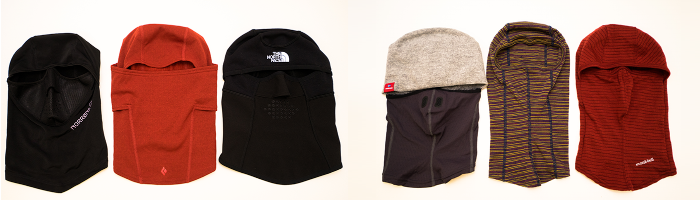
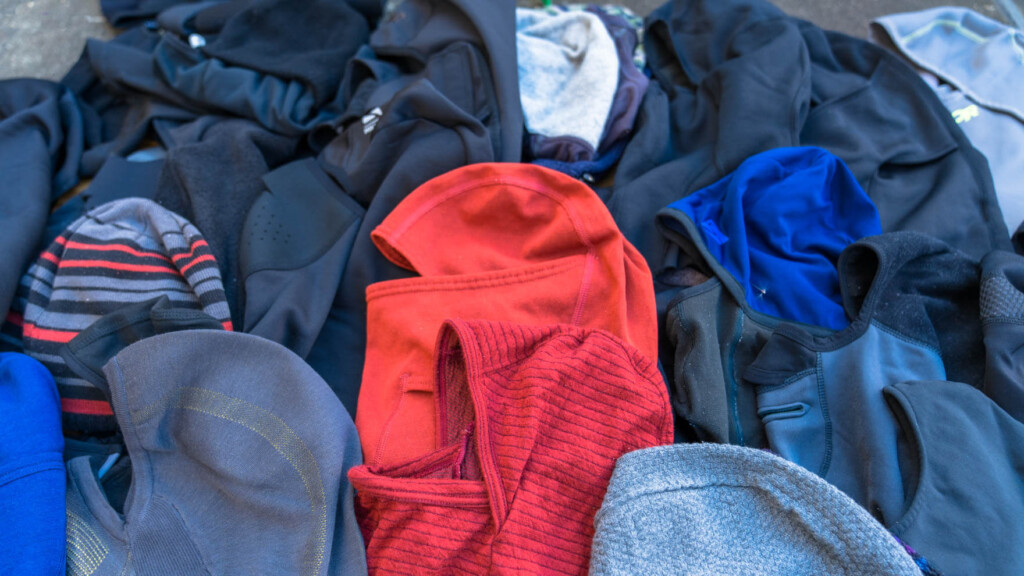
The three on the left are fleece and other synthetic materials, while the three on the right are merino wool and blended materials. As a general rule, technical models tend to be made of synthetic materials, while casual models that prioritize comfort tend to be made of wool
Note: Heat retention isn't determined solely by the material
When choosing a warmer balaclava, it's important to pay attention to the neck area. Balaclavas that don't cover the lower part of your neck properly can let the wind in. If the neck area is shorter, you should wear a neck warmer or jacket to keep the temperature down
Point 2: Is the comfort (fit and breathability) sufficient? Does it fog up when you breathe?
No matter how good the insulation of a material is, if it's too small, it'll be cramped around your face and you'll have difficulty breathing, and if it's too big, it'll easily slip off due to the effects of a helmet or wind, which can be very dangerous. In that sense, choosing the right size and fit for your balaclava is important, and you should be especially careful with models that only come in one size or are made of non-stretchy material. The best thing to do is to try it on
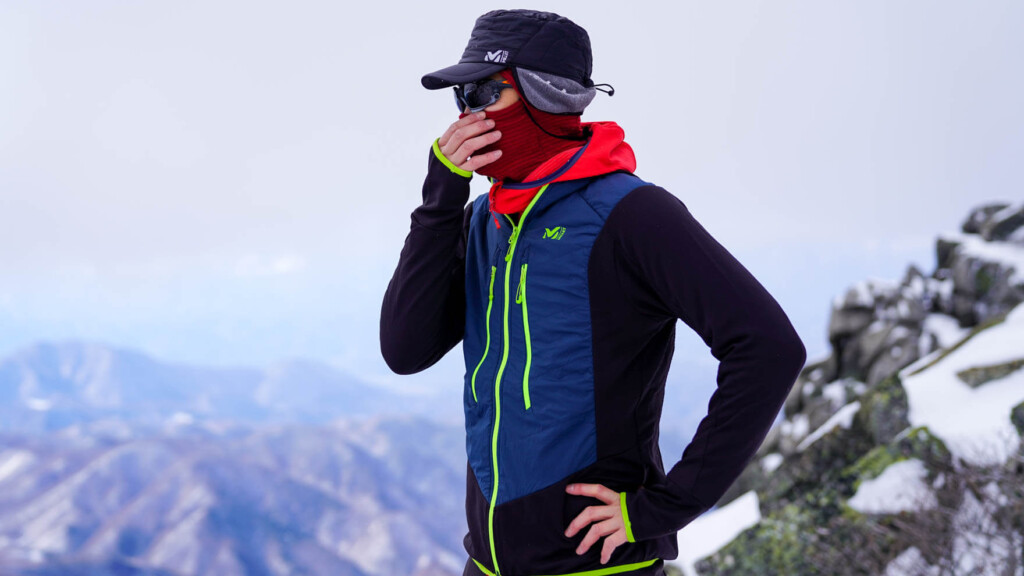
Another important aspect of comfort is the handling of exhaled air. Sunglasses and goggles are essential not only for winter mountain climbing, but for all winter sports, including skiing and snowboarding. If you wear sunglasses in a balaclava that has poor ventilation around the mouth and allows exhaled air to escape from the sides of your nose, no amount of anti-fog cream will prevent the lenses from fogging up due to your breath. Balaclavas that are well aware of this issue are increasingly incorporating mesh or ventilation holes in the mouth area to expel exhaled air to the front and prevent it from rising inside the sunglasses, preventing fogging and stuffiness. Furthermore, if there is padding or a core above the nose, this is the perfect measure to prevent exhaled air from rising up
However, you need to be a little careful with this as well, as depending on the size of your face and the product, even if there is a ventilation mechanism at the mouth, your breath may not be properly expelled to the front, and may end up rising inside the sunglasses. To avoid this, it is important to get a good fit for your balaclava!
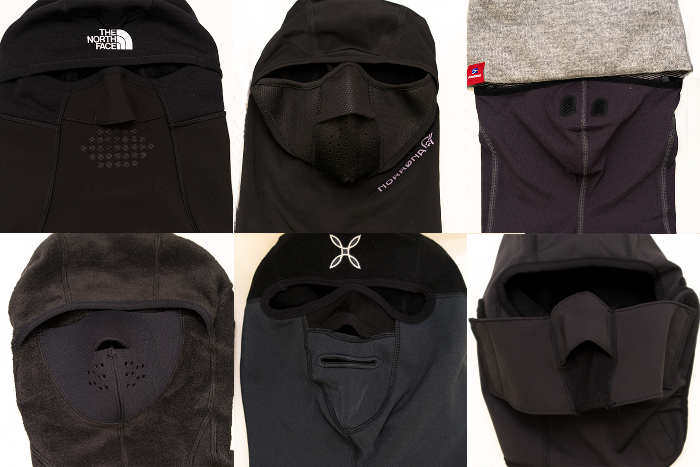
It may depend on the specific conditions, but as far as I can tell from my testing, it's not the case that just any mesh hat will do. You'll have to refer to the reviews here to see if they fog up, or try them on to make sure as much as possible
How to insert a core into the nose area with DIY
Until now, you had to choose a model that had a resin or metal core in the nose area of the product.
However, recently I discovered a way to insert the core material into any model myself, so I no longer worry so much about whether or not there is a core in the nose area.
I'll note down how to do that here.
I used a shape-retaining material for crafts, which you can buy on Amazon. It's 2mm wide. It might be better if it was a little thicker.
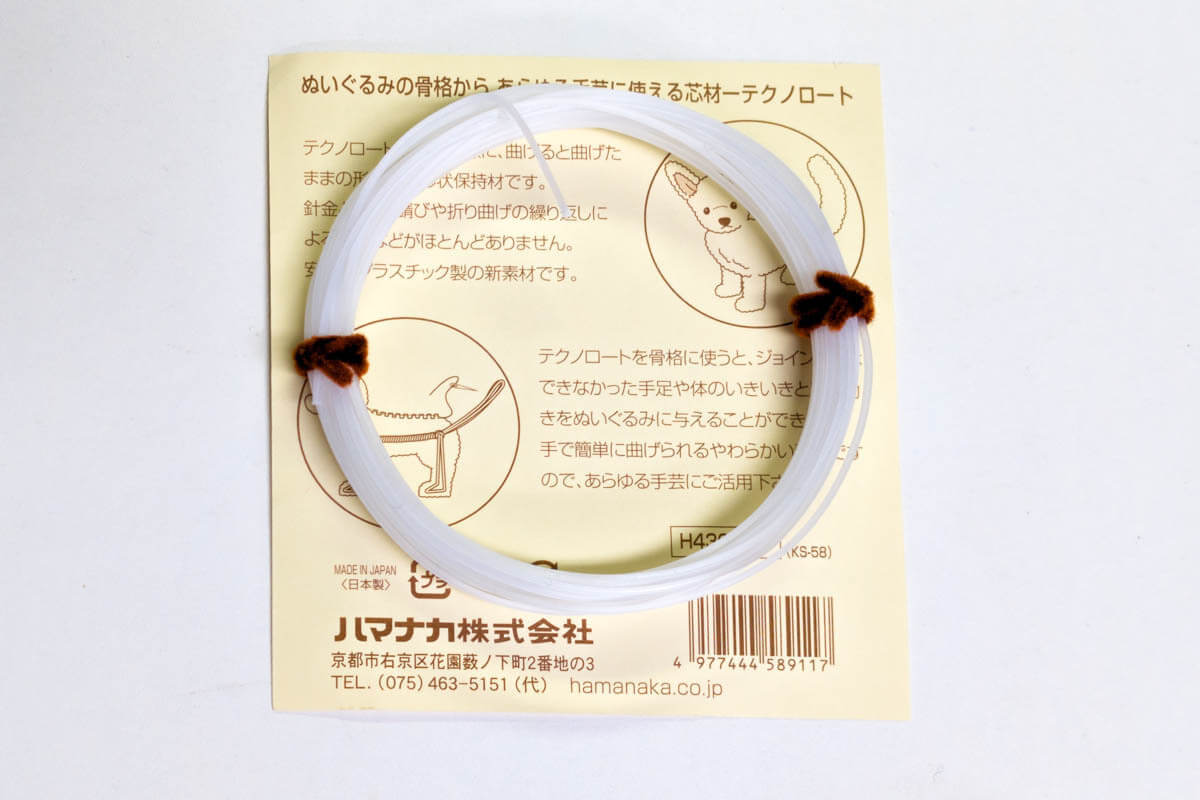
Hamanaka Technoroth L Shape Retention Material, 5m, H430-058
Cut this to the appropriate length and sharpen one end with a cutter or similar tool. Then, simply insert it into the bias tape on the edge of the nose. It's not fixed in place, but so far it hasn't shifted easily inside.
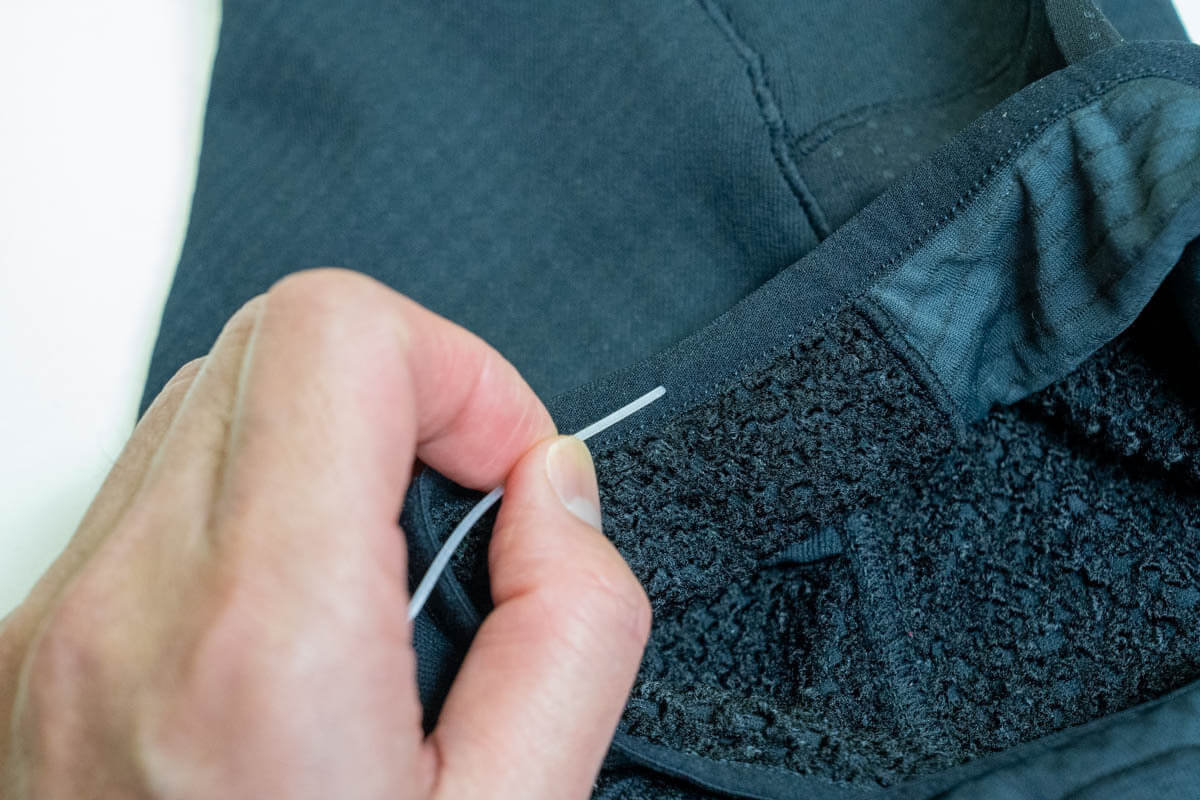
I was worried about my goggles and sunglasses fogging up, but now I can attach nose pads to most balaclavas that don't have nose pads. If you have the same problem, please use this as a reference.
Point 3: Are there many variations in how to wear it?
Balaclavas are relatively thin and stretchy, so you can wear them in multiple ways depending on the situation, such as whether it's hot or cold, how strong the wind is, or how well they work with your helmet, allowing you to use one balaclava in multiple ways, as shown in the diagram below.
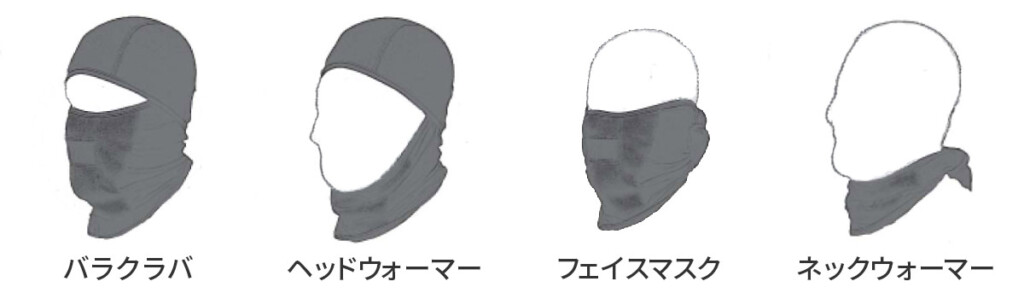
Conversely, bulkier, less stretchy models offer greater protection from wind, snow, and cold, but generally lack the flexibility to do so

Focus on the balaclava's sewing pattern
You can generally check whether a balaclava is "constructed to allow multiple ways of wearing it" by looking at its stitching pattern.
As shown in the diagram below, there are about three different types of balaclava structures.
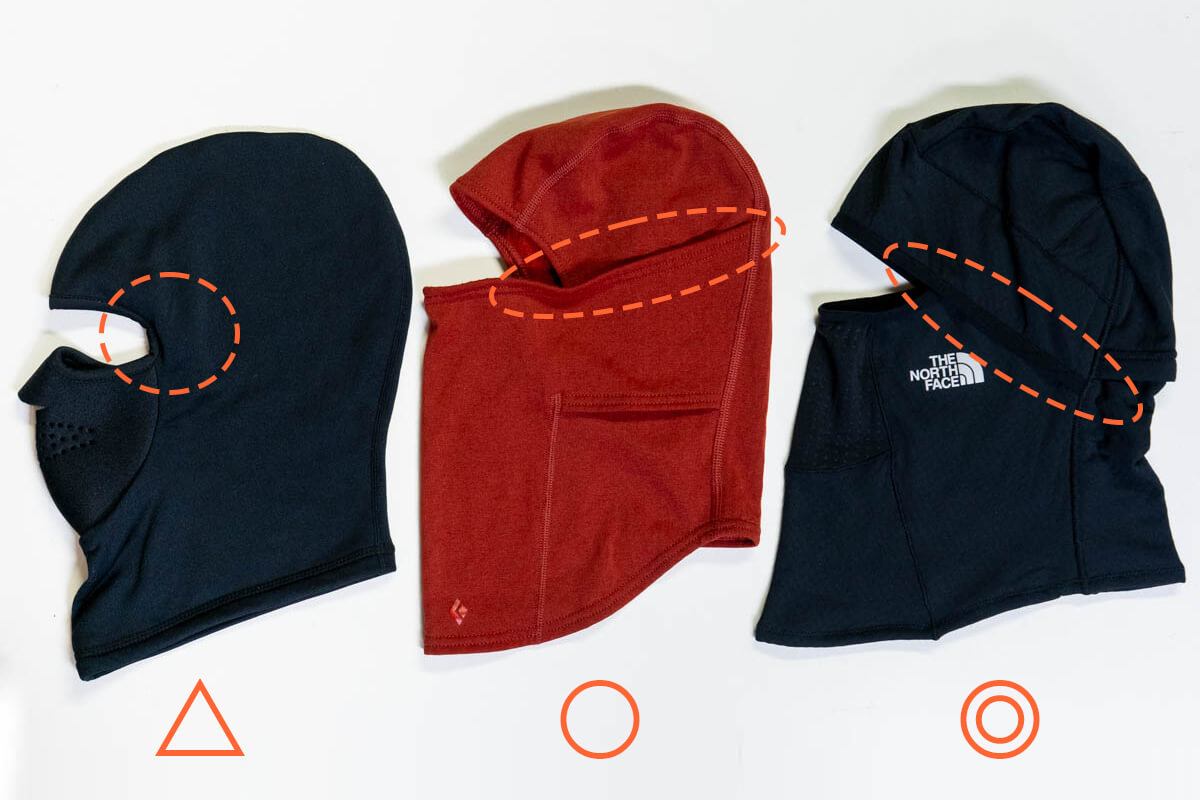
In each model, the one with the area around the eyes sewn shut provides excellent protection against the cold but makes it difficult to open the mouth or remove the balaclava from the head alone (left), while the one with the lower half sewn on the outside makes it easy to lower the lower half (mouth area) and switch to a head warmer when it gets too hot (center). Finally, the one with the upper half sewn on the outside not only makes it easy to lower the mouth area, but also to remove the upper half (head area) and switch to a "face mask style" that covers only the mouth and ears; personally, I like the balaclava with the structure on the right the best in terms of how easily it can be customized into a variety of styles.
Point 4: Other features
In addition, each brand has put a lot of effort into differentiating its models from others. Take, for example, odor-preventing and deodorizing features. Balaclavas directly cover the nose, and saliva inevitably gets around the mouth due to breathing, so the longer you wear them, the more odor-preventing features are extremely valuable. Merino wool, on the other hand, has natural odor-preventing properties, so you can rest assured. Also, some models offer even more comfort and versatility with removable mask parts. If each feature suits your style, there's no reason not to choose it
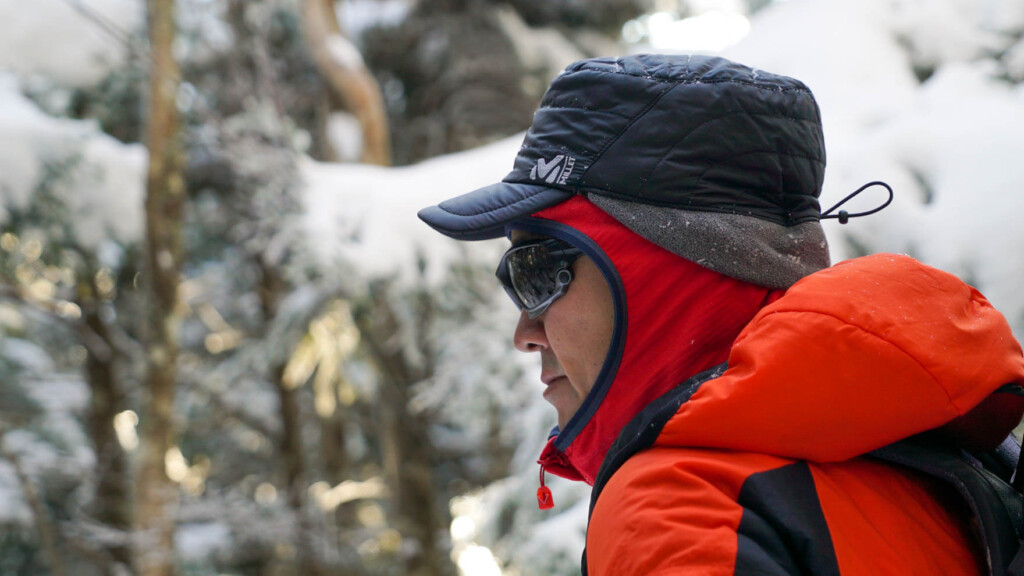
Summary: It's not just about the material, it's not just about the fit. If you don't want to get stuck in a quagmire, choose your balaclava carefully
So far, I've introduced the key points for choosing a balaclava that I've arrived at up to this point, and the models I recommend from the ones I've used. But to be honest, I still haven't found the ultimate "ultimate" one. Of course, balaclavas are like any other mountain gear; there's no one piece that fits every situation, so it's important to remember that the smartest way to use one is to understand its strengths and weaknesses and use it according to your purpose and the situation
Finally, for reference, looking back at my current personal outfitting routine, the two main pillars of my outfit are the lightweight, compact, warm, comfortable, and versatile THE NORTH FACE Midweight Balaclava and the finetrack Merino Spin Balaclava , and I use these two items almost all the time. Depending on the situation, I use a more protective one for mountain climbing in the dead of winter, a more breathable one for running, or a more stylish model for use in town.
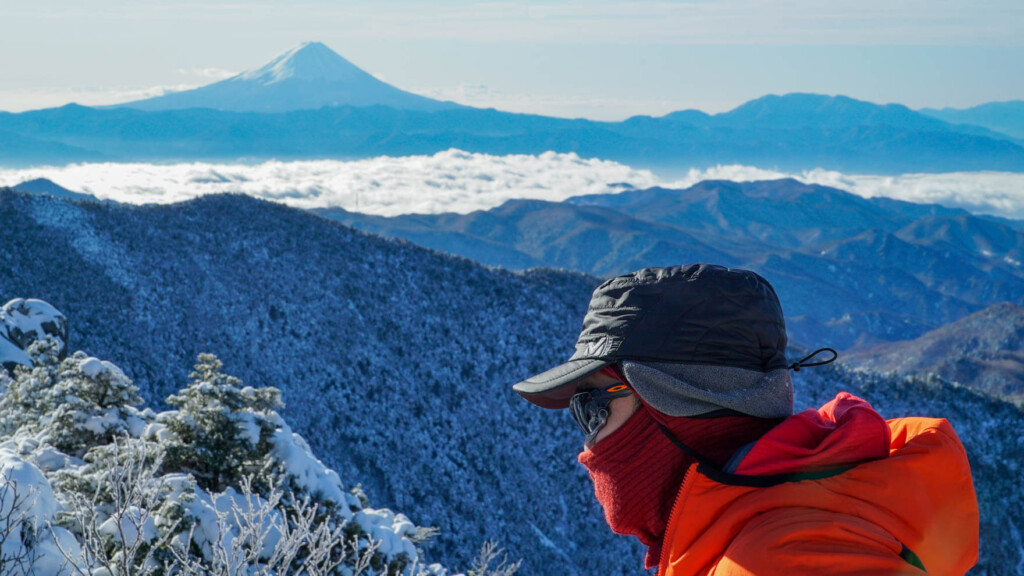
Balaclavas are a simple item, but on snowy mountains, choosing the wrong equipment can easily get you into big trouble, so be sure to use this article as a reference and enjoy playing in the snowy mountains safely this year as well
Related reading
 [Fall/Winter 2025] Recommended base layers for this season and purpose, selected after comparing over 200 items, and how to choose the perfect one for you
 [Fall/Winter 2025] We've selected the best synthetic insulation for fall/winter outdoor activities from approximately 200 models, and here are some tips on how to choose the right one
 [Fall/Winter 2025] Down? Synthetic? Fleece? The key to comfortable layering is choosing the right material. The best mid-layers for mountaineering (cold weather gear) by type, and tips for choosing the right one
 [Fall/Winter 2025] This season's best hard shell jackets, essential for the harsh snowy mountains, and tips on how to choose them safely