The Platypus Quick Draw Micro Filter, a light, easy-to-use water purifier perfect for mountain climbing, has been released, so I'll start thinking about water purifiers again this summer.
Japan is said to be a rare country in the world, with its land covered in forests and blessed with clean, abundant water resources thanks to the abundant rain and snow that accumulates throughout the year
Looking back on my experience of enjoying stream climbing for over 20 years, I have rarely felt any hesitation about drinking the water that flows normally at the source of a stream (of course, it is a different story when it comes to streams in Hokkaido, where I have always boiled stream water to avoid the parasitic worm echinococcus)
However, in reality, it is no longer safe to drink raw water from streams or even from pools like ponds, even if it was safe in a managed water source. Even if it was safe up until now, it could be contaminated with E. coli or Helicobacter pylori due to human activity, or it could be that the water contains garbage or is only available from questionable sources due to weather or other factors
In times like these, a portable outdoor water purifier can be a great way to ensure clean water. In countries overseas where the environment is different, it is common to use a water purifier before using it, and there are many portable, easy-to-use water purifiers available
table of contents
- Introducing the Platypus Quickdraw Microfilter, the latest tool for safe drinking water in the mountains
- Trying out the Quickdraw Micro Filter in the mountains
- The deep world of water purifiers. Choose the best water purifier for various outdoor activities
- Comparison of functions and features by type of water filter
- Pump-type water purifier: Reliable and recommended for a wide range of outdoor activities
- Gravity water filter: Recommended for camping where you want to make a large amount of water in a quiet place
- Portable water filter: Ideal for hiking and backpacking, where you want to make water quickly and easily
- Summary: You can drink water safely anywhere. The Platypus Quickdraw Micro Filter is currently the best solution for hikers
Introducing the Platypus Quickdraw Microfilter, the latest tool for safe drinking water in the mountains
The Platypus Quickdraw Micro Filter I'm introducing today is a "useful" water purifier with many features that are both functional and easy to use, perfect for hiking and backpacking. For someone like me who's always felt the need for a portable water purifier but never got around to it, this is the perfect opportunity to finally get started on a portable water purifier.
So, in this article, I'd like to try out the new Platypus Quickdraw Microfilter Water Purifier and write about how it works. I also took this opportunity to try out other water purifiers, so I'll also summarize the basics of water purifiers, how to choose one, and how to use it.

Trying out the Quickdraw Micro Filter in the mountains
Lightweight and compact, easy to carry
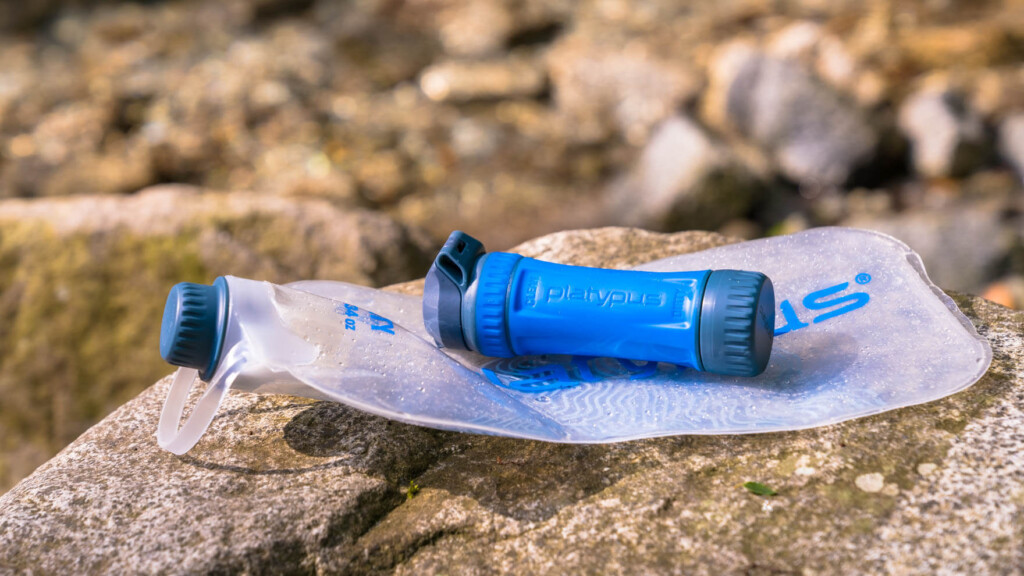
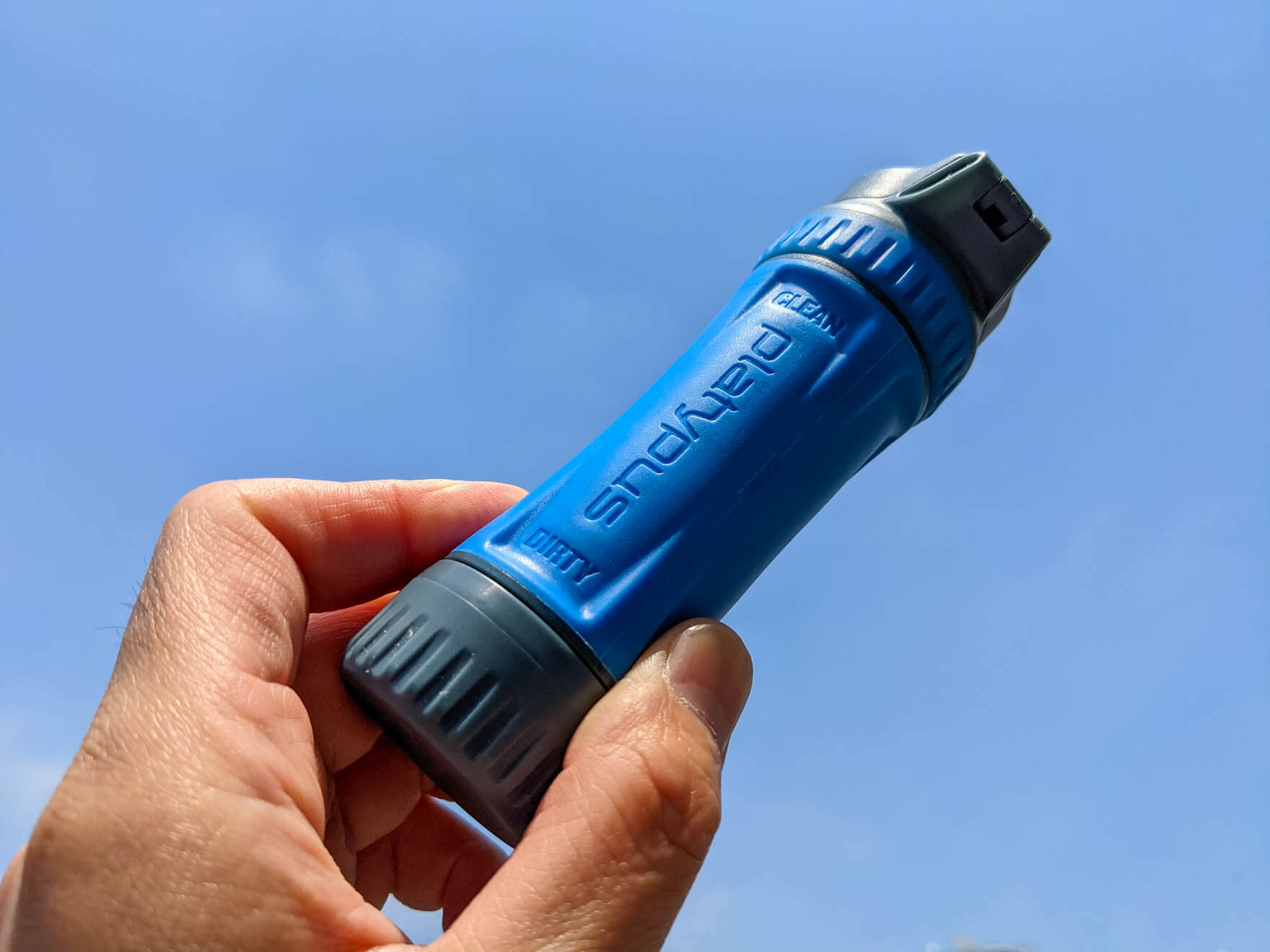
Let's start with a quick look at the exterior. As soon as you pick it up, you'll be immediately impressed by its lightness and compactness. The filter itself weighs just 61g and is smaller than your fist, so it's compact enough to slip easily into the gaps in your backpack

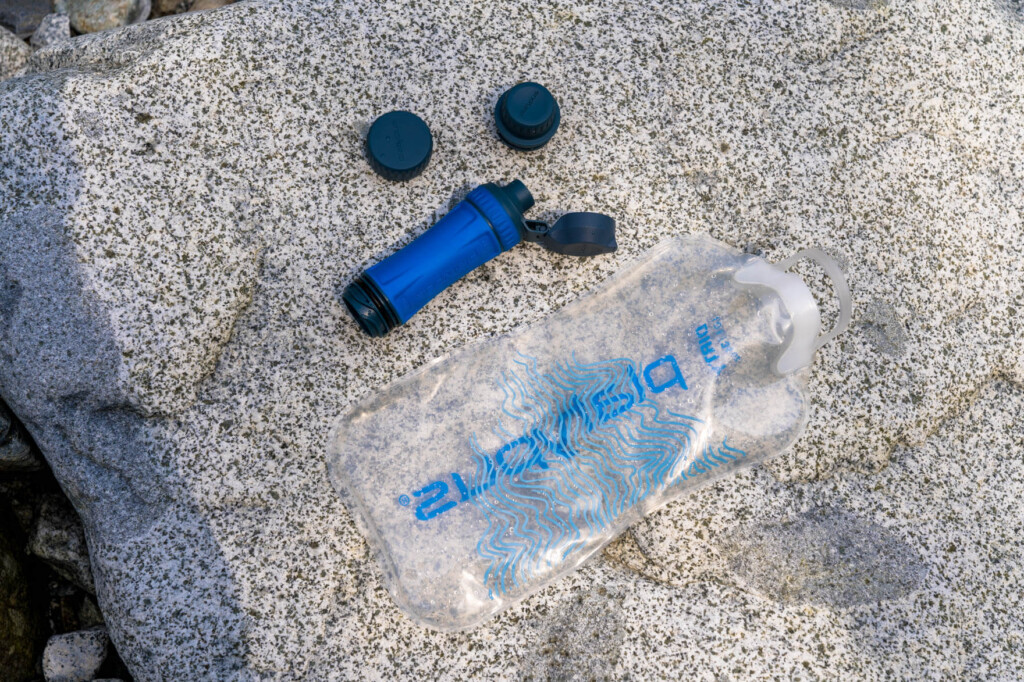
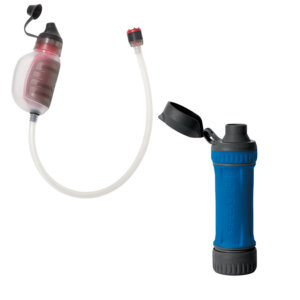
The QuickDraw Micro Filter has a very simple structure. It consists of three parts: the main body with the built-in cartridge, and two caps to protect the water outlets on both ends (see photo below). Even when combined with the reservoir for holding the dirty, unfiltered water, it's very pack-friendly.

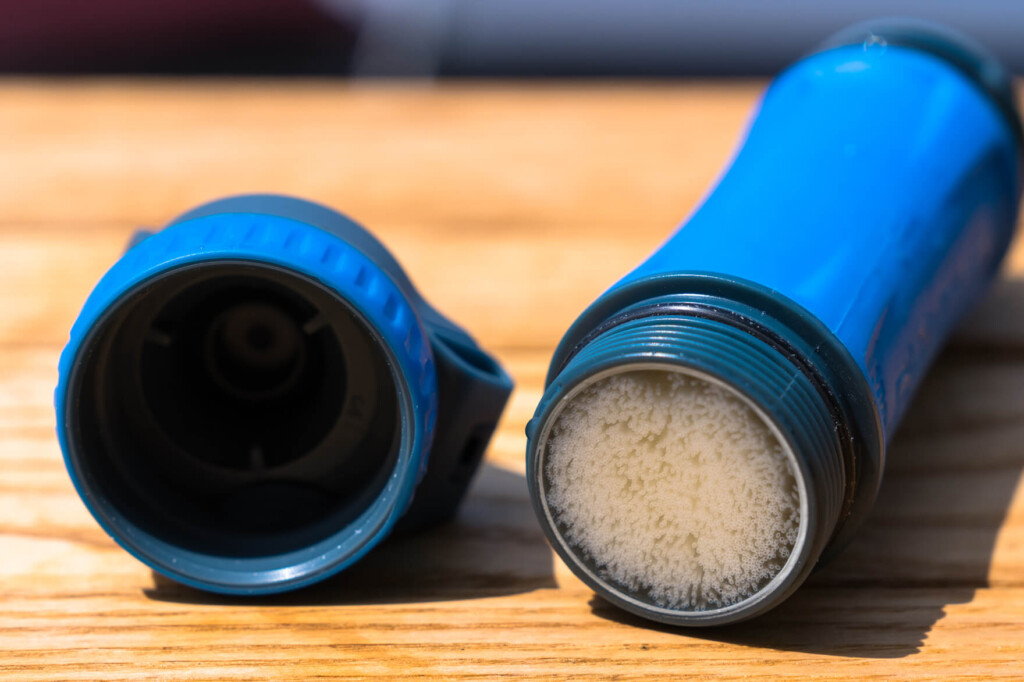
If you remove the caps on both ends and take a peek inside the filter, you will see that it is packed tightly with tiny hollow fiber filters (see photo below)

Easy and fast filtration without hassle
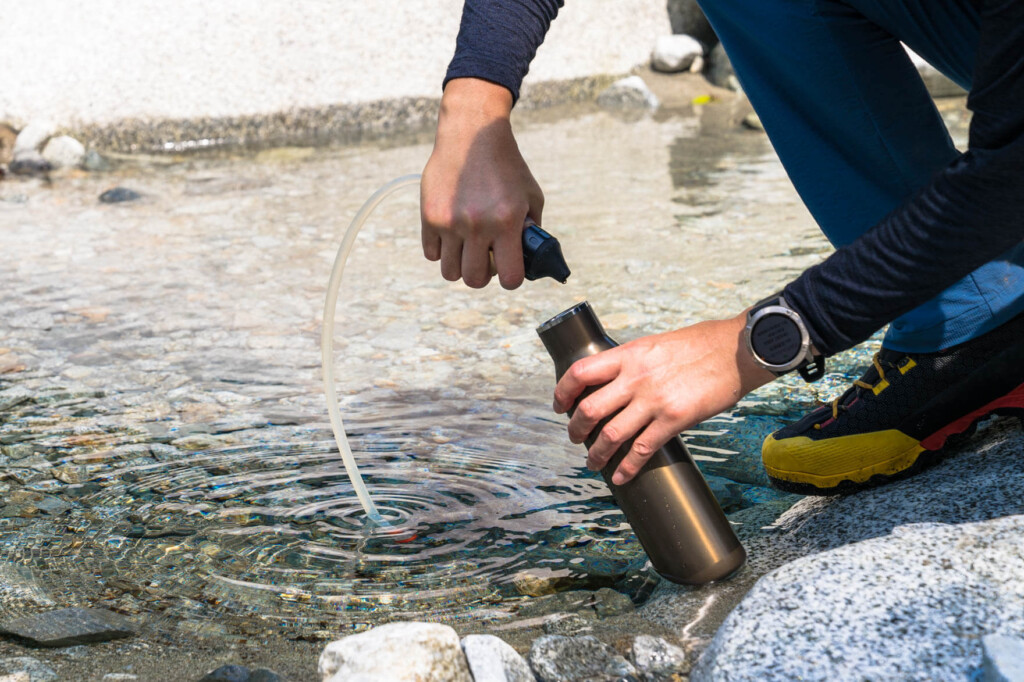
This time, while walking along a hiking trail that goes along a stream, I tried to collect water from a flowing stream at a suitable location and drink it
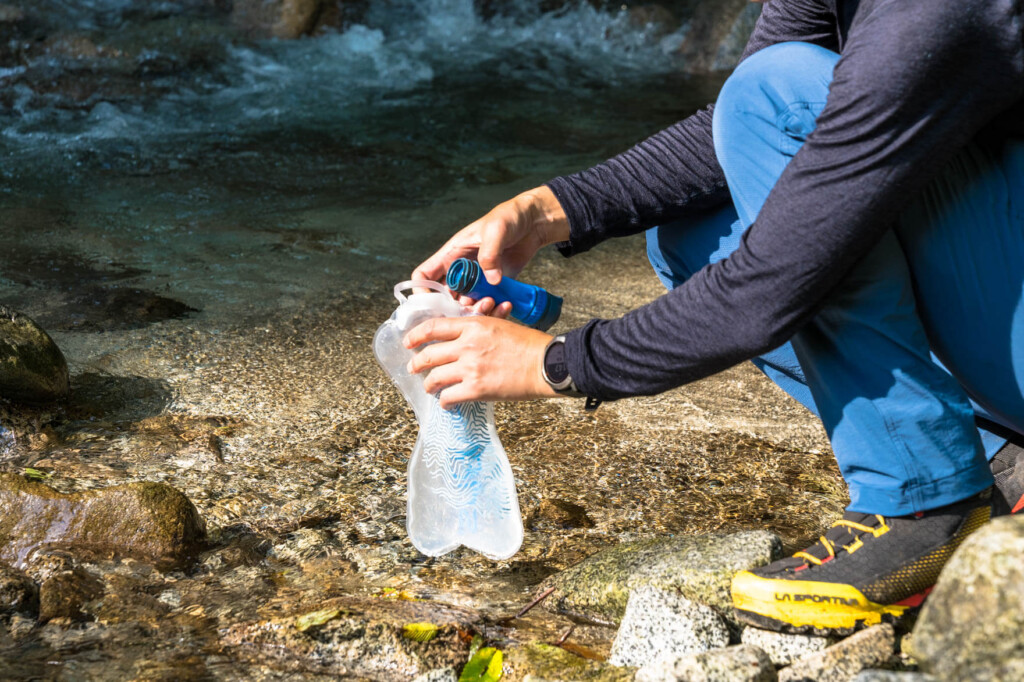
[1] First, find a suitable water source and fill the unfiltered reservoir with water from a safe location (see photo below). Up to this point, it’s no different from drawing water from a stream

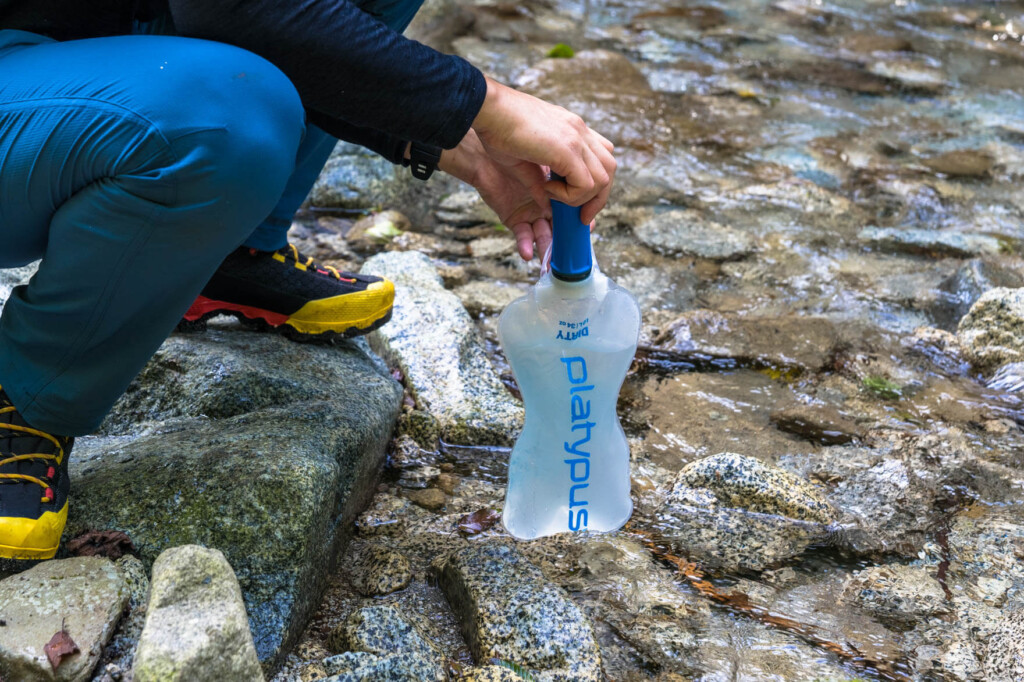
[2] Attach the unfiltered water side of the cartridge to the reservoir (see photo below)

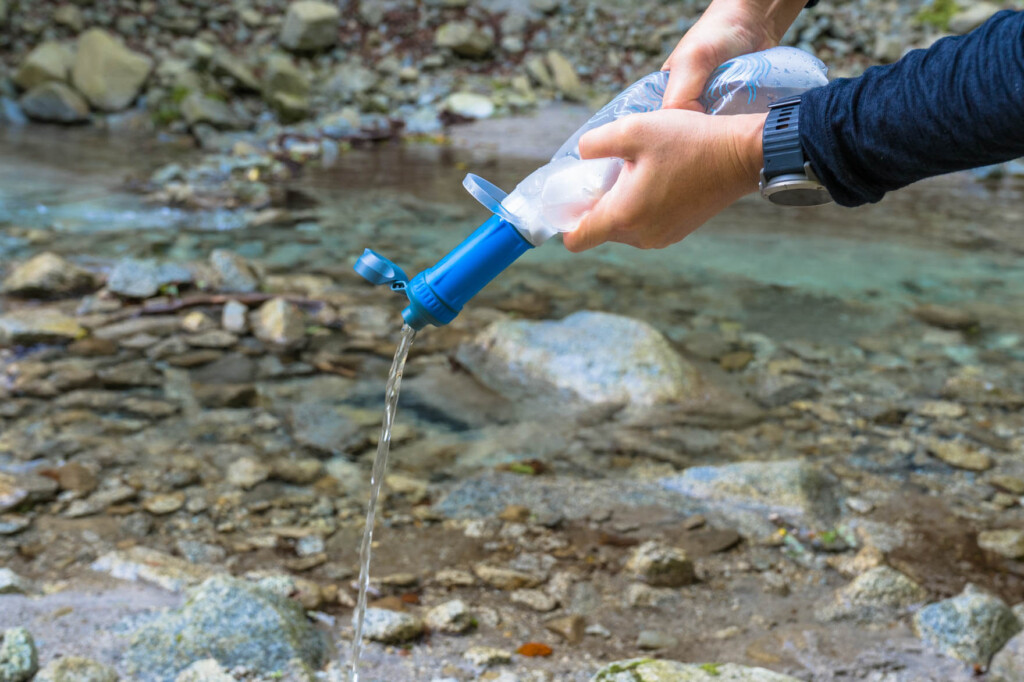
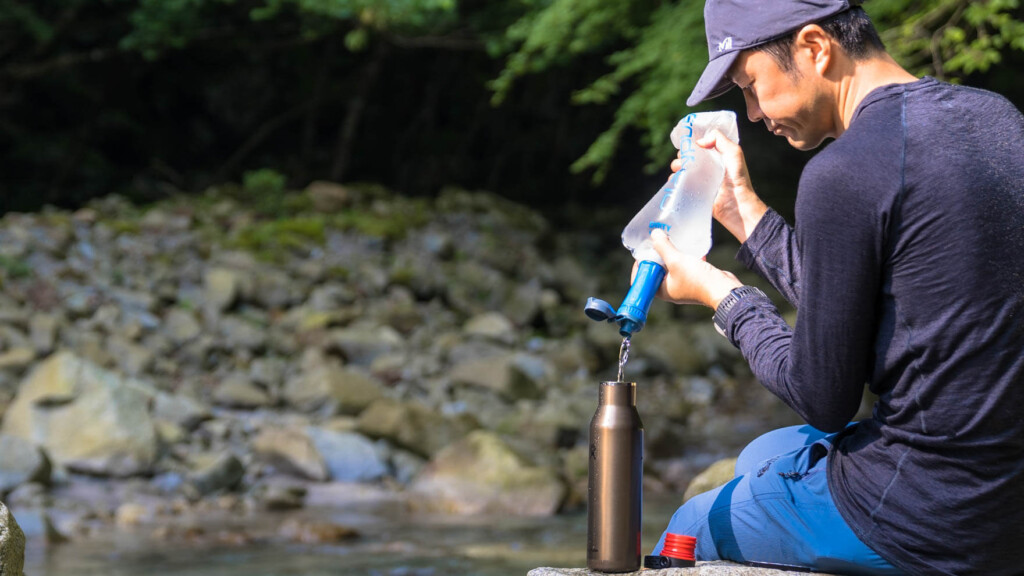
[3] This is the basic setup. All you have to do is open the cap on the post-filtration side and squeeze the unfiltered water container to push out the filtered water (see photo below)

Hundreds of tiny hollow fiber filters allow for faster filtration than ever before. The flow rate is up to 3 liters per minute, which is not the fastest among competitors, but it ranks quite high (though a bit of force is required to get a large amount out). Squeeze the reservoir by rolling it up little by little to effectively filter the water
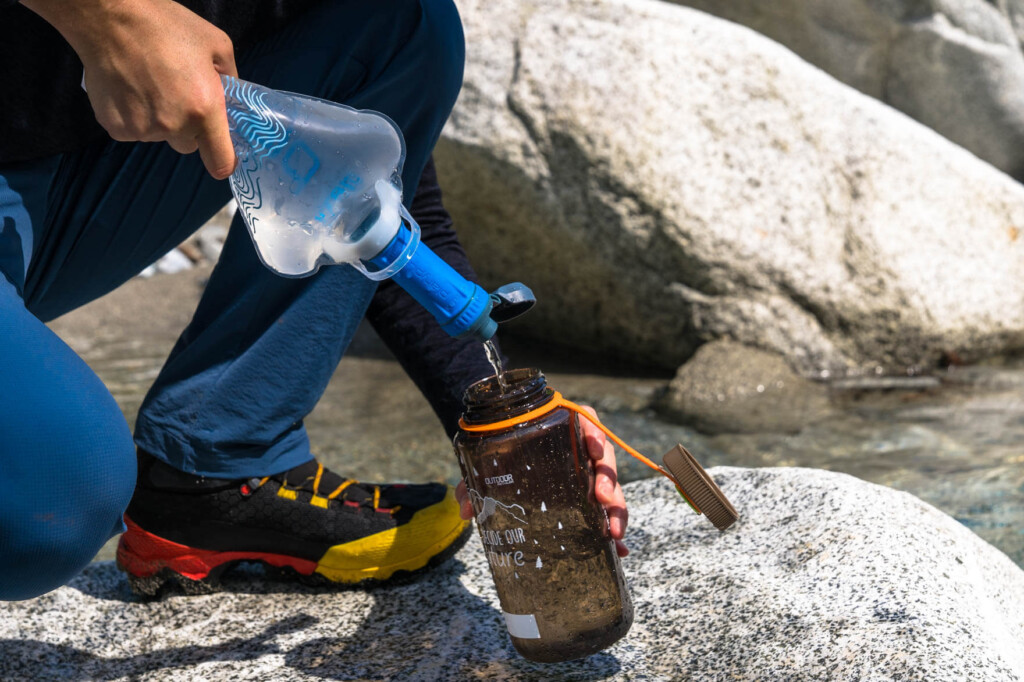
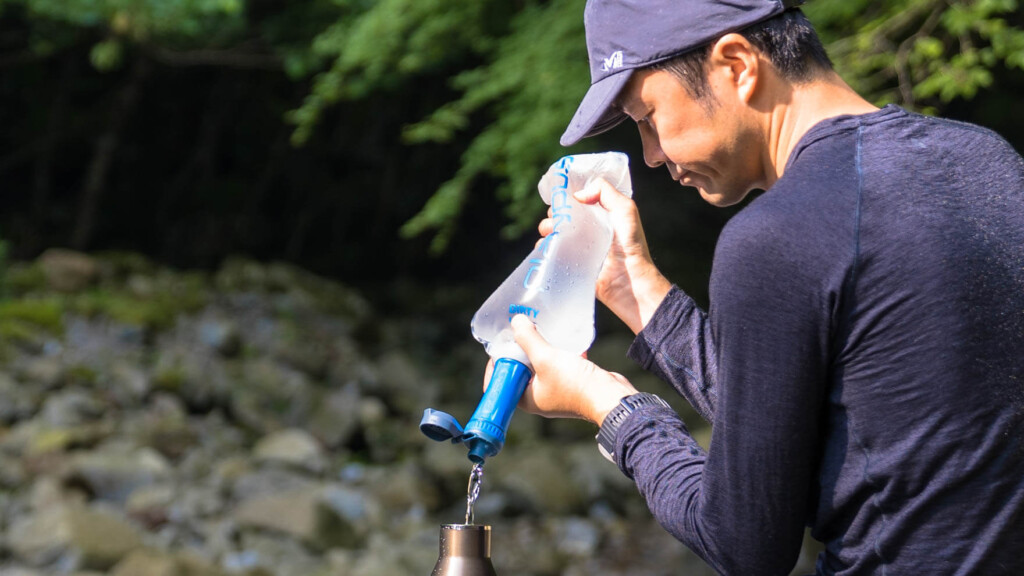
The filtered water that comes out of the drinking spout can be put into a container such as a fresh water bottle or hydration pack (see photo below)

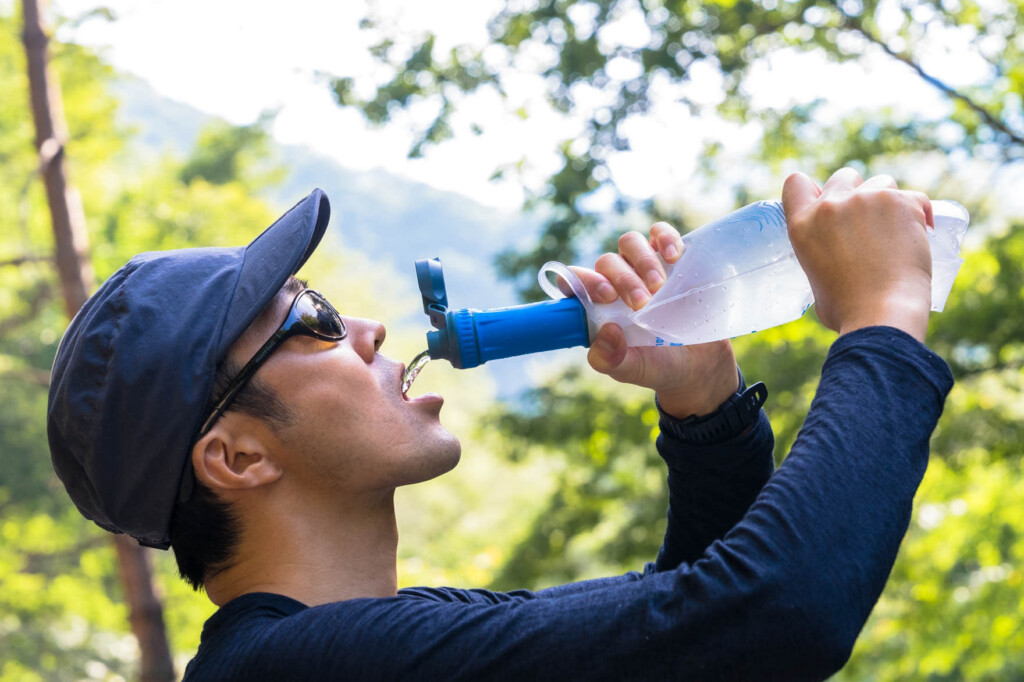
Alternatively, you can simply put it directly into your mouth (see photo below)

You can use different bottles for different purposes
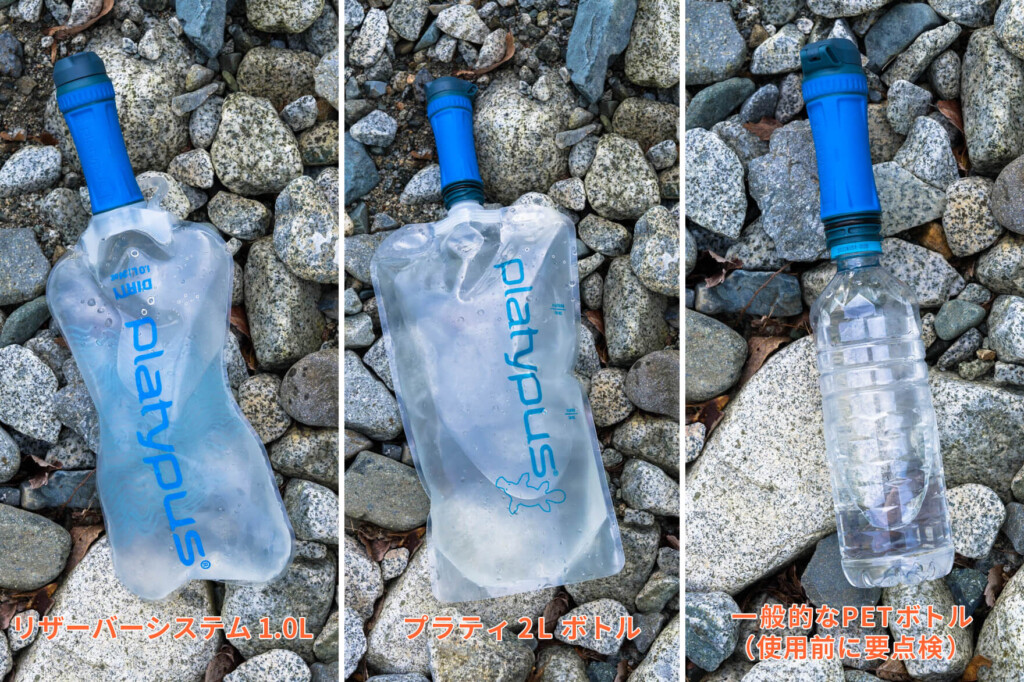
Personally, what I like most about this filter is that it allows you to choose the container you use to draw water from the water source with relative freedom. In addition to the original reservoir that comes pre-installed, you can also use almost all Platypus bottles, and even standard 28mm diameter plastic bottles if the shape is suitable (see photo below)
If only one person will be using it, a dedicated 1L reservoir would be fine, but for camping trips where you need a lot of water for cooking, you can use a 2L reservoir, and if you accidentally forget, you can use a plastic bottle instead.The flexibility of being able to use a variety of containers to suit the situation is a big plus
However, as I will explain later, when I tried it myself, I found that because the plastic bottle type requires you to squeeze the container and push it out, it is difficult to return to its original shape once you have squeezed it, so in the end it became difficult to use and I settled on the soft bottle
Effectively filters bacteria and protozoa in addition to viruses and chemicals
Naturally, you will also be concerned about the filter's performance as a water purifier
According to the manufacturer, this microfilter is tested before shipping based on international safety and health guidelines (EPA & NSF guidelines) and removes over 99.9% of bacteria and protozoa such as Echinococcus, Giardia, Cryptosporidium, E. coli, Salmonella, Vibrio cholerae, and Shigella
It's important to note that, with the exception of a few models, filter-type water purifiers, including this one, are ineffective against chemicals and viruses (hepatitis A, rotavirus, norovirus, etc.) that leak from factories, as well as radioactive materials. While there's probably not much to be concerned about in Japanese streams, in countries overseas where the sanitary conditions are completely different, or in places where the risk is clearly recognized, it's necessary to purify the water not only by running it through a purifier but also by boiling it or using sodium hypochlorite or other methods
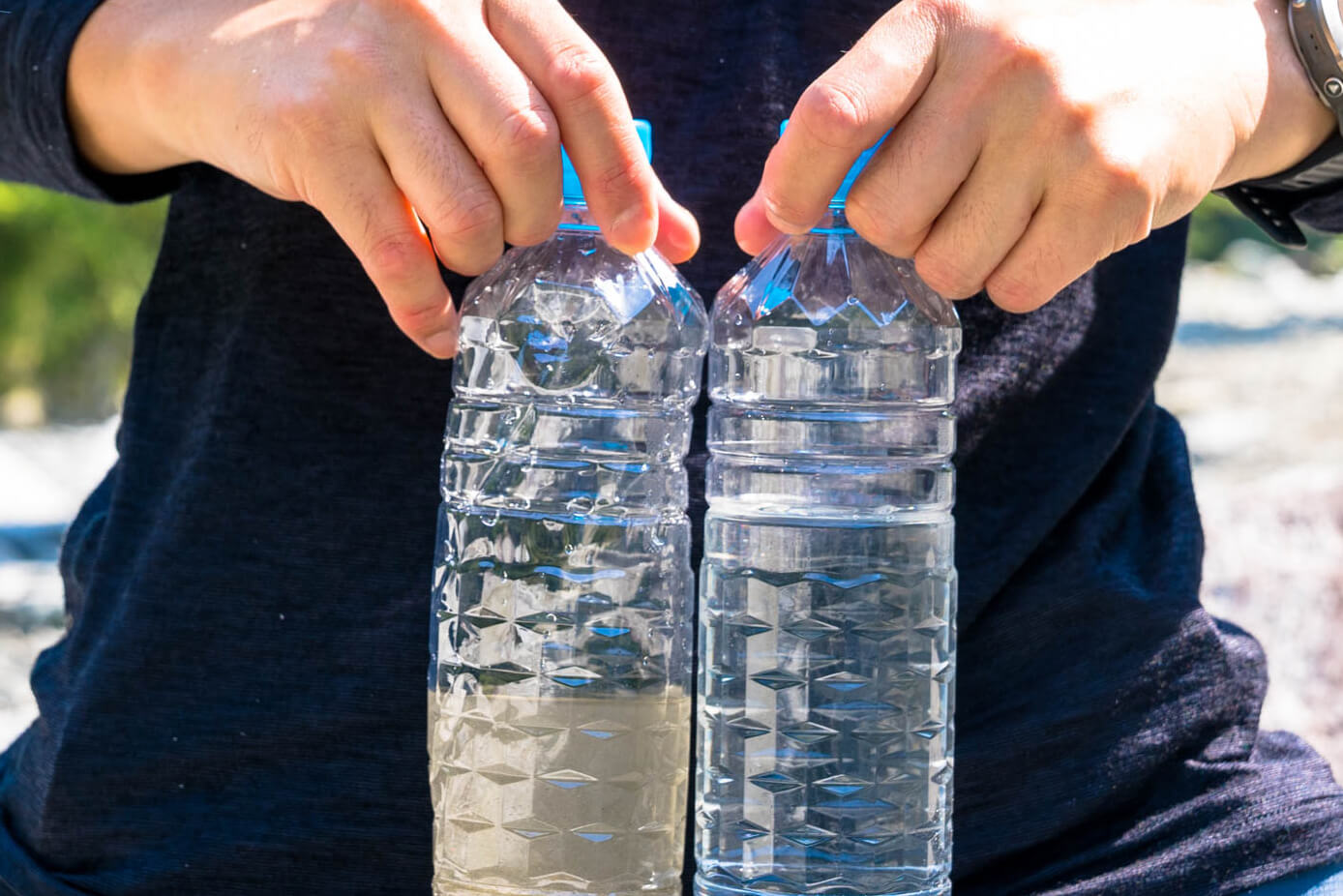
Since we can't actually see the protozoa or bacteria, we can't quantitatively verify its effectiveness, but as a test, we stirred up some fine mud, drew some water, and filtered it. Naturally, the water was completely free of any fine debris, and it was apparent that all the dirt had been removed (see photo below)

On the left is stream water before filtration, with fine mud deliberately mixed in. On the right is filtered water, and you can see that the silt and other particles have been thoroughly filtered out
Easy to clean after use
By the way, cleaning the filter after descending the mountain was also easy: just fill the reservoir about a quarter full with clean tap water, attach it to the cartridge, and shake it vigorously vertically and horizontally for 30 seconds
If the filter is very dirty, you can also clean it by backflushing. First, fill the reservoir bottle with clean water, then insert the filter's drinking spout into the bottle, fit it snugly, and turn it upside down. In this state, push the water out of the bottle so that it flows back into the filter. This is the most effective way to clean the inside of the filter
By the way, the filter can be reused up to a total of 1,000 liters, so even if you use it quite frequently, you can rest assured that it will last for several years
However, one thing that bothers me is that if there is a lot of dirt or fine particles in the water before filtering, the filter is prone to clogging, and cleaning it to remove these particles takes a little more effort than with other models. The area where the filter is stored is highly sealed, and once gravel gets in, it is difficult to remove even with cleaning, so it is a little more delicate than I expected
The deep world of water purifiers. Choose the best water purifier for various outdoor activities
the Quickdraw Micro Filter introduced above , there are many other types and styles of outdoor water purifiers, each with their own advantages and disadvantages depending on the amount of water they can handle, their filtration method, and their weight.
Below, we have summarized the general types of water filters and their advantages and disadvantages. However, since there are now models available that combine multiple features within a single type, it is difficult to generalize, so this is for reference only
Comparison of functions and features by type of water filter
| comprehensive evaluation | Appearance image | The width of the water collection area | Filtration speed | Filtration capacity | Easily care | Weight and compact | Price range |
|---|---|---|---|---|---|---|---|
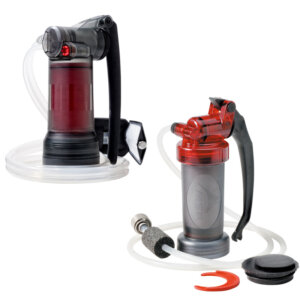
| Pump type | ![]() | ◎ | ◯ | ◯ | |||
| gravity type | ![]() | ◎ | ◎ | ||||
| Portable | ![]() | ◯ | ◯ | ◯ | ◎ | ◎ | ◎ |
Pump-type water purifier: Reliable and recommended for a wide range of outdoor activities
A pump-type water purifier is a type of water purifier that uses a pump to draw water from a water source and then filters it by passing it through a filter. The most obvious advantage of a pump-type water purifier is that, unlike types that use a bottle to draw water directly, it uses a pump to draw water, making it easy to extract water from shallow sources that are difficult to draw from
On the other hand, the disadvantages of pump-type water heaters are that they are heavy and large, and it takes time and effort to operate the pump manually. They also require more maintenance after use than other types, and many models are expensive
- Advantages: Can collect water from small, shallow sources. High durability.
- Cons: They tend to be heavy and bulky, require more effort to filter water, require more maintenance, and are more expensive.
- Suitable activities: a wide range of outdoor activities
Gravity water filter: Recommended for camping where you want to make a large amount of water in a quiet place
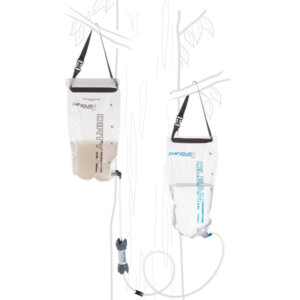
A gravity water purifier is a type of water purifier that first draws unfiltered water from a water source, hangs it in a high place such as a tree branch, uses gravity to pass the water through a filter, and collects the filtered water in a container below
the Platypus GravityWorks , are ideal for group camping trips or camp kitchens because they can filter large amounts of water relatively quickly. Another major attraction is that, unlike other methods, the bag can be hung and gravity can do the work, so less pushing force is required.
The main drawback of gravity filters is that the equipment required is heavier and bulkier than other methods, and since they often consist of two reservoirs, a hose, and a filter, they are not very portable
It is also important to note that it is difficult to draw water from streams or ponds of a certain size and depth, and you need a place to hang the reservoir (if you don't have one, you can just hold the bag while filtering), so you need to be prepared and have a good environment to use it smoothly.The price is also a little high compared to other devices
- Pros: Fast, easy to use, can filter large volumes of water, gravity-fed for easy operation.
- Cons: Heavy and bulky, can be difficult to fill, requires a place to hang the reservoir, and is expensive.
- Suitable for: Group use, base camps and car camps
Portable water filter: Ideal for hiking and backpacking, where you want to make water quickly and easily
There are many other types of water purifiers besides the two mentioned above, but while they may differ in shape, they are generally lightweight and easy to carry. The Quickdraw Microfilter falls into this category
For example, there are types that attach directly to dedicated water bottles, soft flasks, and hydration systems, straw-type types that allow you to drink directly from stream or pond water, and types that can be attached to the openings of various containers, such as the Quickdraw Micro Filter
These are extremely useful for day trips, trail runs, mountain bike rides, or even longer backpacking outings where you know you'll be constantly encountering water sources
They are generally lightweight and compact, eliminating the need for extra luggage. Another feature of this type is that there are many models with various shapes. Types that are compatible with a wide range of containers are particularly versatile and easy to use
The downside of portable filters is that, compared to pump-type or gravity-fed filters, they can generally only filter small amounts of water at a time (except for models that can be used with any container). They also require a bit more force to filter, and to store a larger volume, you'll need to filter multiple times. For this reason, portable filters are more useful for hikers who want to carry less and for short day trips, rather than for group use or camp cooking
- Advantages: Lightweight and compact, available in a wide range of options depending on capacity and water source availability, easy to maintain, and often reasonably priced.
- Cons: It is slow to filter and can only filter small amounts at a time, so it is not suitable for groups or camp cooking where large amounts need to be filtered.
- Suitable activities: Convenient for 1-2 people, ideal for day trips or longer outings with easy access to water sources.

Summary: You can drink water safely anywhere. The Platypus Quickdraw Micro Filter is currently the best solution for hikers
After trying out the Platypus Quickdraw Micro Filter, I was amazed at how easy it was to store and use. Portable water filters are now easily portable, and filtering no longer takes the time and effort it used to. I'm deeply impressed by how little effort it takes to get peace of mind
Best of all, the reservoir and cartridge take up almost no space in your packing, and it can be attached to a variety of containers, not just dedicated bottles. This one unit can be used for fast and light hiking, mountain climbing, and trail running, as well as for family camping trips and group trips where you need a lot of water, so it's perfect for people like me who want to use it efficiently across a wide range of activities
As this is a delicate item related to hygiene, it is reassuring to know that it is being handled by a reliable distributor in Japan. So, this summer, I will be making my belated water purifier debut with the Platypus Quickdraw Micro Filter


Is it a bottle? Is it hydration? ~The question of how to stay hydrated in the mountains~
Mountain gas stoves (burners): Best buys for each type that you can understand when you actually use them, and 5 tips to choose them wisely
Lighter, safer, smarter. A list of cooking tools to take to climb a tent and how to choose one (basic)