



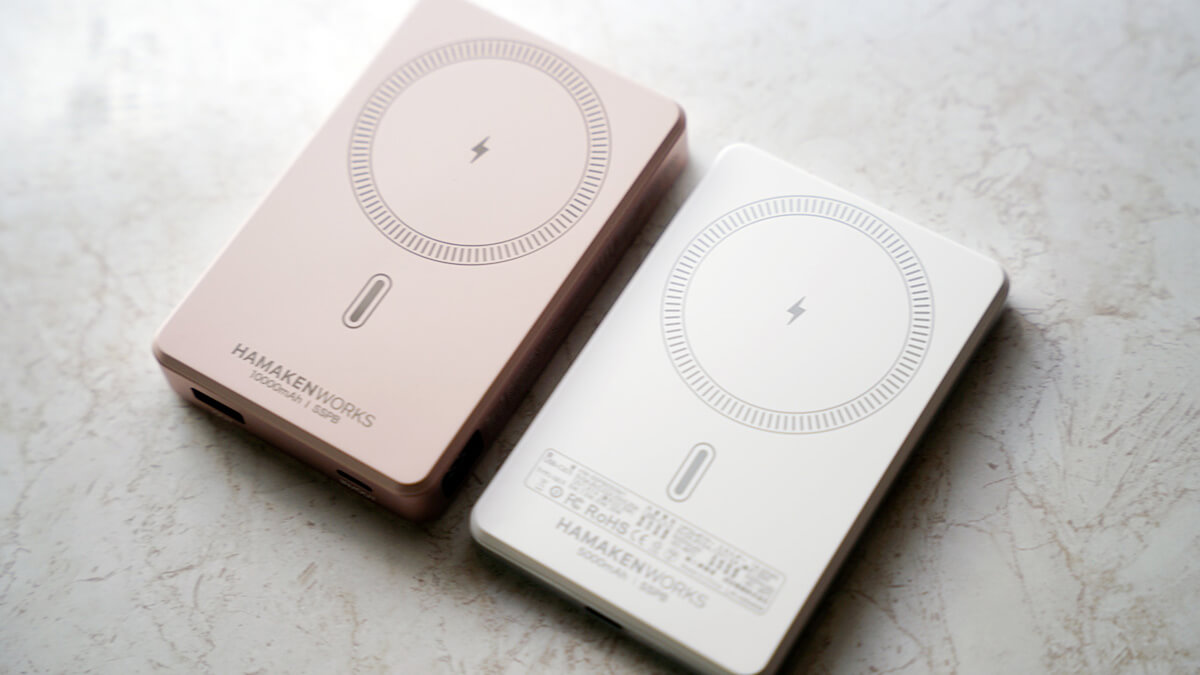
The freedom of being able to "leave it alone" without worrying about temperatures ranging from -40°C to 80°C. A thorough review of the next-generation mobile battery, the "HAMAKEN WORKS New SSPB Semi-Solid-State Battery," a long-awaited choice for snowy mountain and car camping users, in the frigid cold of Hokkaido

Written by Saito Titoce
Winter outdoors. You use electricity, but aren't you concerned about the battery's temperature resistance? For the author, who lives in Hokkaido, this is an issue that cannot be ignored not only outdoors but in everyday life as well. I decided to try out HAMAKEN WORKS' new product, the "Magnetic Wireless Charging Compatible SSPB," which can withstand storage temperatures from -40°C to +80°C
table of contents
- What is the new product "SSPB with magnetic wireless charging support"?
- The battery issue that has always worried me
- Even with the new model that has improved convenience, there are no subjective symptoms of the safety of the "SSPB"
- Compact and lightweight thanks to high energy density
- If you think about it calmly, the running costs are reasonable
- The main mobile power source is the new "SSPB"
- Details and purchase of HAMAKEN WORKS' "Magnetic Wireless Charging Compatible SSPB"
What is the new product "SSPB with magnetic wireless charging support"?
The second model of the world's first ultra-high performance quasi-solid-state personal power supply, "SSPB (Solid State Power Bank)"
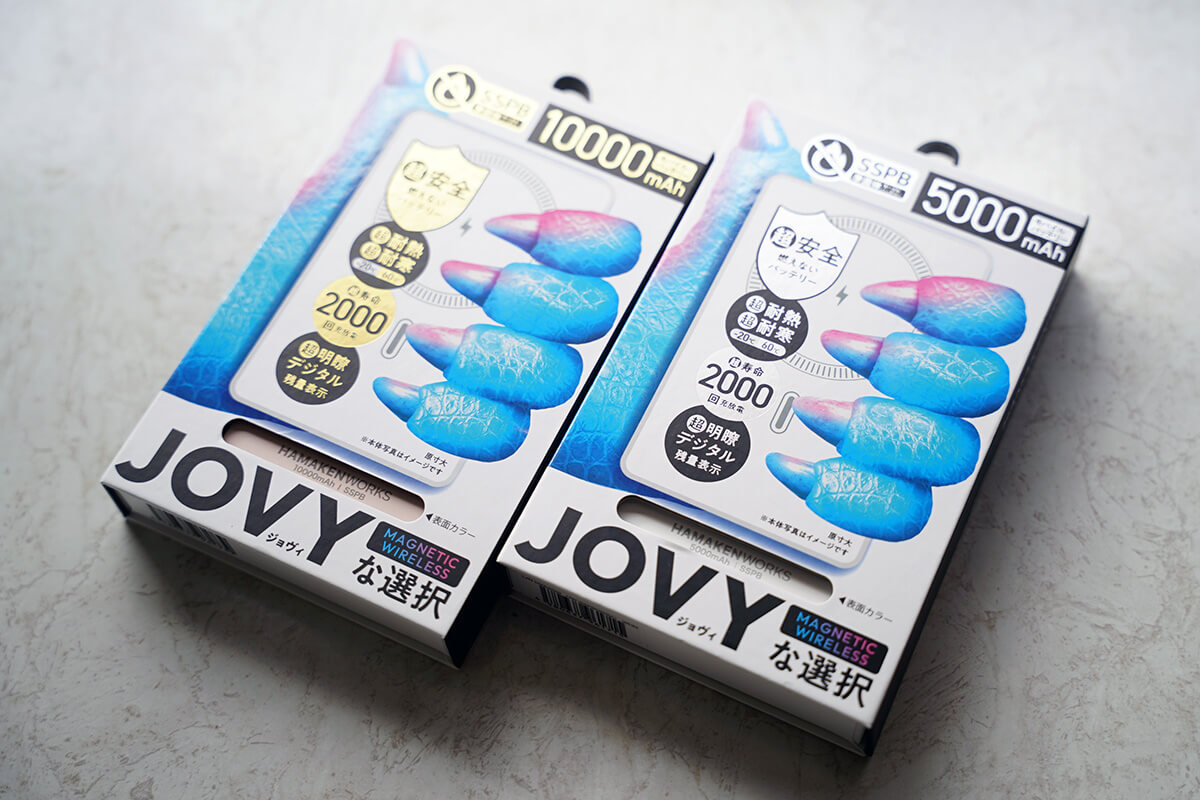
The packaging for the "Magnetic Wireless Charging Compatible SSPB" is quite unique
With each passing year, news of fires and explosions involving mobile batteries and other devices is on the rise. It's worrying, isn't it? Even in outdoor environments, smartphones and smartwatches are essential. However, many of these environments are outside the temperature range of 0°C to 40°C, which is the guaranteed operating temperature for typical mobile batteries
To solve these problems, Hamada Electric Co., Ltd. and Luxxio LLC launched the world's first ultra-high performance quasi-solid-state personal power source, the "SSPB (Solid State Power Bank)," at the end of 2024. The second version, the "Magnetic Wireless Charging Compatible SSPB," was released at the end of December 2025. The main features of the new model are compatibility with magnetic wireless charging and a digital indicator
The SSPB, which uses a quasi-solid-state battery, differs from conventional mobile batteries that use lithium-ion batteries in four major ways:
"Wide temperature range": Can withstand storage temperatures from -40°C in midwinter to 80°C, which is higher than the temperature inside a closed car in midsummer.
"High safety": Virtually no fire even if it is pierced by a nail, dropped, or the cell is damaged.
"Compact and lightweight": Energy density of 280Wh/kg, more than twice that of an iron phosphate mobile battery.
"Long life": Cycle life of 2,000 times, which is about four times that of a typical mobile battery.
In Hokkaido, where it is not uncommon for winter temperatures to drop below -20°C, I enjoy outdoor activities all year round, and have had my eye on the SSPB since the first model, finding it to be an extremely reliable companion.I have also quickly purchased and used the second model, the SSPB with magnetic and wireless charging compatible (hereinafter referred to as the "new SSPB"), which was released at the end of December, and would like to share my findings with you
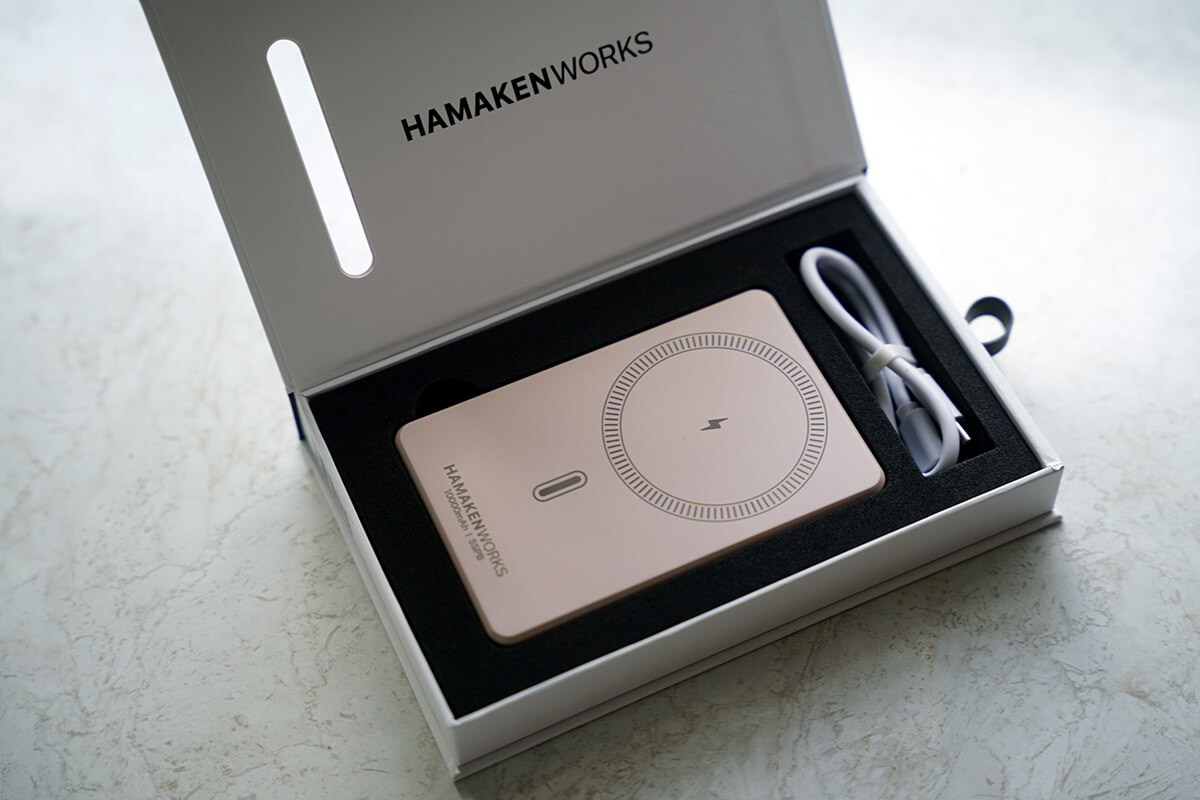
Of the black, white, and pink color options, I like pink
Recommended points
- Storage temperature range: -40℃ to 80℃, operating temperature range: -20℃ to 60℃
- Supports magnetic wireless charging for improved convenience
- It's light, thin and small, so it can be used as your main battery
- Low running costs with a cycle life of 2,000 times
- You can accurately check the remaining battery level in 1% increments
- Highly safe, you can forget about the risk of fire
Points of interest
- High implementation costs (initial costs)
- (If I were to be greedy) It would be even better if it was waterproof and dustproof
- I'm wondering whether to get the 5,000mAh model or the 10,000mAh model
Main specifications and evaluation of HAMAKEN WORKS' "SSPB with magnetic wireless charging"
| item | 5,000mAh Product Specifications | 10,000mAh Product Specifications |
|---|---|---|
| Battery Type | semi-solid battery | |
| standard capacity | 5,000mAh | 10,000mAh |
| Rated capacity | 3,200mAh (5V2A) | 6,500mAh (5V2A) |
| port | USB-C x 1 | USB-A x 1, USB-C x 1 |
| input | USB-C: 5V-3A, 9V-2A, 12V-1.5A, 18W (MAX) | |
| output | USB-C 5V-3A, 9V-2.22A, 12V-1.67A, 10V-2.25A (SCP), 22.5W (MAX) / Wireless charging 5W, 7.5W, 10W, 15W | 5V-3A, 9V-2.22A, 12V-1.67A, 10V-2.25A (SCP), 22.5W (MAX) / USB-A 5V-3A, 9V-2A, 12V-1.5A, 10V-2.25A (SCP), 22.5W (MAX) / Wireless charging 5W, 7.5W, 10W, 15W |
| Case material | Aluminum alloy + PC + ABS | |
| Standard Voltage | 3.85V | |
| Maximum voltage | 4.4V | |
| operating temperature | −20〜60℃ | |
| storage temperature | −40〜80℃ | |
| Cycle Life | 2,000 times (80%) | |
| Energy | 19.25Wh | 38.5Wh |
| Body size | 105mm x 68mm x 9.5mm | 105mm x 68mm x 17mm |
| Weight | Approximately 120g | Approximately 200g |
| accessories | Instruction manual, USB-C to C cable 30cm x 1 | |
| Protection Features | Input overvoltage protection, input undervoltage protection, output overcurrent protection, output overvoltage protection, short circuit protection, battery overcharge protection, battery overdischarge protection, battery overcurrent protection, IC overheat protection, charge/discharge battery temperature NTC protection | |
| Outdoor Gearzine Review | ||
| Wide temperature range | ★★★★★ | |
| Safety and security | ★★★★☆ | |
| Ease of use | ★★★★☆ | |
| Portability | ★★★★☆ | |
| Cost performance | ★★★★☆ | |
The battery issue that has always worried me
I moved battery-powered items out of the car during summer and winter
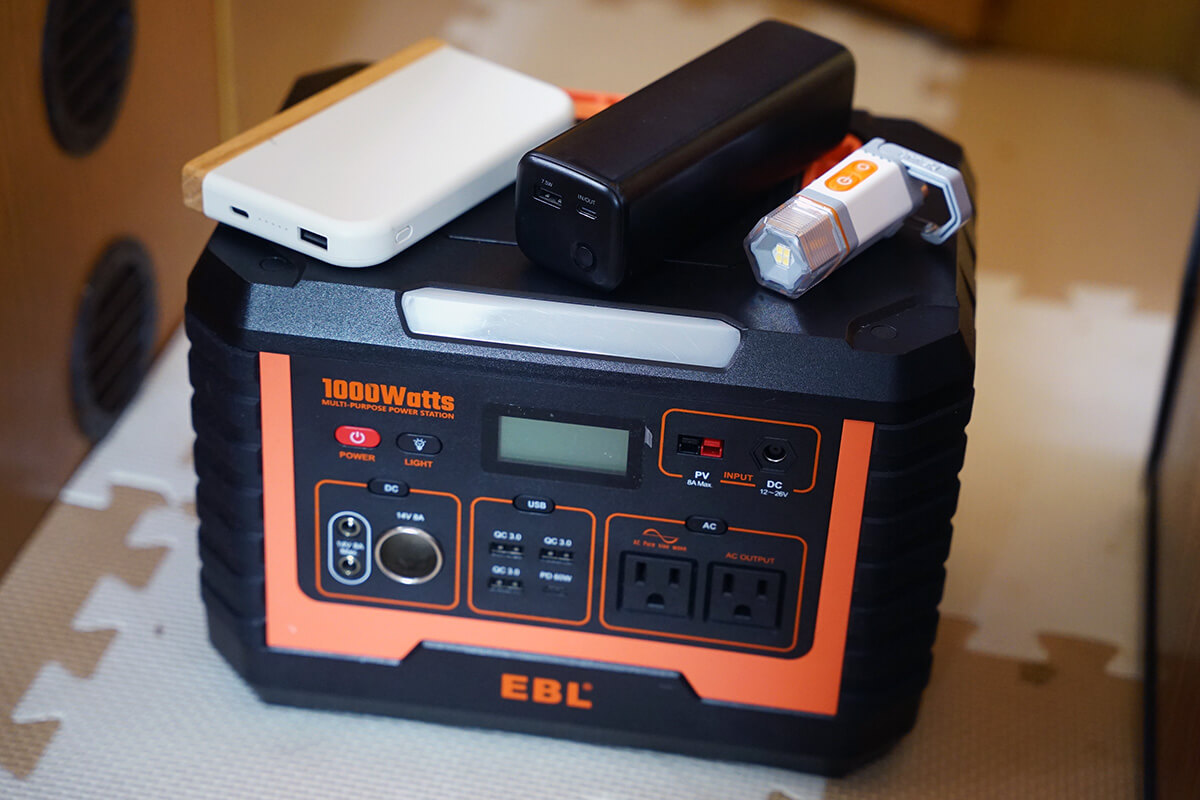
I've given up on it, but it's a hassle to load and unload batteries and items with built-in batteries every time
Nowadays, mobile batteries are considered the prime example of this, but the possibility of fire or explosion is not zero for almost all lithium-ion batteries. Naturally, there is also a risk with batteries in smartphones, mobile phones, laptops, and earphones
The operating temperature of most of these batteries is between 0°C and 40°C. In Hokkaido during the winter, it's common for it to be below 0°C every day, and in the summer, inside a closed car, it can easily exceed 40°C. For this reason, I removed all of the battery-equipped items in my camper van every time it got cold in the winter and hot in the summer
Obviously, it's a hassle, and depending on the situation, you might forget to take it out, or conversely, forget to put it back in when you want to use it. Still, considering the risk of a battery being used outside of its operating or storage temperature range catching fire and burning down the camper while the family is sleeping, or a fire spreading to the house if the car is parked next to it, we couldn't leave it in the car
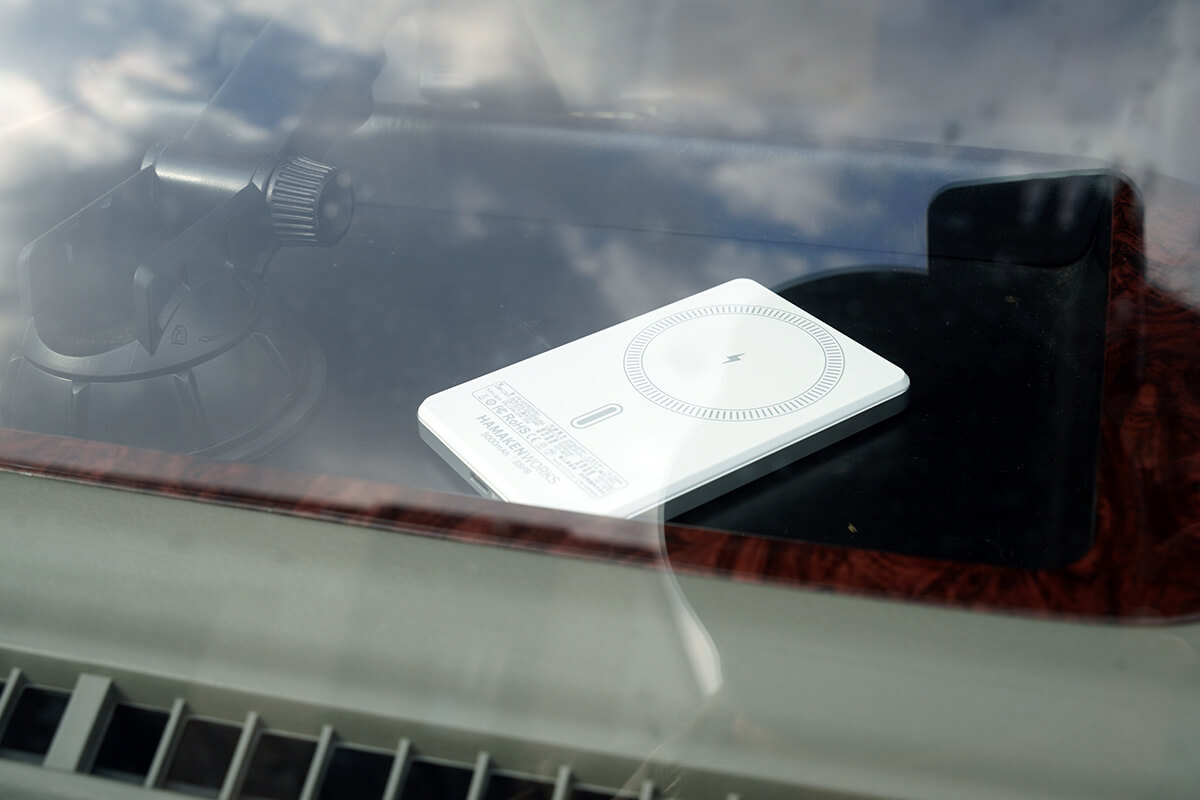
I try to be careful, but I often put it down for just a little while and then forget about it
However, by using a quasi-solid-state battery, the HAMAKEN WORKS "SSPB" has an operating temperature range of -20 to 60°C and a storage temperature range of -40 to 80°C, so there is no need to load or unload it every time, whether you are using it in a camper van or a regular car for sleeping in. This is a major advantage
When you're camping with your family and have a lot of items to carry, it can be more difficult than you might expect to manage the loading and unloading of all your items. And forgetting to unload something can be a risk that could lead to a fire in the worst case scenario
In fact, the other day, my family and I went to Cape Nosappu in Nemuro in our camper van to see one of the earliest first sunrises in Japan. Afterward, perhaps because we had the new SSPB, we felt safe, but we found it left behind in the center instrument panel tray with the heating turned off. The temperature at the time was -10°C. The HAMAKEN WORKS SSPB eliminates this risk
Even with the new model that has improved convenience, there are no subjective symptoms of the safety of the "SSPB"
Magnetic wireless charging and battery percentage display are very convenient
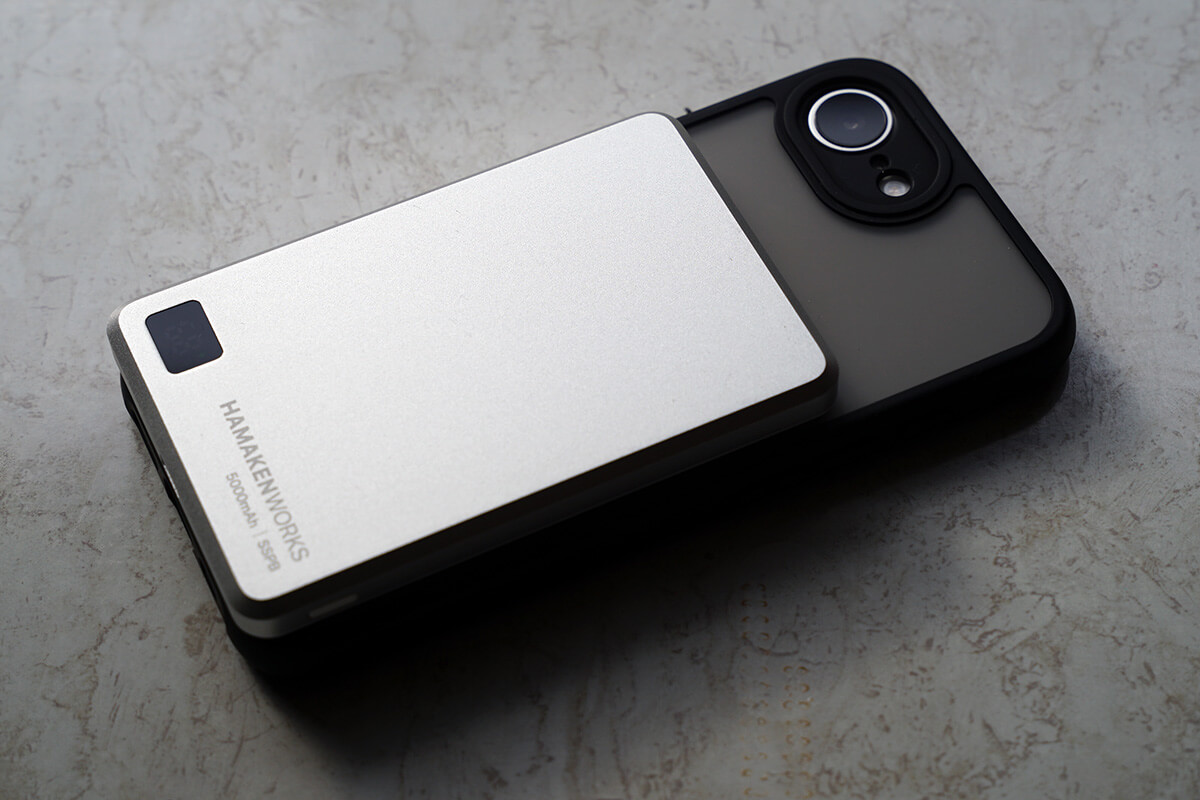
Support for magnetic wireless charging has made it much easier to use
I had the same thought when I introduced the first SSPB, but the safer the mobile battery or SSPB, the less aware you are of its safety. A battery with safety issues would show symptoms such as swelling or deformation, but because it is so safe, no noticeable changes occur
It is also said that there is a low risk of fire even if the battery is pierced by a nail, dropped, or damaged by a strong impact, but we cannot test this. Furthermore, the protection functions such as input overvoltage protection, input low voltage protection, output overcurrent protection, output overvoltage protection, short circuit protection, battery overcharge protection, battery overdischarge protection, battery overcurrent protection, IC overheat protection, and charge/discharge battery temperature NTC protection are not visible, so they are quite unassuming. However, this sense of security is extremely important
Having already purchased the original SSPB, I felt a big difference between it and the new SSPB. The original SSPB gave off an unassuming impression of being a highly safe mobile battery that was barely noticeable, but the new SSPB supports magnetic wireless charging, dramatically improving usability
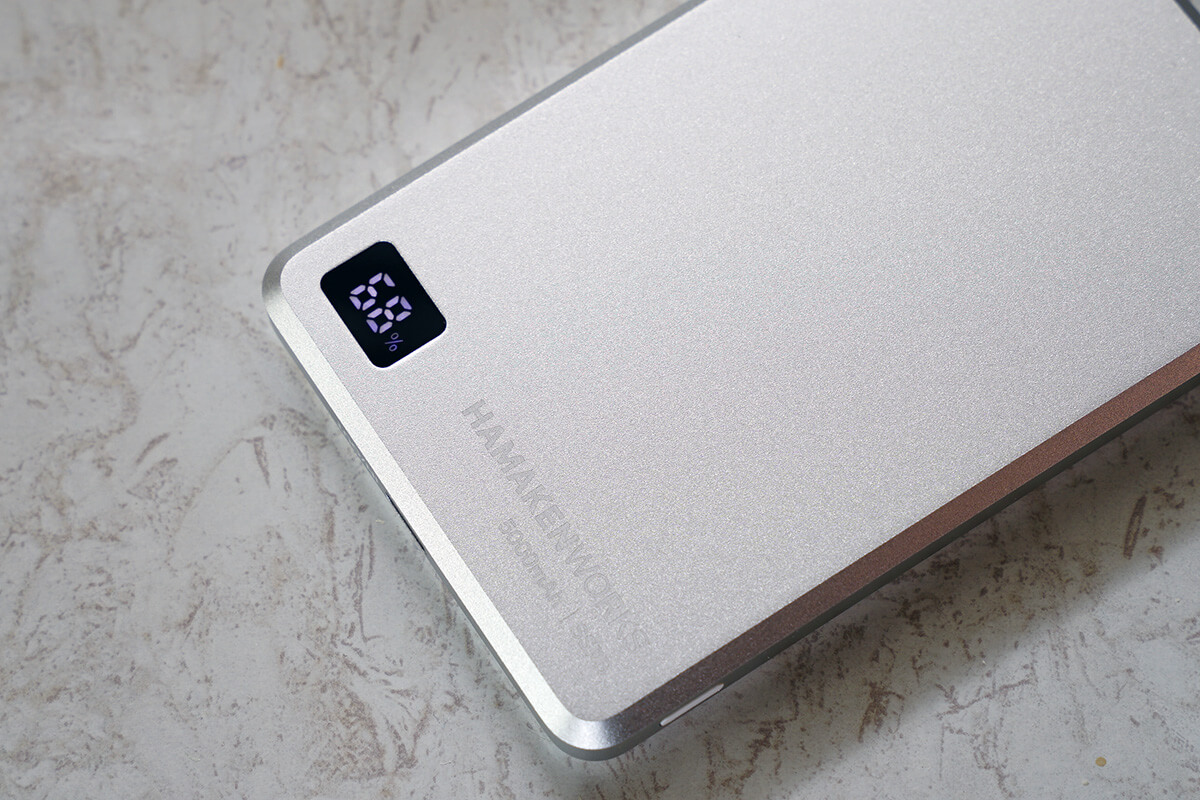
The fact that the remaining battery level is displayed in 1% increments makes it easier to use than you might think
I use an iPhone 16e, and I have the new "SSPB" attached to the back of my smartphone most of the time when I'm active. Thanks to this, I don't have to worry about the remaining battery life of my smartphone. What's more, when needed, I can power each item from the new "SSPB" that I always carry with me, which is very convenient
Furthermore, while the original SSPB had a five-level indicator for remaining battery power, the new SSPB displays it as a percentage in 1% increments. This makes it much easier to determine when to charge in outdoor situations where battery life is a critical factor, improving usability
Compact and lightweight thanks to high energy density
It's smaller than a regular lithium-ion battery, making it easy to use
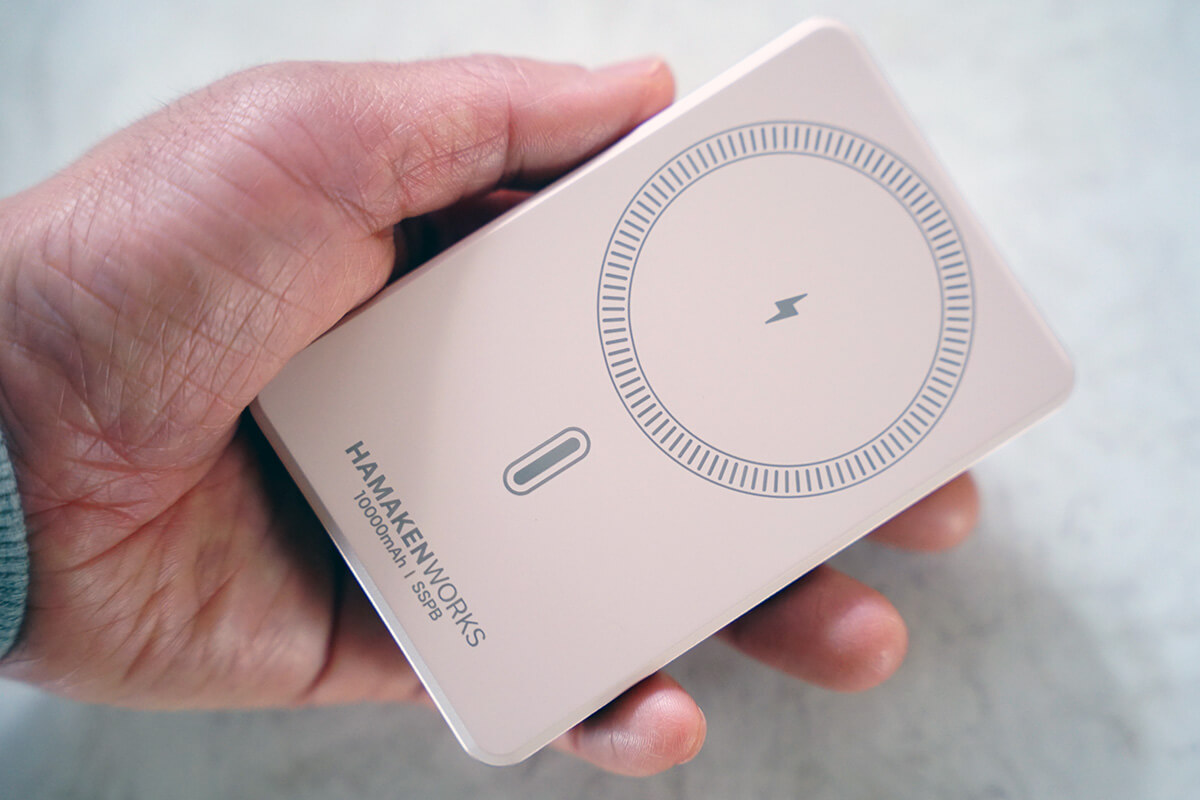
Even the 10,000mAh model is small and easy to carry around, measuring just 105mm x 68mm x 17mm
The new SSPB offers improved usability while maintaining a high level of safety. I didn't realize it at first, but it's actually quite small for a highly safe mobile battery. The 10,000mAh model measures 105mm x 68mm x 17mm and weighs approximately 200g. The 5,000mAh model measures 105mm x 68mm x 9.5mm and weighs approximately 120g
It's not dramatically smaller than a typical lithium-ion mobile battery, but it is surprisingly small. The reason for this is said to be the energy density of the quasi-solid-state battery. While the energy density of a typical lithium-ion battery is about 250Wh/kg, the quasi-solid-state battery used by SSPB is about 280Wh/kg, giving it a data density about 1.1 times higher
This makes it easier to make them smaller and lighter. Furthermore, typical lithium iron phosphate batteries, which are attracting attention for their high safety, have an energy density of about 110Wh/kg, which is less than half that of quasi-solid-state batteries
As a result, the new SSPB is a little smaller. Even compared to the original SSPB, the 10,000mAh model is slightly smaller, measuring 105mm x 68mm x 17mm, while the original was 112mm x 68mm x 17mm. This small size makes a huge difference in usability for me, as I use the new SSPB attached to the back of my smartphone all day
If you think about it calmly, the running costs are reasonable
It depends on how you think about the high initial cost when introducing it
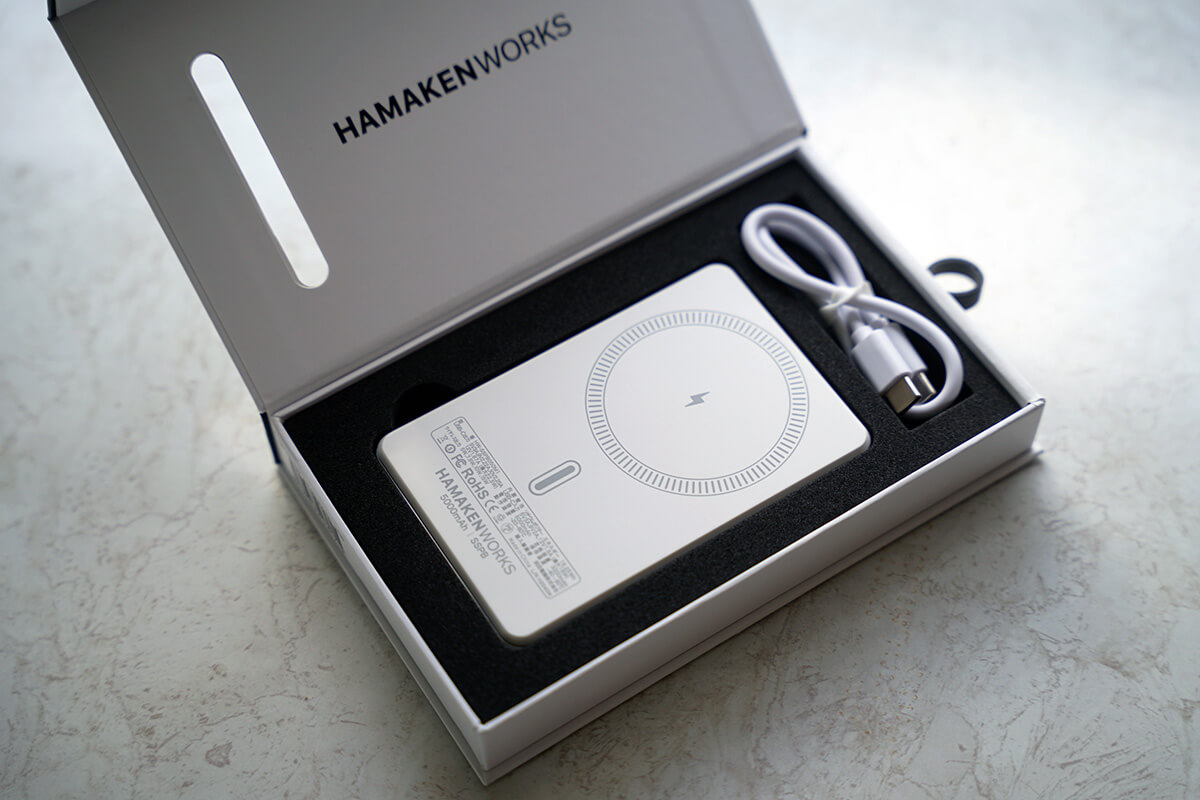
In terms of everyday usability, the 5,000mAh model is quite good at 7,980 yen (tax included)
In a sense, the new SSPB is easy to use, lightweight and compact, and is close to the ideal mobile battery for outdoor use. You don't have to worry about the low temperatures of Hokkaido in the middle of winter, and you don't have to worry about leaving it in your car in the middle of summer. However, it is quite expensive
The 5,000mAh model is priced at 7,980 yen (tax included), and the 10,000mAh model is priced at 9,980 yen (tax included). Considering that you can now buy a mobile battery at a super-cheap 100-yen shop for just 1,000 yen, the SSPB is quite expensive
However, this writer took a moment to think about this calmly. One of the features of the "SSPB" is its long lifespan. A typical lithium-ion battery can only be charged and discharged around 500 times. In contrast, the "SSPB" can be charged and discharged four times, at 2,000 times. The new "SSPB" is also compatible with magnetic wireless charging
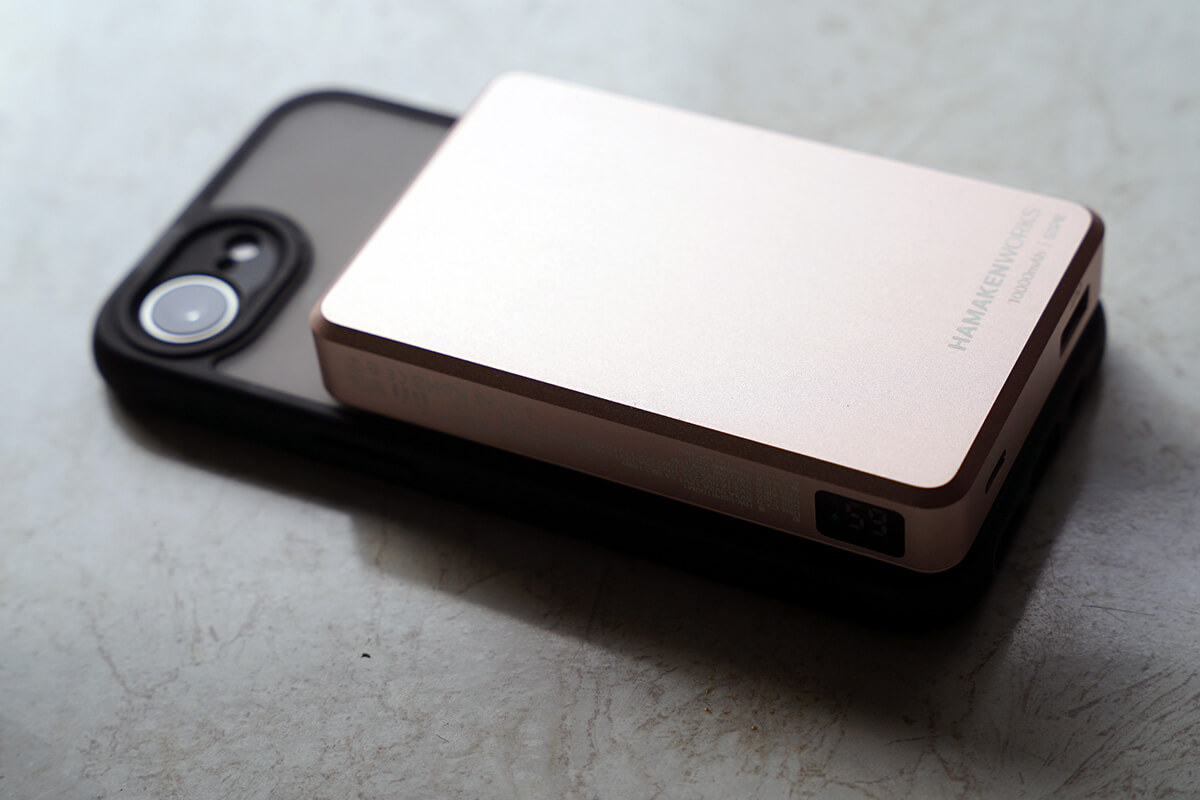
Naturally, it will be thicker, but I often use the 10,000mAh model
Taking this into consideration, we compared the cost performance of the new SSPB, which is priced at 9,980 yen, with the cheapest magnetic wireless charging compatible mobile battery costing around 3,000 yen. The results are as follows:
General mobile battery 3,000 yen / 500 times = approx. 6 yen / time
New "SSPB" 10,000mAh model 9,980 yen / 2,000 times = approx. 5 yen / time
Although the initial cost is high, when you compare the running costs, it is actually quite cost-effective. Even if you charge and discharge it every day, it can be used for about five years, so there is no need to replace it frequently, and the low environmental impact is also a great thing for outdoor enthusiasts
The main mobile power source is the new "SSPB"
The 5,000mAh model or the 10,000mAh model? It all depends on how you use it
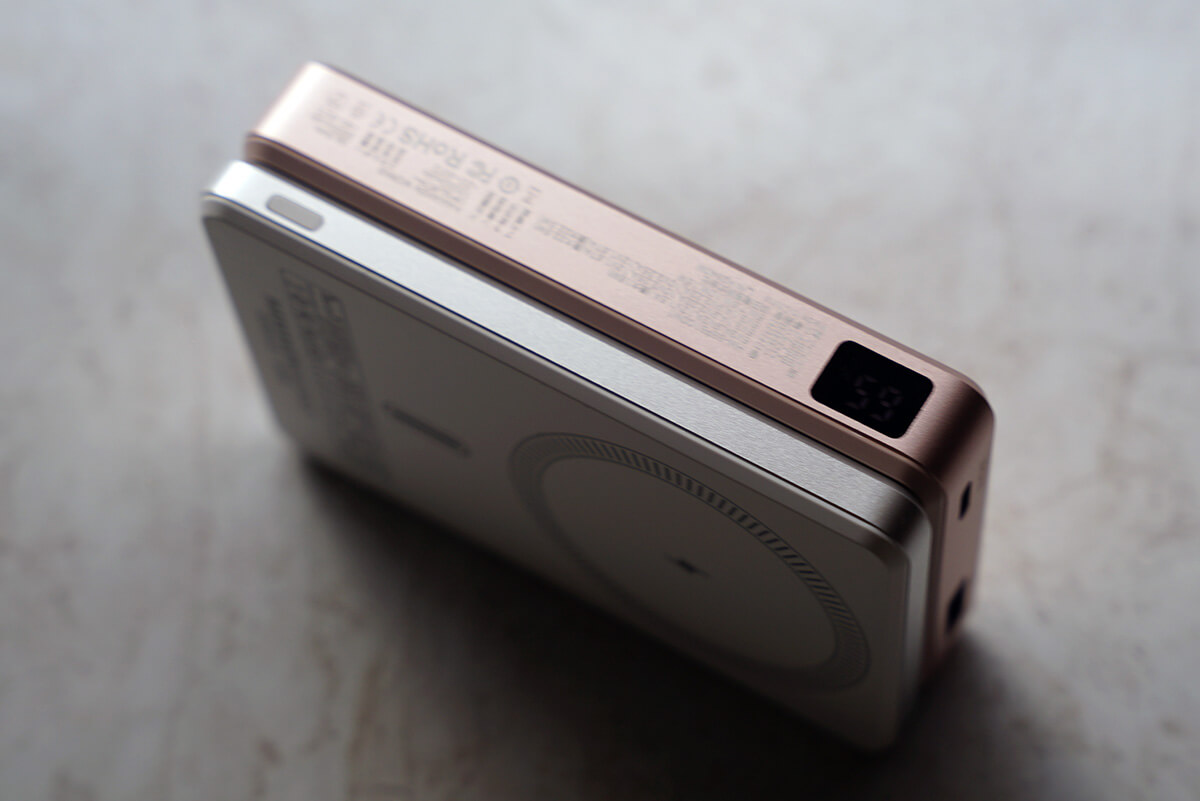
The biggest factor that affects ease of use is actually the thickness
The biggest benefit of the SSPB is its unnoticeable safety, but since there are no noticeable symptoms, it's a rather unassuming benefit. However, for me, who uses it outdoors, it also has noticeable benefits, such as reducing the mental burden of loading and unloading items from my car and the risk of forgetting to load or unload items
Furthermore, the new "SSPB" is compatible with magnetic wireless charging, so I attach it to my compatible smartphone almost every day and use it, making it my main mobile power source. I use it quite frequently, and the low running costs are also a plus
Considering safety, convenience, and ease of use outdoors, I highly recommend this model, but the question is, which model should you buy: 5,000mAh or 10,000mAh? Having tried both, my conclusion is that it all depends on how you use it
If you're mainly using it to charge your smartphone, the thinner 5,000mAh model won't bother you even if you have it attached to the back of your device all the time. However, if you want to charge other devices in addition to charging your smartphone, the larger 10,000mAh model is recommended. The price difference isn't that great, so it's best to decide based on how you'll use it
I charge both and alternately attach them to the back of my smartphone, so it's very convenient to have two, but the initial cost is quite high, so I think it's best to try them out before deciding whether to use them
Details and purchase of HAMAKEN WORKS' "Magnetic Wireless Charging Compatible SSPB"
For more product details, please visit the HAMAKEN WORKS official website

Please consider a paid membership to support the site while enjoying exclusive offers and content!
Chitose Saito
 A former editor of a monthly camera magazine, he became immersed in the outdoor lifestyle of campervans and car camping while pursuing Hokkaido's spectacular scenery and wildlife. He is currently a photographer and writer who travels all over Hokkaido with his wife and two-year-old son, capturing and writing about everything he experiences, from cameras and lenses to outdoor activities, camping, child-rearing, PC gadgets, cooking, and even dieting. For OUTDOOR GEARZINE, he plans to write a variety of articles, primarily for the "QOCL (Quality of camping life) Improvement Committee," which aims to improve the quality of life while camping and in a campervan
Related reading
 Lithium cobalt oxide, lithium iron phosphate, sodium ion, and quasi-solid state. We compared all four types of mobile batteries! Which is best for outdoor use?
 The 8K resolution 360-degree camera "Insta360 X4" makes mountain climbing and other outdoor activities that much more enjoyable [Practical Review]
 [A genuine, self-funded review] A hands-on review of the "GARUD kanamari400 & ao" ultra-lightweight aluminum cooker and alcohol stove for minimalists who want to enjoy both "ultra-light" and "delicious" food
 Going beyond "lightweight"—"Lightweight and spacious, but not just that"—Big Agnes' Copper Spool UL1 tent, with masterful details, sets a new standard for comfort [Practical Review]