



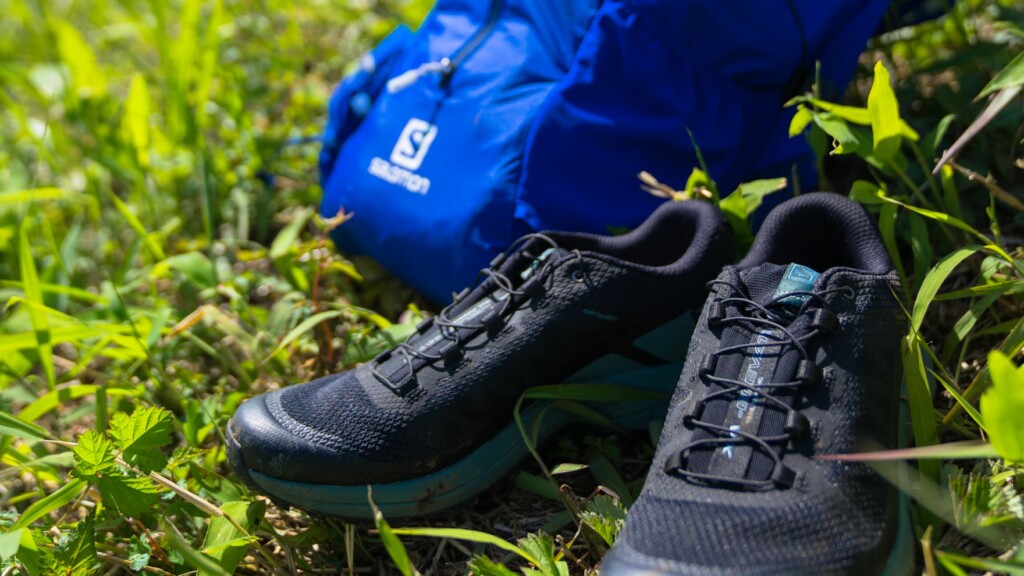
Review: SALOMON XA ELEVATE + OUT PEAK 20 - A reliable companion for speed hikers who want to ride through rough terrain and steep slopes!

Written by Yasushi Hisatomi
What if you want to leave the race and run your own trails? Or what if you want to enjoy hiking further and more freely? The perfect gear for you might not be lightweight and delicate racing gear, nor heavy mountain gear
Salomon boasts a wide lineup of running shoes for various uses and purposes. The latest addition to the XA the XA ELEVATE , joined the lineup last fall/winter. It's designed to be the perfect solution for runners looking to tackle a variety of challenging routes, as well as hikers looking to go faster and further. Meanwhile, the OUT PEAK 20 and durability for mountaineering. The combination of these two will completely change the landscape of mountain travel for those who have traditionally enjoyed trail running and hiking.
This time, I'll be carrying these two pieces of gear with enough luggage to last me an overnight stay, and based on my impressions of actually riding in the field, I'll SALOMON product representative and report back on how they feel to use.
table of contents
General characteristics
XA ELEVATE
The XA series, which bears the abbreviation "XA" for cross-adventure, originates from the concept of completing a variety of outdoor activities and reaching the finish line as quickly as possible. As such, the XA series is not just targeted at trail running, but is characterized by its high level of protection and mobility that can be used in a variety of road surfaces and weather conditions
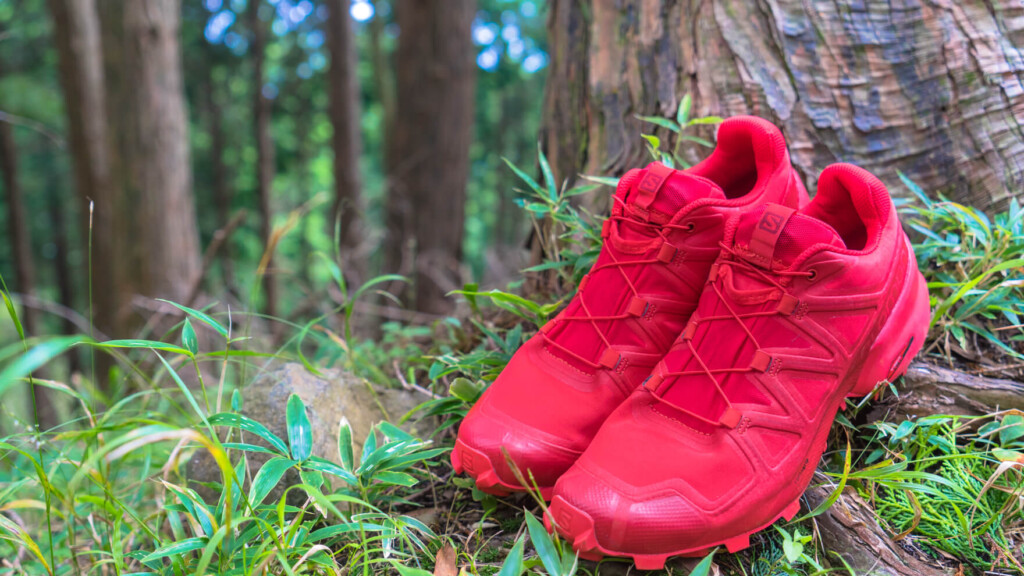
The XA ELEVATE inherits this concept, featuring seamlessly bonded TPU protection on the upper to protect your feet from bumps, a highly stable Advanced chassis™ midsole with a profiled film to prevent jolts from rough ground, and a Premium Wet Traction Contagrip® outsole for superior grip even on wet surfaces. These features ensure reliable protection for long hikes over a variety of terrain, from trails to rocky areas, scree, muddy paths, and even bushwhacking off the trail. Of course, Salomon's proprietary SensiFit™ and QUICKLASE™ technology ensure an excellent fit. A GORE-TEX® model with enhanced waterproofing is also available
OUT PEAK 20
This speed-hiking backpack was created to strike the perfect balance between a lightweight, mobile trail running pack and a hiking pack, which requires comfort, convenience, and durability for long-term wear. Its lightweight yet durable fabric allows for speedy movement in tough environments. The back panel and shoulder straps offer excellent breathability and a snug fit. The main compartment and numerous pockets throughout the pack offer more storage capacity than indicated. Sensi Fit™ (pack) technology ensures optimal fit while wearing the pack, while MotionFit™ Trail technology prevents movement even during intense vibrations, allowing for stable and comfortable movement even with a heavy load
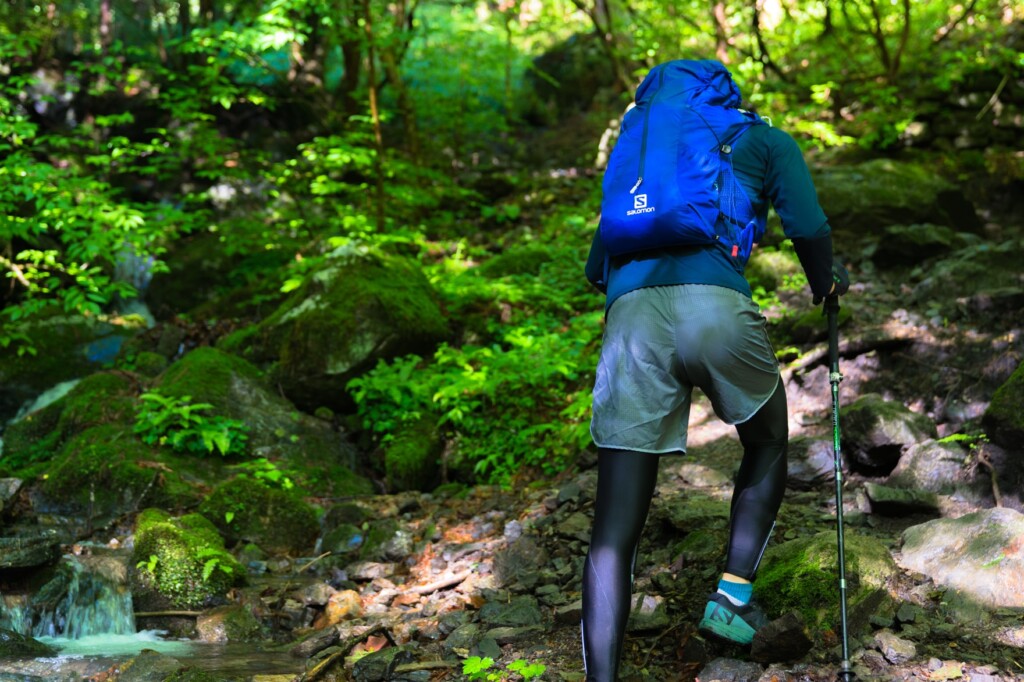
Main specifications and evaluation
XA ELEVATE
| item | Specifications and reviews |
|---|---|
| weight | 298g (measured per foot, size 27cm) |
| Stack Height | 25mm/17mm (8mm drop) |
| upper |
|
| chassis |
|
| Outsole | Premium Wet Traction Contagrip® |
| Comfort | ★★★★☆ |
| weight | ★★★☆☆ |
| grip | ★★★★☆ |
| protection | ★★★★☆ |
| stability | ★★★★★ |
| comprehensive evaluation | ★★★★☆ |
OUT PEAK 20
| item | Specifications and reviews |
|---|---|
| Official capacity (L) | 20 |
| Reference measured capacity* (L) | 27.5 |
| Official weight (g) | 514 |
| Actual weight (g) | 536 |
| Actual weight per 1L (g) | 19.5 |
| material | 100D nylon mini ripstop, waterproof 500mm 70D nylon double ripstop, waterproof 500mm |
| Back System | MotionFit Trail SensiFit™ (Pack) |
| |
| accessories | Emergency seat |
| weight | ★★★★☆ |
| Comfort | ★★★☆☆ |
| mobility | ★★★★★ |
| Storage capacity | ★★★★☆ |
| Functionality | ★★★☆☆ |
| comprehensive evaluation | ★★★★☆ |
*This is based on our own measurements, converting the number of ping pong balls (40mm diameter) packed into a pack into liters
Detailed Review: XA ELEVATE
Upper for excellent fit and protection
When I first saw these shoes, I thought they were quite similar to the SENSE RIDE, which was released around the same time. They certainly share Salomon's proprietary SensiFit™ fitting technology, QUICKLACE™ shoelaces, and protective material pressed onto the mesh fabric. However, the feeling when I put my foot in was quite different from what I expected
However, the basic fit is still excellent. The shoes securely wrap around the entire instep from the bottom of the arch, preventing the foot from moving around inside the shoe
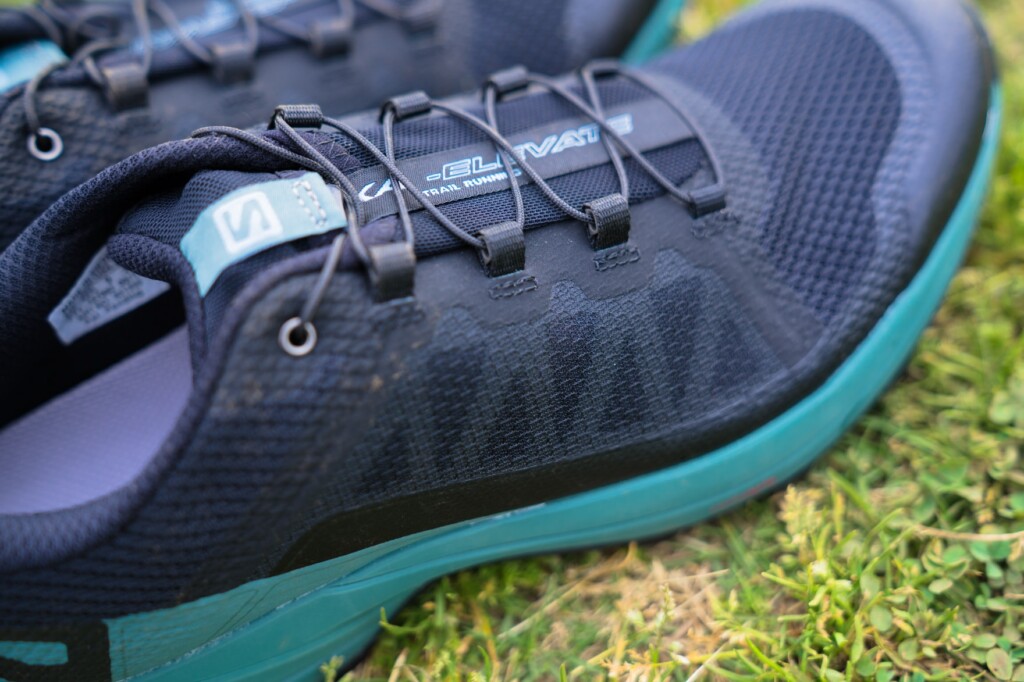
However, while the SENSE RIDE has a soft, enveloping feel overall, the XA ELEVATE feels a little harder in comparison. This is because this model prioritizes protection, and uses more durable TPU material in the toe and midfoot, which provides excellent protection from bumps. If you're planning on taking on tough courses, this trade-off is probably a welcome one
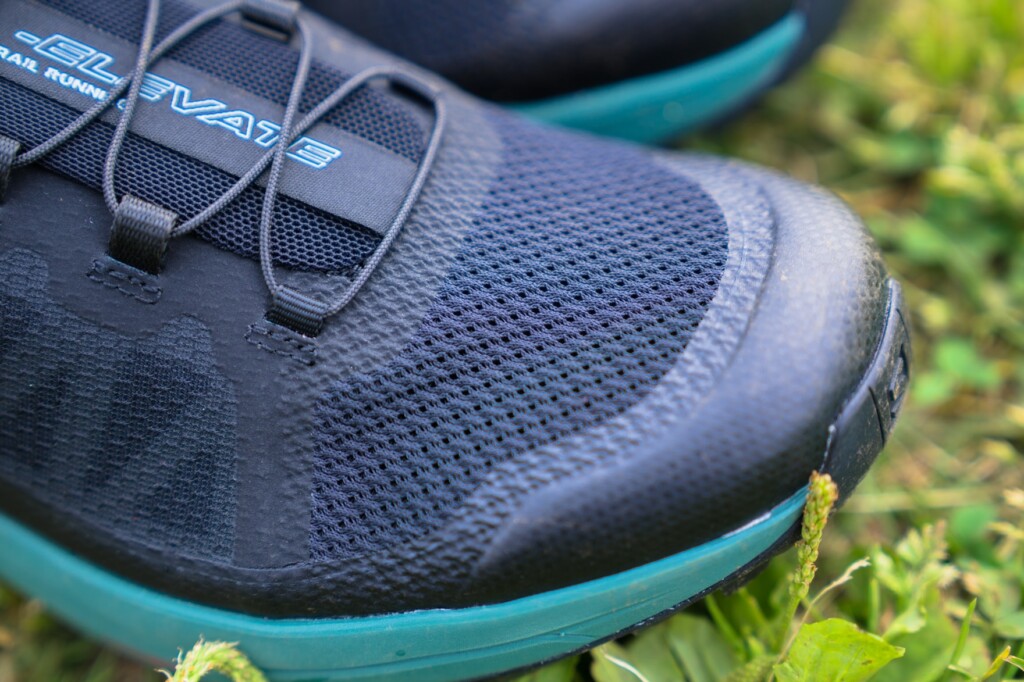
Perhaps due to the difference in the texture of the upper, the sizing impression is slightly different. Personally, I found the XA ELEVATE to be a little tight, so I found the 27.0cm size, which is more common for hiking boots, to be a more comfortable fit than the 26.5cm size that is my exact fit
Highly protective midsole that guards against impacts from the ground
For this review, I carried a load of between 5kg and 10kg and ran aggressively on a course with a lot of elevation change. I was surprised at how smooth my foot movement was and how secure it felt when I placed my heel down. Since these are essentially running shoes, the 290g weight and flexible midsole make them easy to walk (and run) in as hiking shoes, but what sets them apart is that despite their lightness, they offer stability and protection in every way, just like hiking shoes
The lightweight, highly functional Advanced Chassis™ around the heel provides excellent stability against impacts stronger than those experienced during typical trail runs
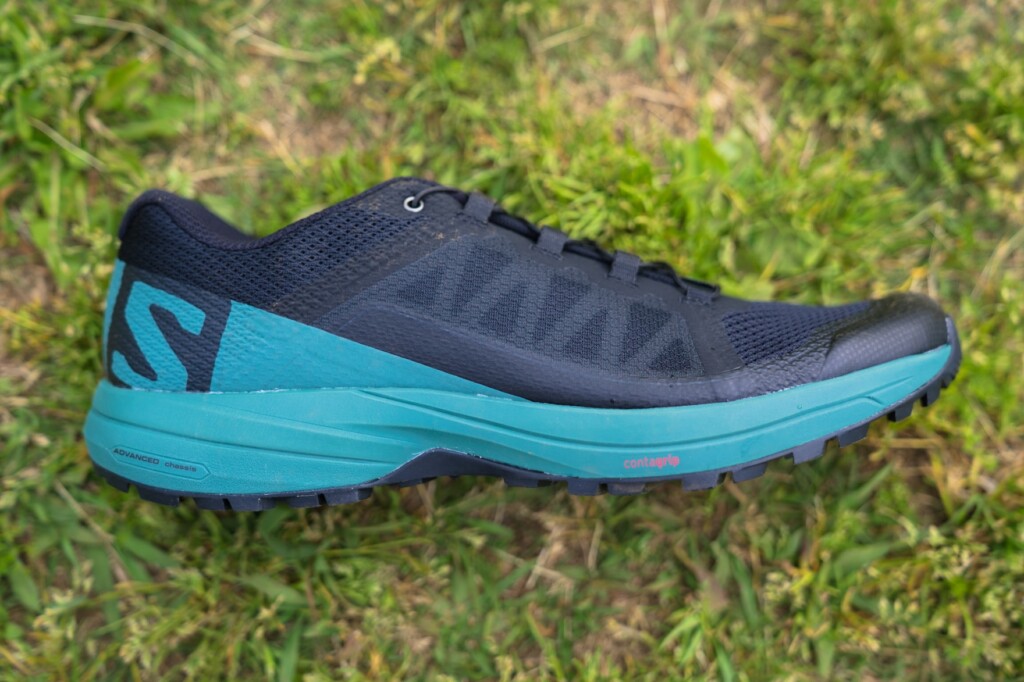
Additionally, the midsole is equipped with a lightweight, hard TPU film called PROFEEL FILM, which effectively protects against impacts from rough rocks and other ground surfaces, preventing damage from accumulating even when walking on scree for long periods of time
Incidentally, since SENSE RIDE is designed for trail running on relatively well-maintained surfaces, it uses the same high-rebound Energy cell+ midsole, but with Vibe technology, it incorporates a very soft vibration-absorbing material called OPAL, which provides a strong shock absorption feeling when landing, and in that respect the feeling is quite different. If I were to be greedy, it would be best to have both high protection and Vibe technology, but that seems like an overly ambitious request
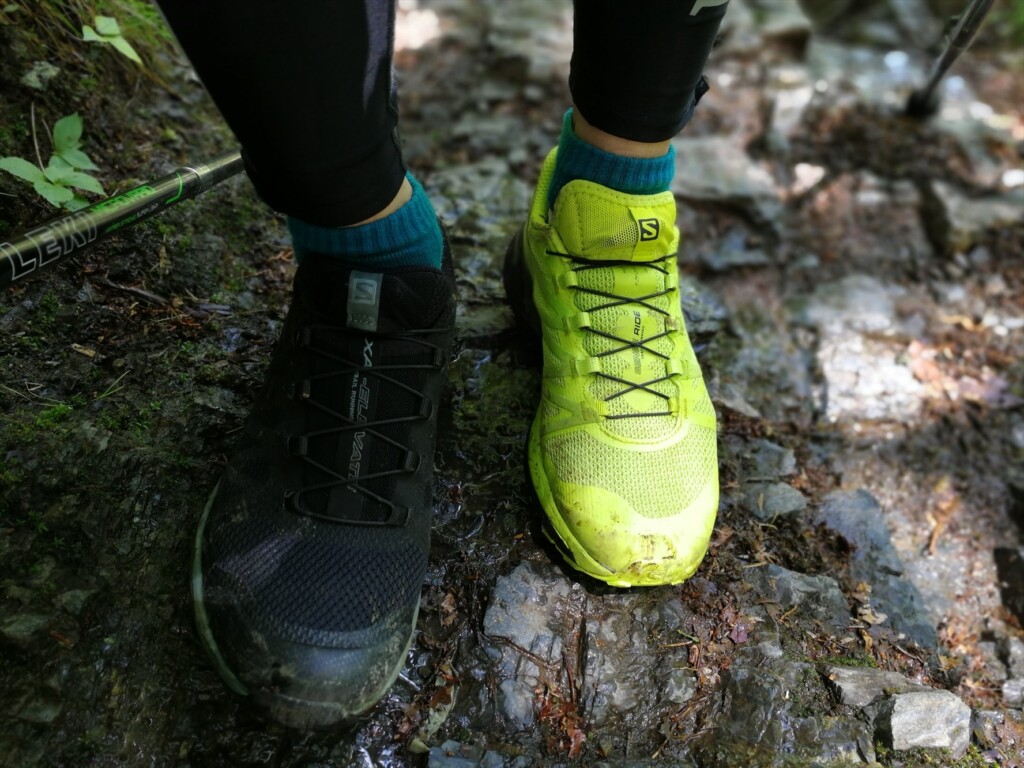
Outsole with excellent grip even on rough terrain
This model is designed to easily traverse the worst possible terrain, and of course the outsole is also designed to handle rough terrain
The material used is Premium Wet Traction Contagrip®, a compound that is strong on wet surfaces, similar to the material used in the company's mountaineering models. By configuring it with a lug pattern similar to that of trekking shoes, it is not only easy to run in, but also provides traction on climbs (from the toe to the outer part), grip against strong impacts on descents (heel area), and slip resistance on wet or soft surfaces (midfoot area). This is also the reason why you feel secure when landing your heel on the ground with force when descending

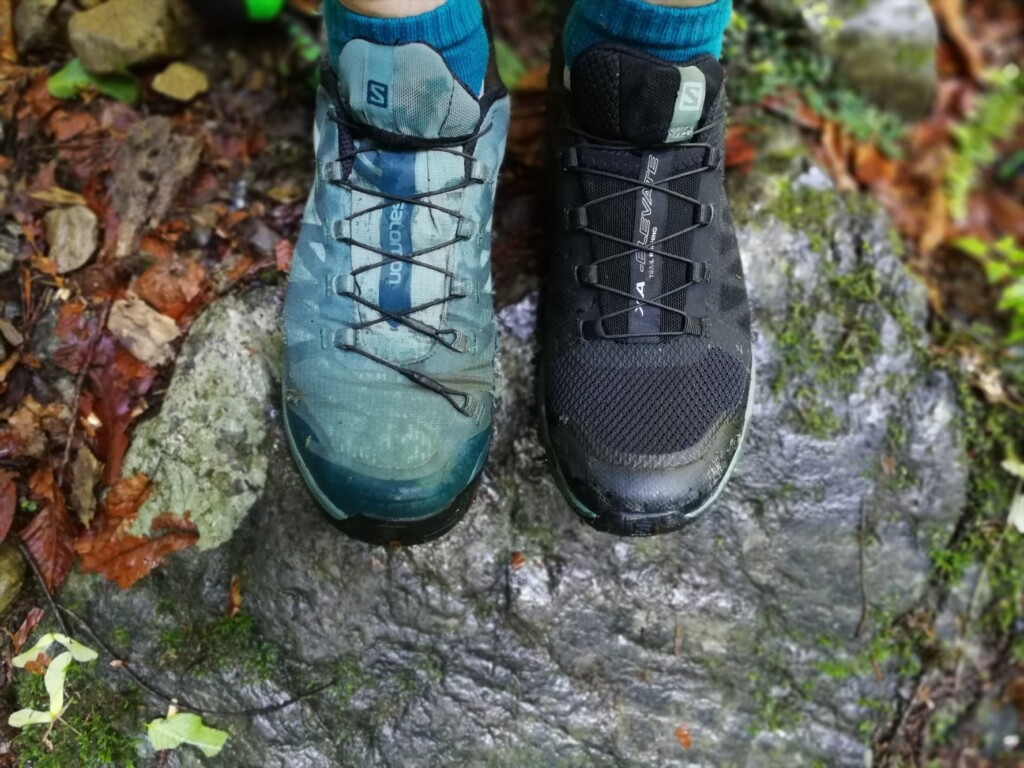
However, one thing that bothered me was that when I compared the XA ELEVATE with OUTPATH the XA ELEVATE . For this reason, even if the shoe seems to be strong on rough terrain, I think it's best to keep in mind that this is only in the context of running shoes.
Concerns
As I mentioned briefly in the fit section, while the basic performance of these shoes is high as trail running shoes, they are designed with a focus on protection, so the overall comfort and running feel are on the "stiff" side (for a running shoe). The sole is not thin, but it's not particularly shock-absorbent either. For this reason, when it comes to comfort when running on well-maintained, mild trails, they are slightly lower than shoes with high flexibility and cushioning, such as the SENSE RIDE. This depends on what you prioritize, so you'll need to be careful
Detailed Review: OUT PEAK 20
Unusually light and breathable for a mountaineering backpack
When you pick it up, the first thing you notice is how light it is. A typical 20L daypack for mountaineering weighs around 800g, and even among so-called ultralight backpacks, it's rare to find one that weighs around 500g. The fabric used for the main body isn't extremely thin, and it appears that the right materials have been used in both thin and durable areas
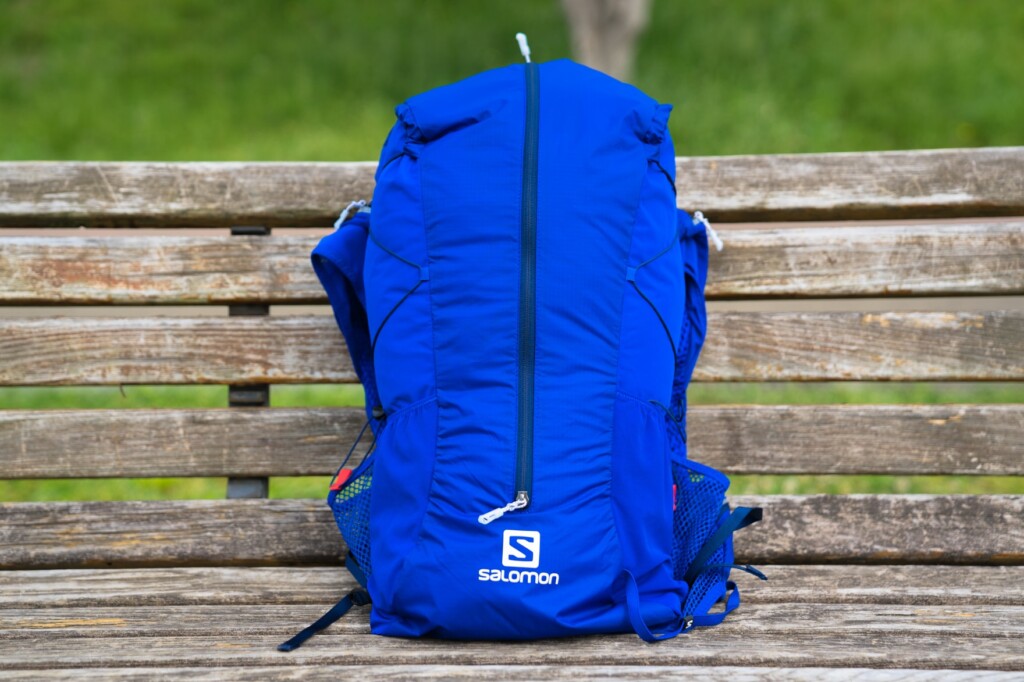
Another factor contributing to its lightness is the foam back panel, the mesh woven throughout the back for cushioning, breathability, and quick drying, and the cut waist belt. This is where the knowledge gained from trail running packs is put to good use

It has a larger capacity than it looks, and is easy to take in and out
The official pack capacity is about 20L, but in fact, this pack's storage capacity is much larger than that. First, let's check the storage area of this model
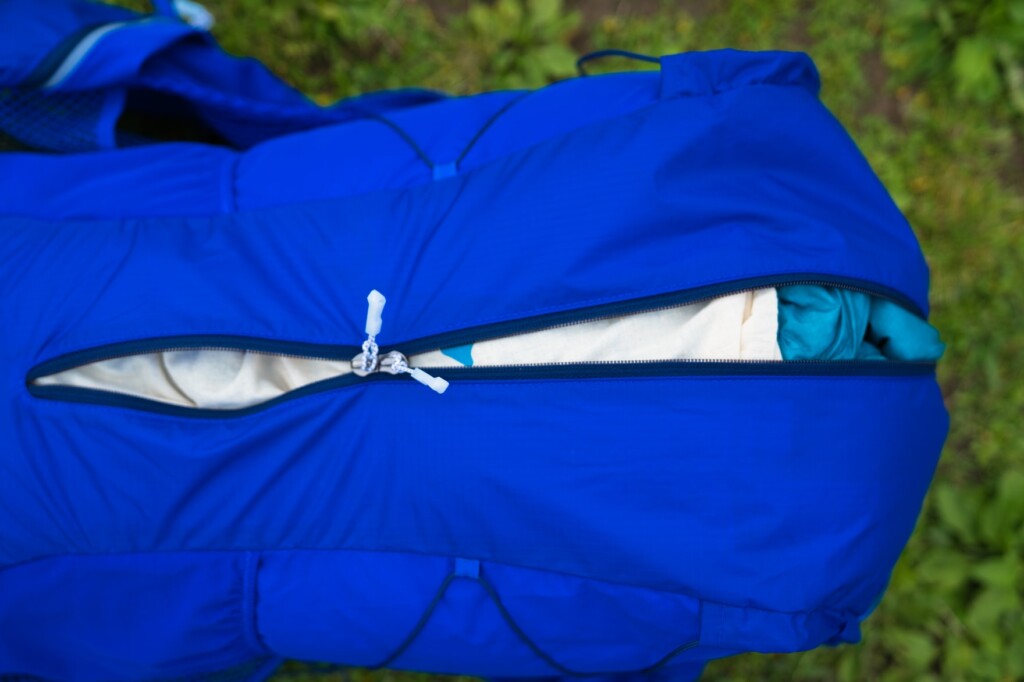
First of all, the main compartment has a base that gets wider as you go up, so it feels like it can hold more than it looks. Access is via a vertically placed double zipper, making it easy to take things in and out. While it's less waterproof than a roll-top entrance, it's definitely more convenient
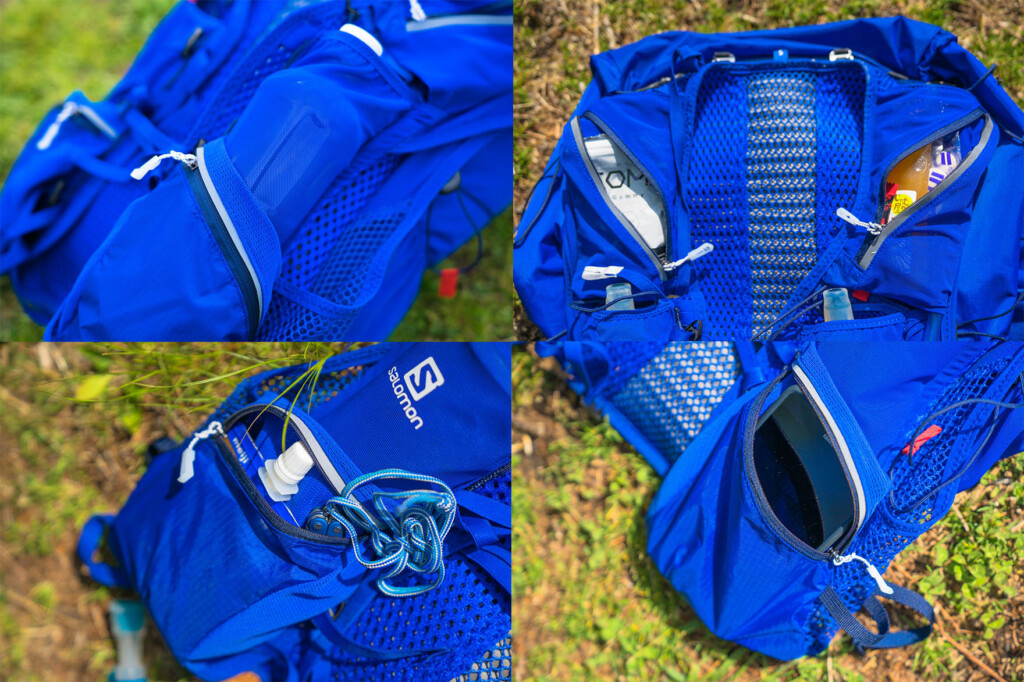
The front is equipped with a variety of features, including bottle (flask) holders on both sides (top left in the photo below), two large zipper pockets that can fit a 5-inch smartphone (bottom left and right in the photo below), and two mesh zipper pockets for storing tablets (top right in the photo below)
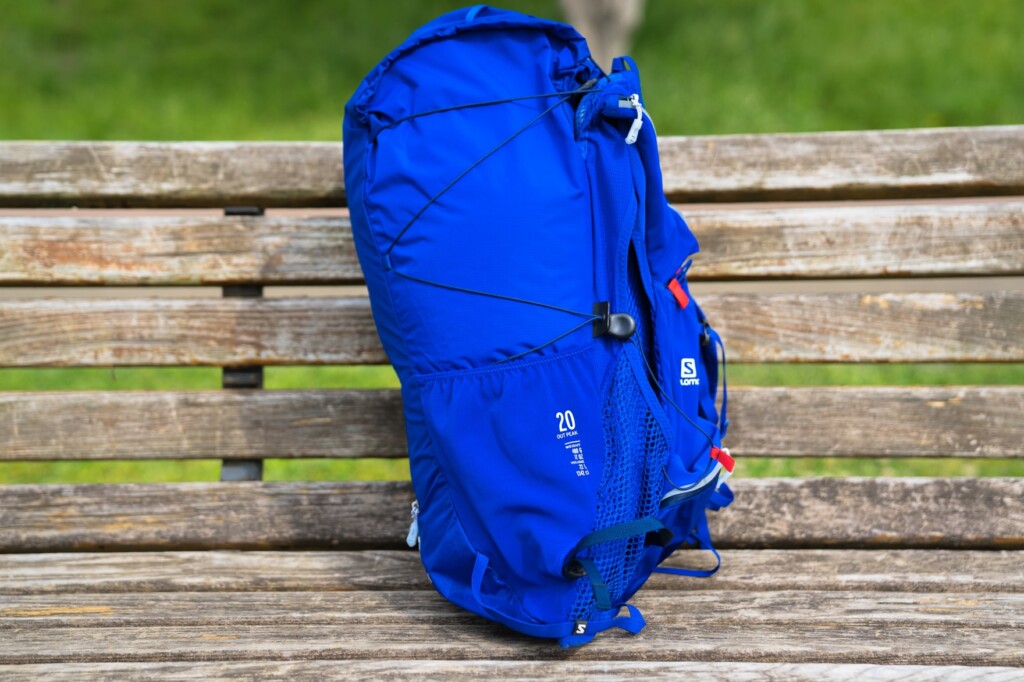
There are also mesh pockets on the sides, making it easy to store bottles, poles, etc
With all this storage, is it really 20L? Just like in a previous lightweight backpack comparison review on this site, I put a 4mm diameter ping pong ball inside the pack to measure the approximate actual capacity
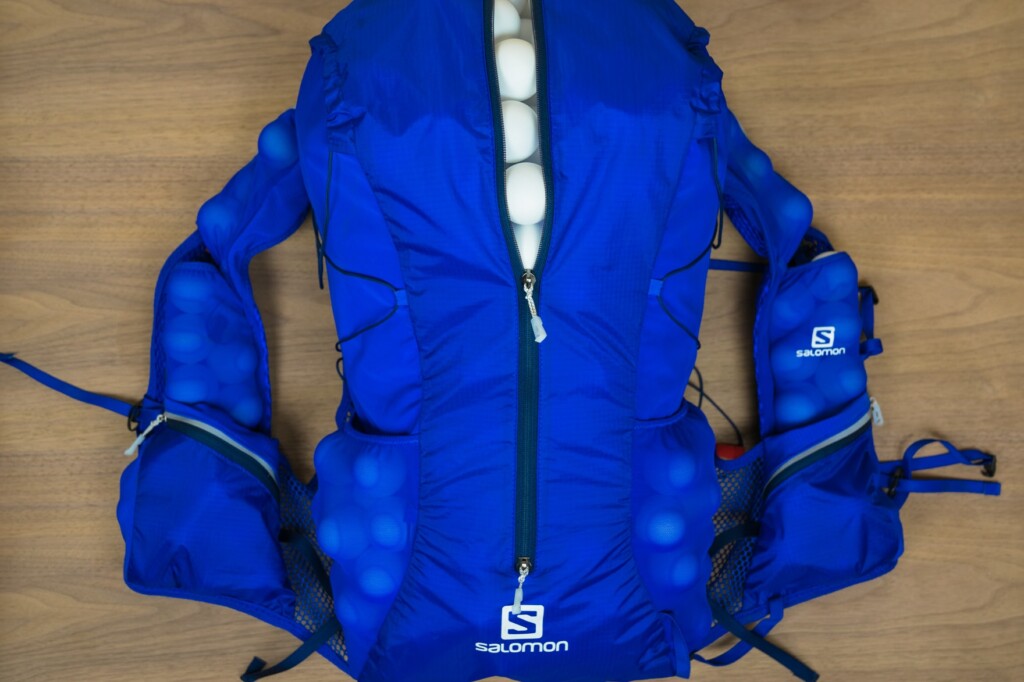
And guess what? The 20L figure is for the main compartment, and if you include the side and front pockets, the total capacity is roughly 27L. Unlike most mountaineering backpacks, which don't have front bottle holders or pockets, this pack has ample and effective storage space overall, so I found I could fit a lot more than I expected. For example, as shown in the photo below, it's not impossible to skimp on the extra storage and just use an ultralight shelter and quilted sleeping bag, even camping in a tent
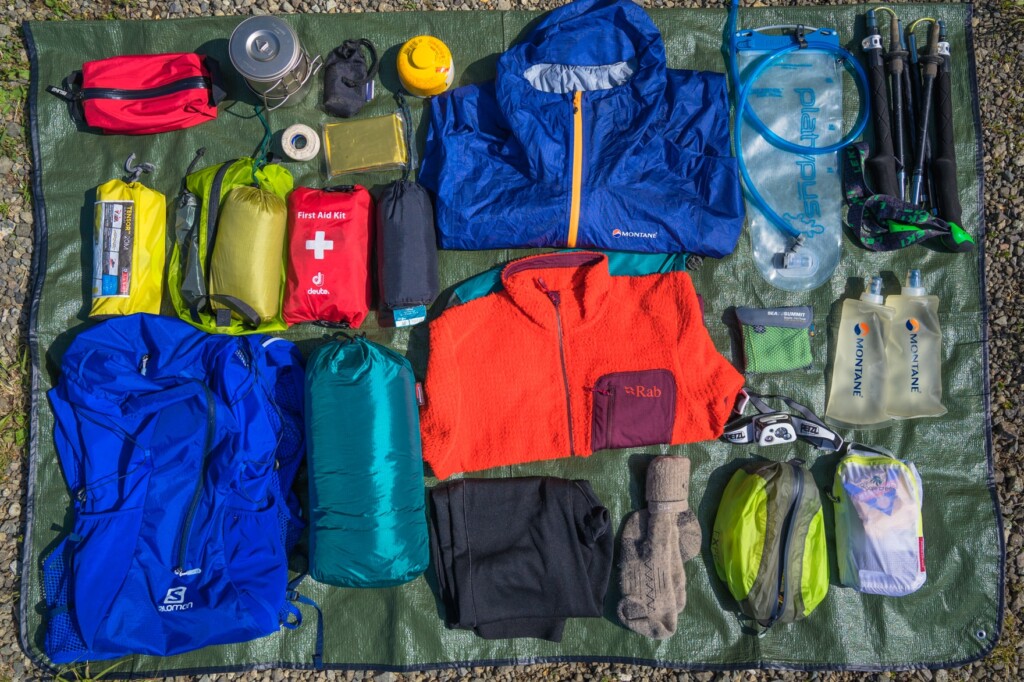
The thing I like most about this pack is its high storage capacity, which is surprising given its lightness and compactness
It fits securely to your body while standing and provides high mobility without shaking even when running
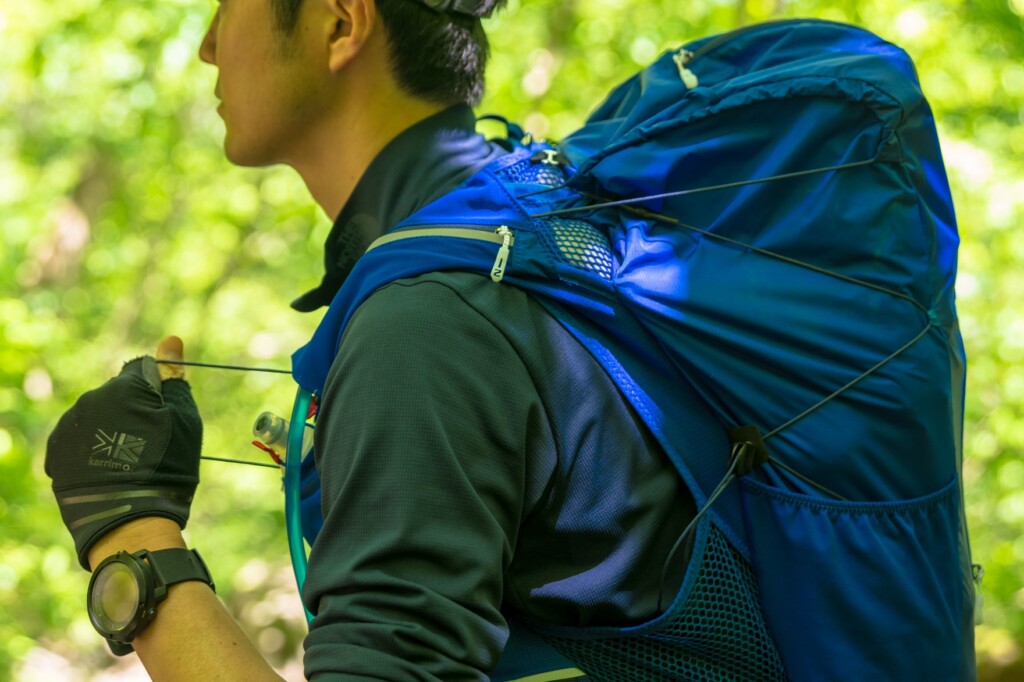
One feature that I found very unique and convenient was the fitting function, known as the "pack version of SensiFit." Compression cords run from the sides of the pack to the head, and when you pull them from your shoulders while wearing the pack, the entire pack compresses, allowing you to fit it to your back. If you try it out, you'll see that it can be tightened while in active position, allowing you to adjust it to fit your body securely
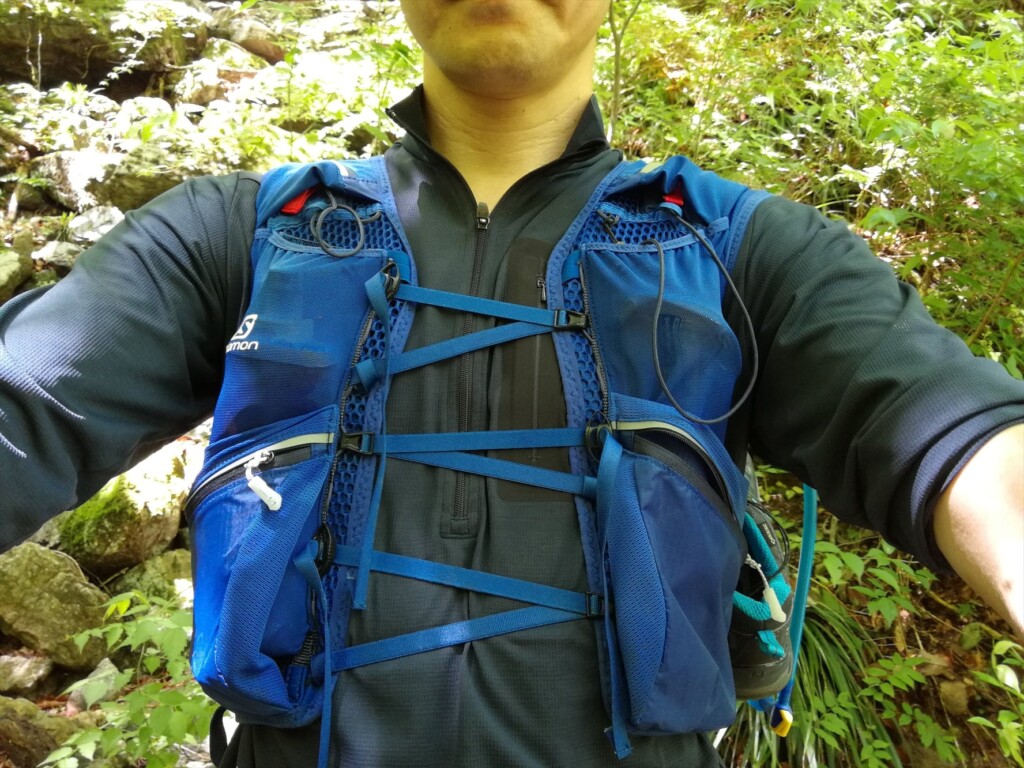
In addition, the sternum strap on the chest uses three joints and a total of six rows of flat elastic, allowing for subtle adjustment of tension
Of course, there are also adjustable straps around the sides, allowing you to wear the pack snugly against your body. The pack's center of gravity is at the top, and this excellent fit and secure fit significantly reduces the pack's movement even during intense shaking. Personally, I the ULTIMATE DIRECTION FASTPACK 30 .
Points of concern due to its novelty
This is an original pack that solves a variety of issues using unique technology, but that doesn't mean there aren't still some areas that seem to be fully developed
First of all, the sternum strap on the front (chest area). The hook is designed to hook onto the loop of the string, but it is very narrow and difficult to put on. Also, adjusting the tension is a bit inconvenient as there are too many adjustment points to make it even
The SensiFit™ (pack) function, which allows you to adjust the fit while standing, is basically great, but the parts are complicated, the strings stretch after tightening, which can be annoying, and loosening them can be a bit of a pain. I also had trouble with the strings accidentally coming loose from my shoulders. It's an interesting feature, so I'd like to see it become even easier to use
In addition, the outside of the shoulder harness has a mesh fabric with edges sewn together, but this is a bit stiff and raised, so I noticed some chafing when carrying a heavy load (8kg at the time). This is another area that I would like to see improved
Summary: Recommended for these people
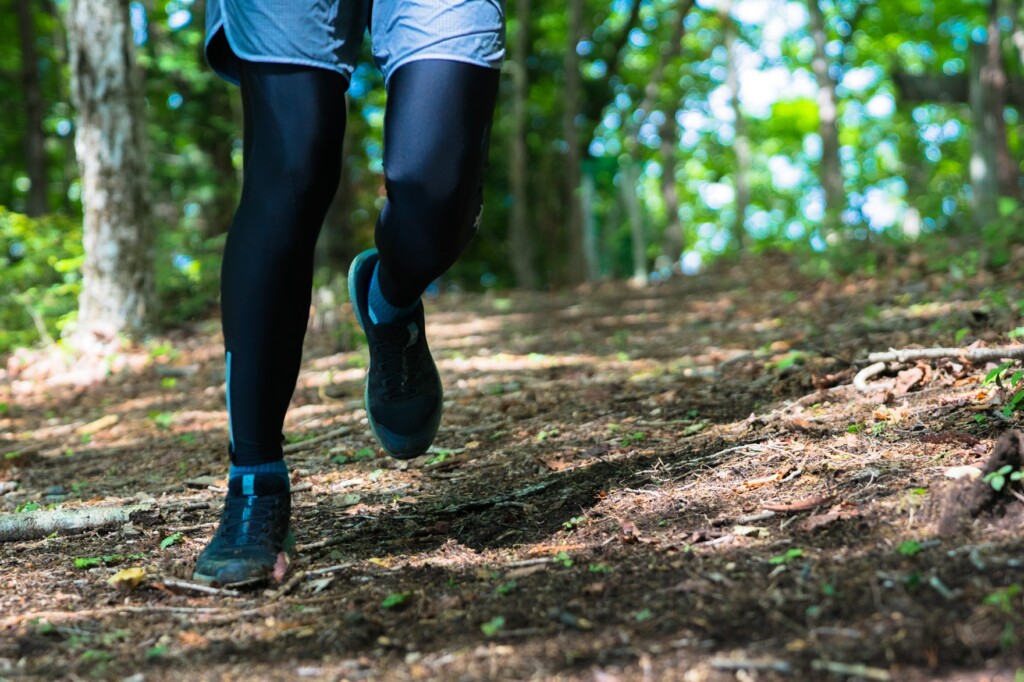
The running shoes and backpack, which combine moderate lightness and durability, struck me as the perfect balance of gear for a trail runner like me who isn't primarily involved in races, or in other words, a hiker who walks at a speed of about 60-70% of the course time. Although the backpack is 20L, the storage is distributed throughout the pack and it compresses well, so even if you're on a day trip with only a small load, it can be packed compactly and comfortably without feeling uncomfortable, making it highly versatile. In that sense, while it may seem like an odd size at first glance, it can be used for a wide range of activities, from day trips to overnight stays in huts, or even for multi-day UL-style mountain hikes
As for the shoes, if you plan to primarily run with ultralight loads, I think these shoes offer more lightness and protection than hiking shoes like the company's X ULTRA , providing sufficient safety and less fatigue. As mentioned at the beginning, they would be a great choice for runners who have left racing and begun to explore their own routes, or for hikers who want to go further and cover more distance in the same amount of time. While this is unavoidable given the model's concept, it was designed with the combined activity of running and hiking in mind, so if you're thinking about racing, it's important to consider this carefully. Other options may be more appropriate, especially if you're traveling on a fairly well-maintained course and require speed. Also, keep in mind that if you're carrying a large load or are heavy, you'll need more stable hiking boots unless you're extremely fit.
For product details and inquiries, please also check the SALOMON official website
Related reading
 Review: SALOMON SPEEDCROSS 5 This latest model, which is suitable for road use while maintaining its stability on rough terrain, is absolutely flawless
 Review: SALOMON SENSE RIDE 2 ~The all-rounder that teaches a wide range of runners the joy of trail running is now even easier to use~
 Review: SALOMON SONIC RA 2 NOCTURNE - Perfect for cold winter training! Lightweight mid-cut running shoes for excellent stability and injury-free running
 Review: SALOMON XA AMPHIB & CROSSAMPHIBIAN SWIFT These might be the shoes outdoor enthusiasts want to wear this summer