



[An Unbiased Comparison Review] PRIMUS "Single Burner for Mountaineering" - Which is the Best to Buy Now? We Compared Them in the Field [Surprising Results]

Written by Yosuke.C
PRIMUS, a long-established stove manufacturer with over 130 years of history in Sweden, offers a wide range of gas stoves. However, in reality, it's not possible to distinguish between stoves and determine which model is right for you just by looking at them in a store or catalog. As with all mountain gear, you can only truly understand their capabilities by using them in the field under a variety of conditions
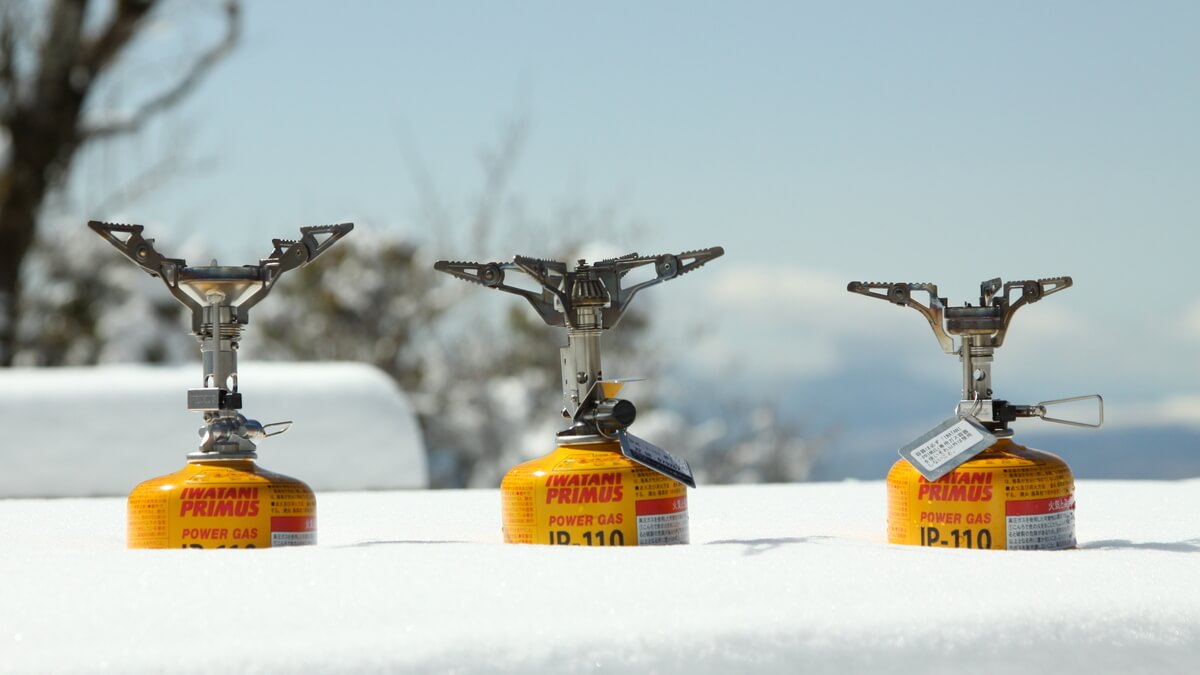
So this time, we compared three Primus gas stove models developed for mountaineering and hiking in a variety of field conditions to see which one is the most useful, what the differences between them are, and what uses they are suitable for
we compared were the P-157 Integrate Stove , P -153 Ultra Burner , and P-116 Femto Stove II . Field testing revealed distinct characteristics that weren't apparent from the specs, resulting in unexpected results. We hope this helps you choose the best stove for your needs.
table of contents
- PRIMUS mountaineering single burner 3 models compared this time
- Comparison of main specifications and test results
- Field testing and comparison under different conditions
- Combustion power test (time it takes for 300ml of water to boil at a temperature of approximately 20°C and no wind)
- Wind resistance test (time it takes to boil 300ml of water at an altitude of approximately 2,500m, with a temperature of approximately 0°C and a wind speed of approximately 3-5m)
- Cold resistance test (time it takes to boil 300ml of water at an altitude of approximately 1,100m, with a temperature of approximately -3°C and a wind speed of approximately 1-3m)
- Combustion efficiency test (comparing the consumption amount by the weight difference before and after use)
- Check the difference in boiling time depending on the size of the cooker used (size of the bottom surface area)
- Comparison of weight, storage size and ease of use
- Conclusion and summary: If you want a stove that you can use safely in any conditions throughout the year, choose the Integrate Stove. If you are only going solo in the snow-free season, choose the Femto Stove II
PRIMUS mountaineering single burner 3 models compared this time
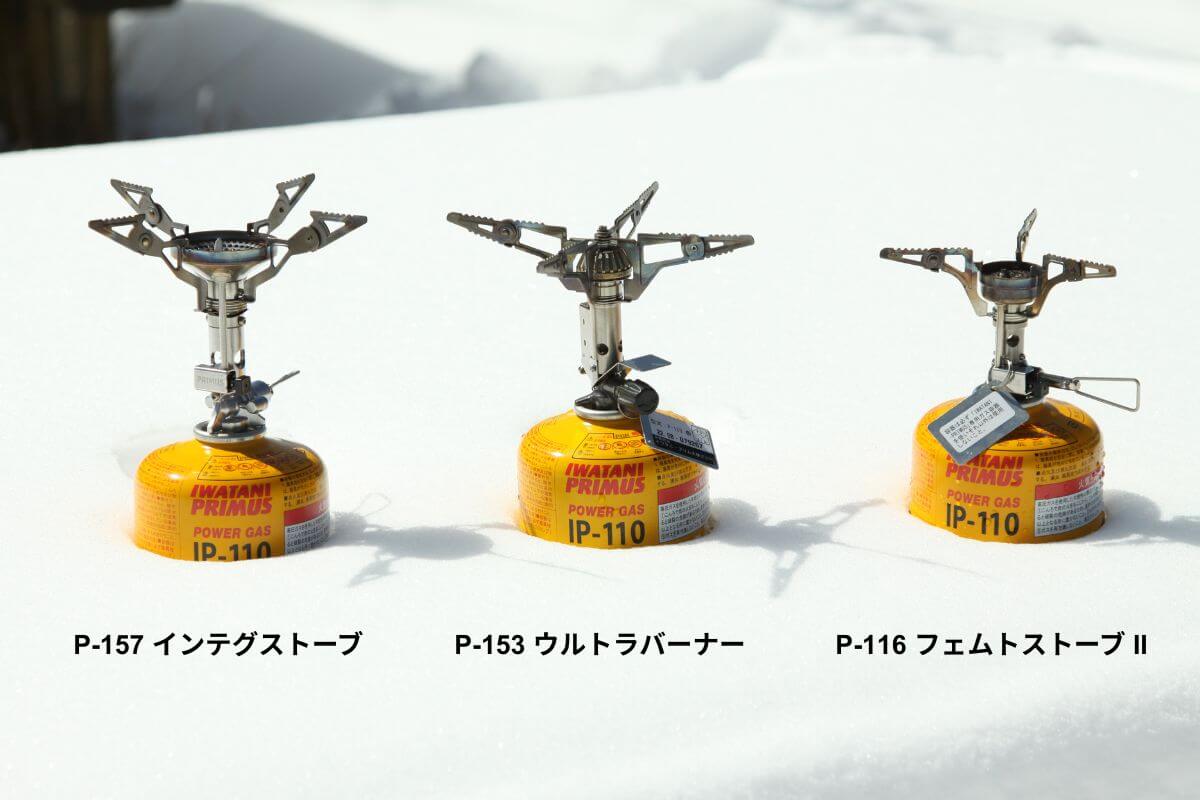
The P-157 Integrate Stove is a high-performance single burner that uses a newly designed valve with a regulator mechanism. The cone-shaped burner head creates an inward-tilting flame, efficiently transferring the flame's thermal energy to the cooker, making it highly wind-resistant and ensuring stable combustion in any environment.
P-153 Ultra Burner delivers an impressive 3600 kcal/h . With four stable burners, high power, compact size, and lightweight construction, this model is perfect for cooking while hiking or mountain climbing.
P-116 Femto Stove II is the lightest single-burner gas stove in the Primus lineup . Its compact size and wind resistance make it a perfect balance between portability and practicality.
Comparison of main specifications and test results
Before we get into the details of the test results, we have put together a comparison table below of catalog specifications and test results for those who would like a rough idea of the conclusions
The evaluation criteria were set as follows: 6 criteria, and a 5-star rating was given. This rating is not based on published specifications, but is a unique evaluation based on field testing
- Combustion power: Fast boiling speed in windless and room temperature conditions
- Wind resistance: How quickly water boils in windy conditions
- Combustion efficiency: Measures the amount of gas consumed to boil a certain amount of water in windless conditions at room temperature
- Low temperature resistance: Fast boiling speed in low temperature environments
- Portability: Compare weight, compactness, etc
- Usability: Ease of use and cooking that can accommodate a variety of complex uses, such as the versatility of the grate and the ability to adjust the heat
| P-157 Integrated Stove | P-153 Ultra Burner | P-116 Femto Stove II | |
|---|---|---|---|
| type | Direct connection type | ||
| Output (kcal/h) | 3.3kW / 2,840kcal/h (when using IP-250T) | 4.2kW/3,600kcal/h (when using T-type gas) | 2.5kW / 2,100kcal/h (when using T gas) |
| Gas consumption (g/h) | 220g/h | 245g/h | 170g/h |
| Burn time | Approximately 62 minutes | Approximately 55 minutes | Approximately 80 minutes |
| Weight (g) | 100g | 116g | 64g |
| Tripod size (Φ mm) | 148mm | Large 148mm/Small 90mm | Large 120mm / Small 80mm |
| Storage size | 7.3×10.1×4.7cm | 7.5×8.8×3.0cm | 5.4 x 7.4 x 2.7cm |
| ignition device | can be | can be | can be |
| 300ml boiling time (measured) | 75 seconds | 106 seconds | 132 seconds |
| Reference price (tax included) | ¥9,900 | ¥8,800 | ¥8,800 |
| Outdoor Gearzine Review | |||
| Combustion power | ★★★★★ | ★★★★☆ | ★★★☆☆ |
| Wind resistance | ★★★★★ | ★★☆☆☆ | ★★★★☆ |
| combustion efficiency | ★★★★☆ | ★★★★☆ | ★★★★★ |
| Low temperature resistance | ★★★★★ | ★★★☆☆ | ★★★☆☆ |
| Portability | ★★★☆☆ | ★★★★☆ | ★★★★★ |
| Ease of use | ★★★★☆ | ★★★★★ | ★★★★☆ |
Favorite points and points of interest for each
| item | P-157 Integrated Stove | P-153 Ultra Burner | P-116 Femto Stove II |
|---|---|---|---|
| Favorite points |
|
|
|
| Things I was curious about |
|
|
|
Field testing and comparison under different conditions
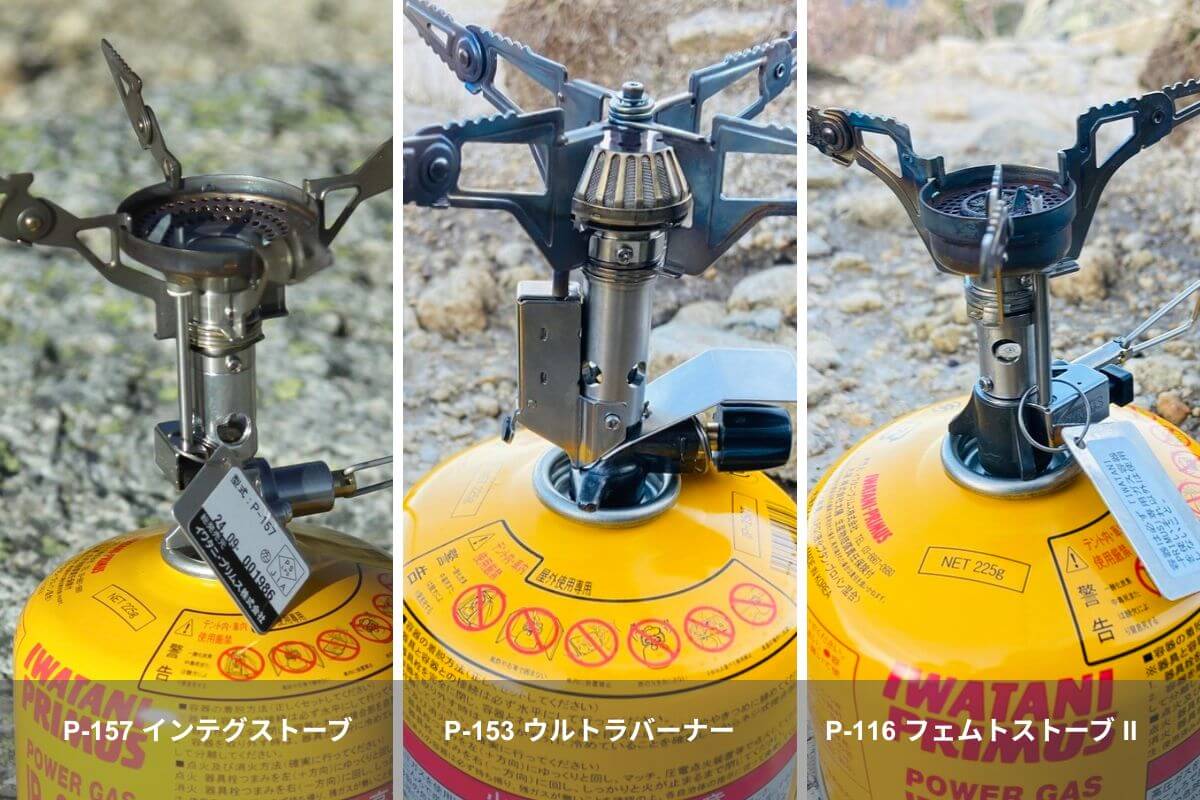
To compare the three gas stoves, we conducted field tests as well as combustion efficiency tests
The field test was conducted three times in different environments and the following items were compared:
- 1st test: Combustion power test (time it takes to boil 300ml of water at a temperature of approximately 20°C and no wind)
- Second test: Wind resistance test (time it takes to boil 300ml of water in an environment with a temperature of approximately 0°C, a wind speed of approximately 3-5m, and an altitude of approximately 2,500m)
- Third test: Cold resistance test (time it takes to boil 300ml of water in an environment with a temperature of approximately -3°C, a wind speed of approximately 1-3m, and an altitude of approximately 1,100m)
The test involved turning on the burner, setting it to maximum heat, placing the cooker on the stove, and measuring the time it took for 300ml of water to boil completely. The reason for choosing 300ml is that, assuming use in the mountains, 300ml is the amount of water needed for one meal, such as instant rice that can be rehydrated and eaten, or freeze-dried soup
To prevent the gas cartridges from cooling down due to continuous use, multiple cartridges were used and ignited at intervals. Also, since measurements were taken sequentially in a realistic natural environment, please understand that the conditions are not exactly the same, and use this as a reference
Combustion power test (time it takes for 300ml of water to boil at a temperature of approximately 20°C and no wind)
| item | P-157 Integrated Stove | P-153 Ultra Burner | P-116 Femto Stove II |
|---|---|---|---|
| time | 75 seconds | 106 seconds | 132 seconds |
In a test held at a temperature of about 20°C and in windless conditions, one might expect the Ultra Burner the Integrate Stove that beat out the Ultra Burner . It was able to boil 300ml of water in an astonishing 75 seconds (1 minute 15 seconds). the Ultra Burner 's 106 seconds (1 minute 46 seconds) was not slow, it was far faster.
The integrated stove is designed with a cone-shaped burner head that concentrates the flame, and it is thought that this concentrated flame is heated efficiently when it hits the cooker, thereby compensating for the low output, increasing combustion power, and allowing water to boil in a short time.
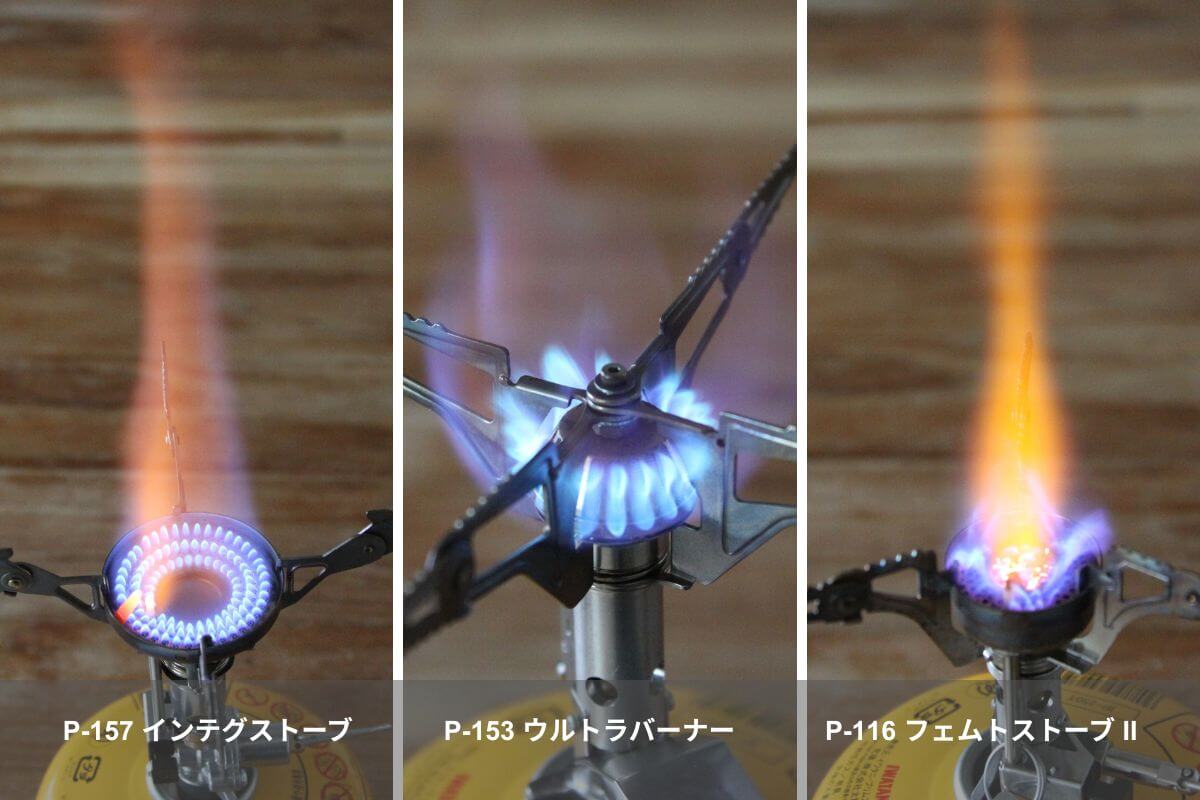
On the other hand, the Ultra Burner has a high output, it is not as efficient at transferring heat as the latest model, the Integrate Stove , and as a result it took a little longer to boil.The Femto Stove II , like the Integrate Stove , is a flame-concentrating model with good combustion efficiency, but due to its low output itself (as expected), it took the longest time to boil.
Wind resistance test (time it takes to boil 300ml of water at an altitude of approximately 2,500m, with a temperature of approximately 0°C and a wind speed of approximately 3-5m)
| item | P-157 Integrated Stove | P-153 Ultra Burner | P-116 Femto Stove II |
|---|---|---|---|
| time | 84 seconds | 248 seconds | 193 seconds |
The second test was conducted at an altitude of approximately 2,500m, with a temperature of approximately 0°C and wind speeds of approximately 3-5m. The wind was constantly blowing, making it a bit of a hassle to use the stove. The strong winds made it perfect for testing the stove's wind resistance
the Integrated Stove reached a full boil in 84 seconds . The difference from the first test was less than 10 seconds. This shows that it delivers stable output to the cooker even in adverse conditions. The cone-shaped burner head not only increases combustion power, but is also designed to enclose the area where the flame comes out, protecting the flame from wind and minimizing its impact.
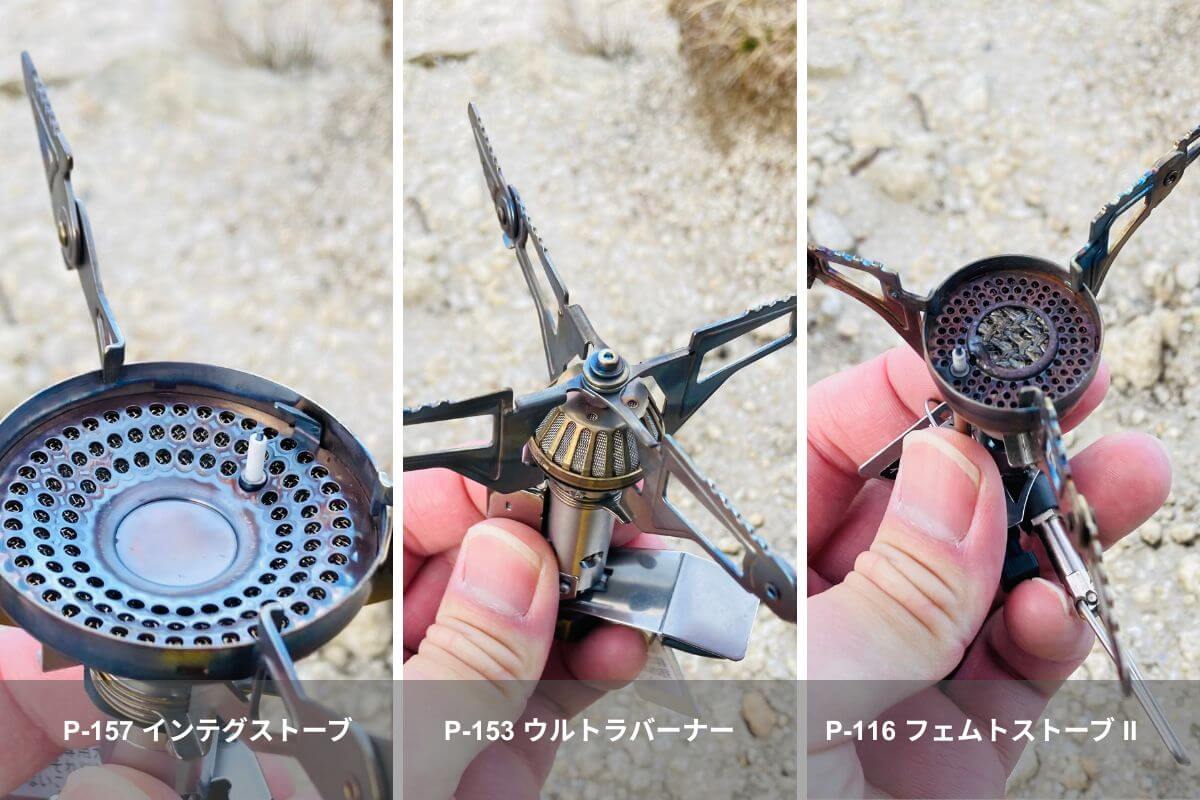
The Femto Stove II this structure , and as proof of this, it was able to boil water faster than the Ultra Burner. The Ultra Burner has an exposed burner head, so it is directly affected by wind, which significantly reduces combustion efficiency, and it took more than twice as long to boil water than when there was no wind.
Wind resistance not only allows you to boil water even in poor environments, but also shortens the time it takes to light the stove, which has a significant impact on fuel economy. This isn't a concern for short trips like day trips or overnight stays, but for longer mountain trips, you may need to increase the amount of gas you bring, so it's an important consideration, just like combustion efficiency
Cold resistance test (time it takes to boil 300ml of water at an altitude of approximately 1,100m, with a temperature of approximately -3°C and a wind speed of approximately 1-3m)
| item | P-157 Integrated Stove | P-153 Ultra Burner | P-116 Femto Stove II |
|---|---|---|---|
| time | 89 seconds | 129 seconds | 179 seconds |
The third test was conducted in a low-temperature environment with a temperature of approximately -3°C, a wind speed of approximately 1 to 3 m/s, and an altitude of approximately 1,100 m
One thing that all stoves have in common is that the colder the temperature, the longer it takes to boil water. But here again, the Integrator Stove , boiling water in 89 seconds, just 15 seconds faster than the first test.
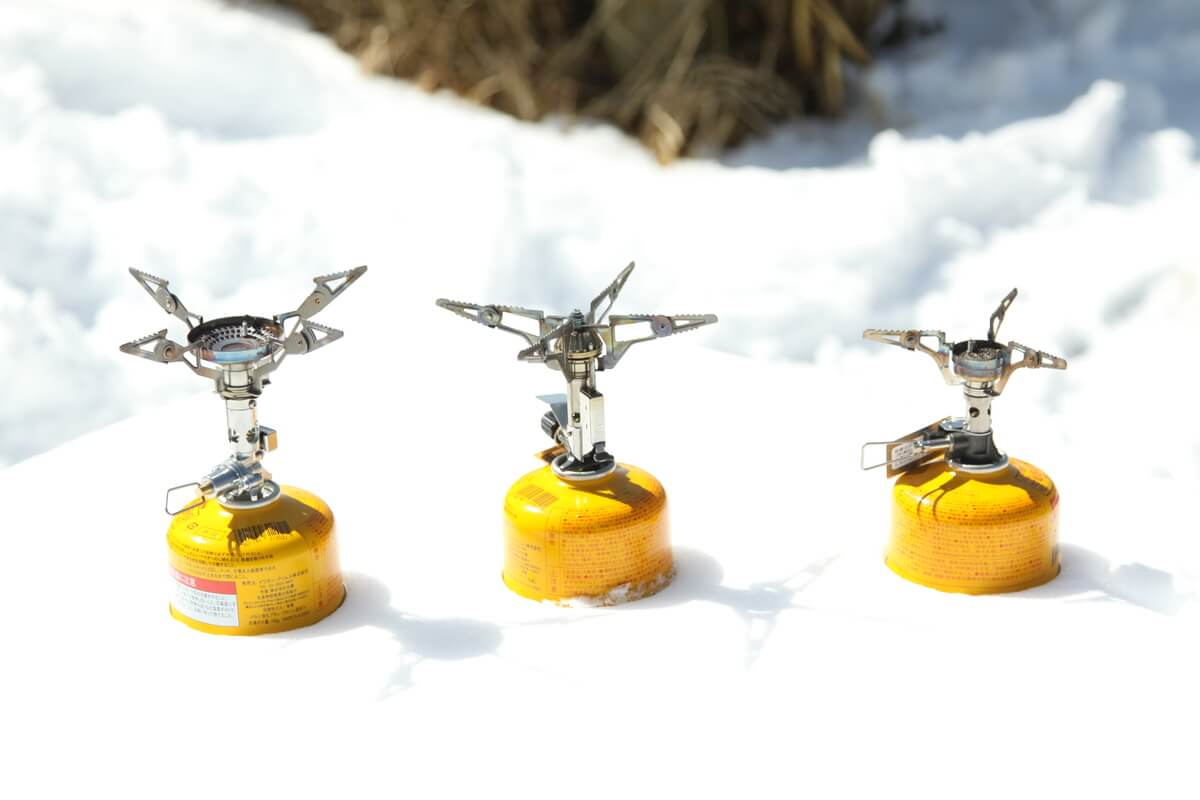
Testing on snow at -3°C
In low temperatures, the gas inside the cartridge does not vaporize as easily, resulting in a decrease in output. The Integrator Stove valve, which offers high performance even in low temperatures, is equipped with a regulator mechanism. A spring properly adjusted to the pressure of the gas released when the valve is opened moves the diaphragm (rubber partition) inside the valve to the optimal position, and the internal O-ring adjusts the gas flow rate in real time to maintain a constant output.
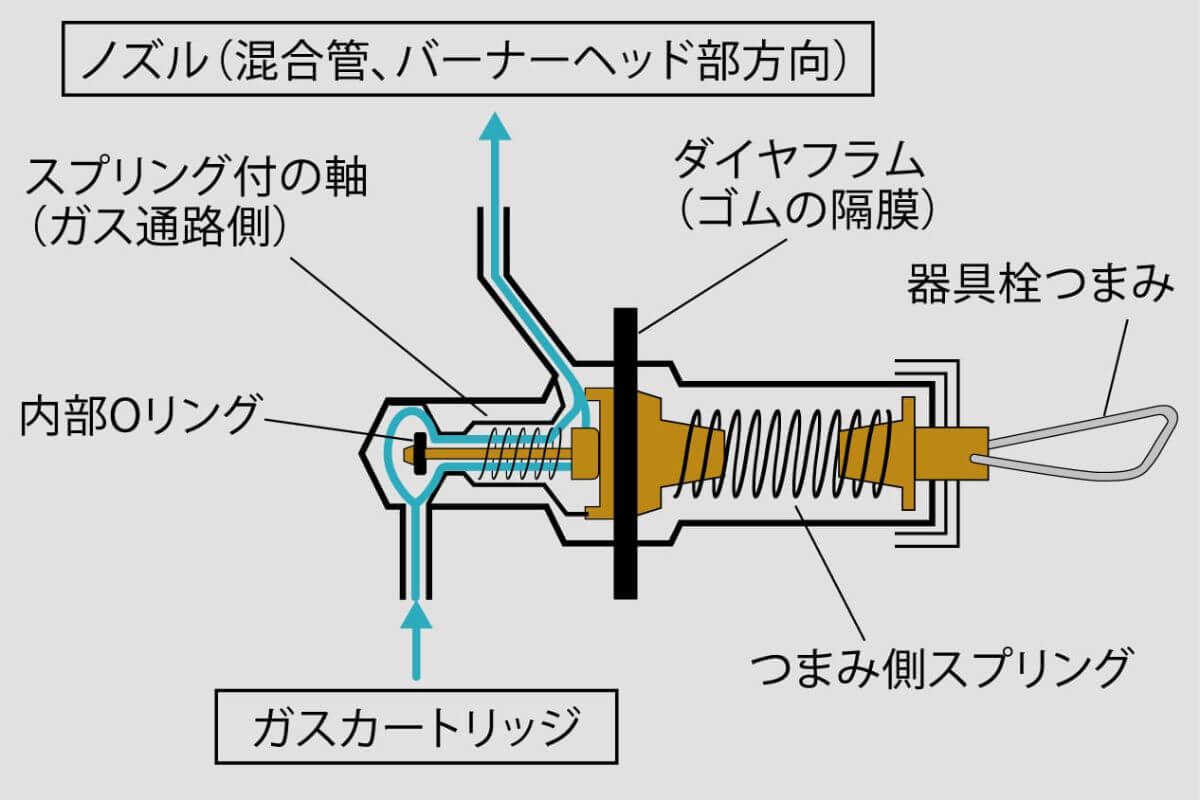
Image credit: PRIMUS
This regulator mechanism is the Ultra Burner and the Femto Stove II . You can't tell from the outside whether a stove has a regulator, but the difference in performance is clear when you actually use it. If you plan to use it in harsh environments, it's better to choose a model with a regulator mechanism.
Combustion efficiency test (comparing the consumption amount by the weight difference before and after use)
In the combustion efficiency (fuel economy) test, we measured how much fuel was consumed to boil 300ml of water. We measured the weight of the gas cartridge before and after use and compared the difference
| item | P-157 Integrated Stove | P-153 Ultra Burner | P-116 Femto Stove II |
|---|---|---|---|
| weight difference | 6g | 7g | 5g |
The Femto Stove II had the best fuel economy . Because of its low output, it takes a long time to boil water, but it is fuel-efficient and consumes less gas.
Although it was a close call, the Ultra Burner had the worst fuel economy. While high output is an advantage, good fuel economy affects the amount of fuel you can carry over the long term. When considering use on long-term mountain hikes or long trails, good fuel economy is always better, so whether you prioritize combustion power or fuel economy will likely depend on the mountain trip you're planning
Check the difference in boiling time depending on the size of the cooker used (size of the bottom surface area)
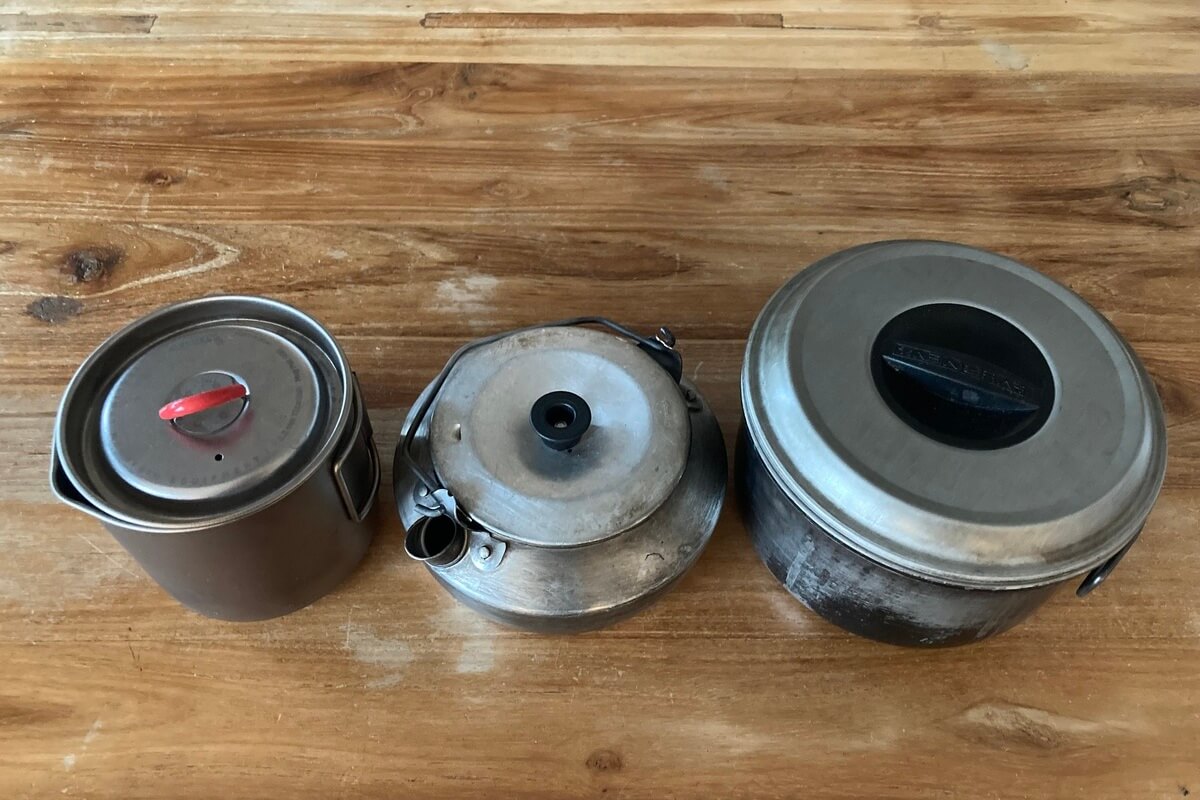
We measured the time it took to boil 300ml of water in cookers (kettles) with diameters of approximately 9.5cm, 12.5cm, and 14.5cm
Using three cookers (kettles) of different diameters, the time it takes for 300ml of water to boil completely
We have compared the combustion power, but we also checked how the time to boil changes depending on the cooker used
Generally, increasing the diameter of a cooktop increases the area of contact with the flame, shortening the time to boiling. However, what effect does a concentrated flame shape like the Integrator Stove or Femto Stove II the Ultra Burner 's expansive flame have? We measured and compared the time it took to boil 300ml of water using cooktops of different sizes. Since the cooktops were made of different materials and were not identical in thickness, please use these results as a guide only.
| item | P-157 Integrated Stove | P-153 Ultra Burner | P-116 Femto Stove II |
|---|---|---|---|
| Diameter 9.5cm | 85 seconds | 117 seconds | 150 seconds |
| Diameter 12.5cm | 84 seconds | 106 seconds | 132 seconds |
| Diameter 14.5cm | 77 seconds | 85 seconds | 100 seconds |
For all stoves, the time decreased as the cooktop size increased, the Ultra Burner showing particularly impressive results. In the test with the largest cooktop, it took 85 seconds to bring the water to a full boil.
The Integrator stove was not affected by the size of the cooktop . In the test with a 14.5cm cooktop, the time was shorter, but the error was within 10 seconds, achieving excellent results. While the other two stoves showed significant differences, the Integrator stove was not affected, demonstrating that the flame concentration achieved by the grooved burner head allows it to deliver high performance regardless of the size of the cooktop.
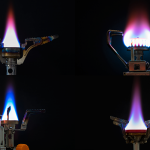
When we looked at the flames of the Integ Stove and the Femto Stove II the Integ Stove is designed to be perfectly conical, but the Femto Stove II 's flame is not strictly conical, but rather concentrated at one point, so we could visually see that some of the flame was wasted when it hit the cooker.
This difference is likely the reason why the cooker is less affected by its size and allows for stable heating
The Ultra Burner 's performance can be expected to improve when used with a larger cooker, but if you are planning to use it solo, you will need to choose a compact cooker, so you may have to think hard about combining it with a cooker.
Comparison of weight, storage size and ease of use
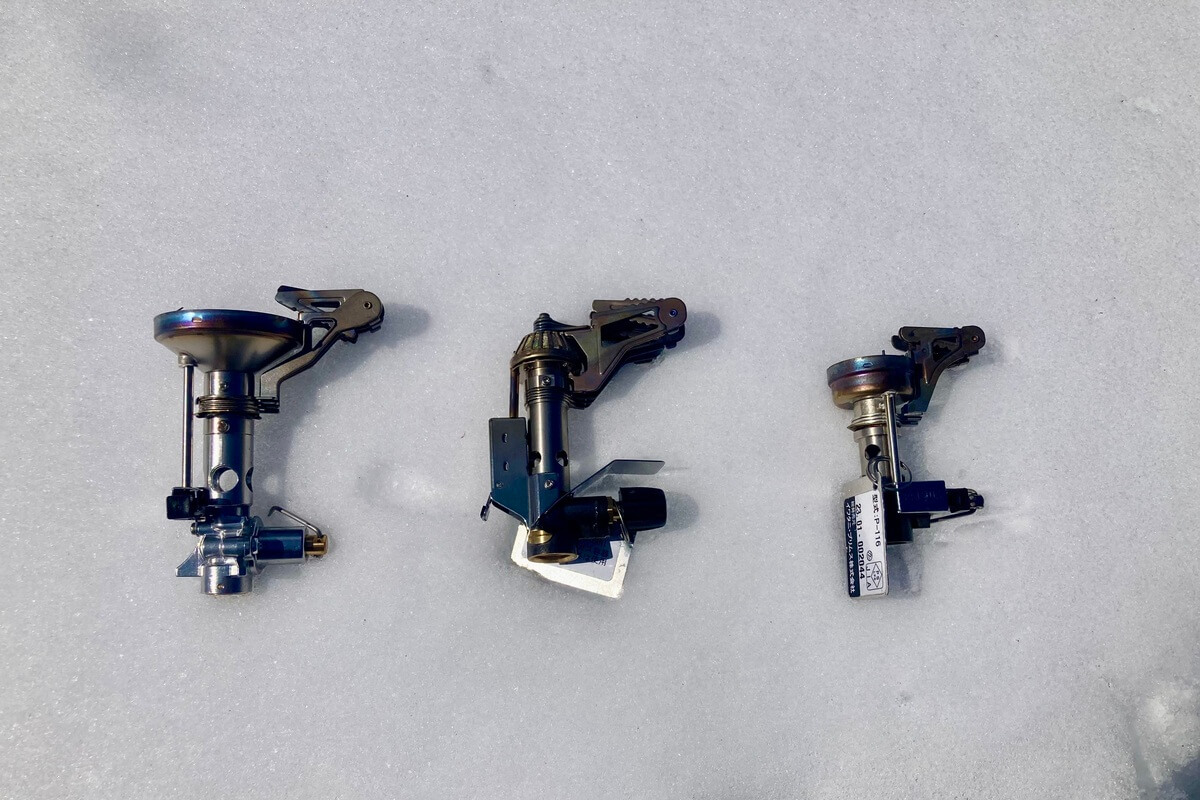
The Integrated Stove is the second heaviest, but its large burner head means it's not particularly compact, and it takes up the largest storage space. This large burner head also means the grate is wide, so while it's fine for cookware with a larger-than-average base, you can only fit small mugs and the like by folding the grate. Its drawback is that it's slippery and difficult to use.
The lightest the Femto Stove II , weighing just 64g, 36g lighter than the Integrate Stove , the Femto Stove II is undoubtedly the best. For those of us who like to store gas cartridges, a lighter, and the stove itself in a 650ml cooker during mountain climbing (tent camping) in the snow-free season, the Integrate Stove 's storage size is too large, so the Femto is the only choice.
Finally, the Ultra Burner is slightly heavier than the other three, but it is thinner and smaller than the Integrate Stove, so it's not as difficult to store stability , and can accommodate a wide range of items, from small cups to large pots. It also has a wide range of heat settings, from low to high, and the flames spread well, making it easier to use for a variety of cooking methods, from hotpot dishes to frying pans, making it superior to the other two.
Conclusion and summary: If you want a stove that you can use safely in any conditions throughout the year, choose the Integrate Stove. If you are only going solo in the snow-free season, choose the Femto Stove II
After conducting a comparative study, I will summarize the conclusions I have reached
If you want a stove that can be used all year round, including on snowy mountains, choose the Integrate stove

The Integrate Stove which demonstrated high performance in terms of combustion power, wind resistance, and cold resistance, was the ideal gas stove for a variety of activities throughout the year, including harsh winters and strong winds. In a previous test on Mt. Hirashira, it was able to boil water without difficulty even in winds so strong it was difficult to stand, proving its true potential.
integrated stove 's regulator keeps the output constant regardless of the environment, making it less likely to experience the "drop-down" phenomenon caused by continuous use and minimizing performance degradation (drop-down occurs when the gas cartridge cools down due to continuous use, making it difficult for the fuel inside the cartridge to vaporize, resulting in a decrease in heat output). If you're planning on hiking in the dead of winter or using the stove in harsh environments, we can confidently recommend the integrated stove
Related articles
Femto Stove II is recommended for solo use during the snow-free season
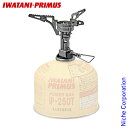
The FemtoStove II offers the best balance between portability and performance .
Lightweight equipment is a must when hiking, where you'll be carrying everything you need for food, clothing, and shelter. Not only is it lightweight, but compactness is also key. The Integrate Stove is an excellent stove that delivers high performance even in harsh environments. It's not too heavy at just 100g, but its large burner head means it's not as compact compared to other stoves. the Femto Stove II has slightly less burning power, it's also wind-resistant, offering a good balance between portability and performance.
The Femto Stove II is recommended for UL-oriented hikers who base their mountain meals on reheating, or for those looking for a stove for fastpacking
the Ultra Burner unfortunately didn't see much use in this test , but it is a powerful, easy-to-use grate that can be used with large pots, allowing for a wide range of heat adjustments from low to high, and the flames that spread horizontally heat the cooker evenly, making it extremely easy to cook by grilling and frying.
the Femto Stove II heats the cooker efficiently, but the temperature difference at the bottom of the cooker makes it unsuitable for grilling or frying. When I used the old Femto Stove, the frying pan didn't heat evenly when I tried to grill some sausages, and they ended up burning. Cooking at the summit and enjoying a luxurious mountain meal is recommended for those who want to enjoy such a meal.
Eating in the great outdoors is one of the pleasures. At the end of a long day of hiking, you can quickly and simply reheat your food in hot water, or you can enjoy a luxurious meal using the ingredients you've worked so hard to carry and enjoy the spectacular view as your side dish. Bring the gas stove that best suits your needs and enjoy your mountain meal!
Please consider a paid membership to support the website while enjoying exclusive articles and events!
Yosuke.C (Yosuke)
 A person who travels around with just one backpack, with the motto of "as light as possible" without causing inconvenience
From spring to autumn, I go fishing in mountain streams in pursuit of char deep in the mountains. I hike the mountains in search of spectacular views that cannot be seen from the ground. I camp to relax by a bonfire. I snowboard to experience the feeling of floating in the silvery white mountains
A freelance writer who enjoys the outdoors all year round, he shares his experiences and the best gear he has used
Related reading
 No problem with wind or cold! PRIMUS' new "P157 Integrate Stove" is a high-end single burner that can withstand any bad weather [Hands-on Review]
 Comparison Review: Which gas stove for mountaineering is best to choose?
 Best buys by type based on actual comparison of mountain gas stoves (burners) and five points to help you choose wisely
 Comparison Review: Comparing Lightweight Gas Stoves (Single Burner) for Mountaineering [Ideal for Beginners and Solo Hikes]