



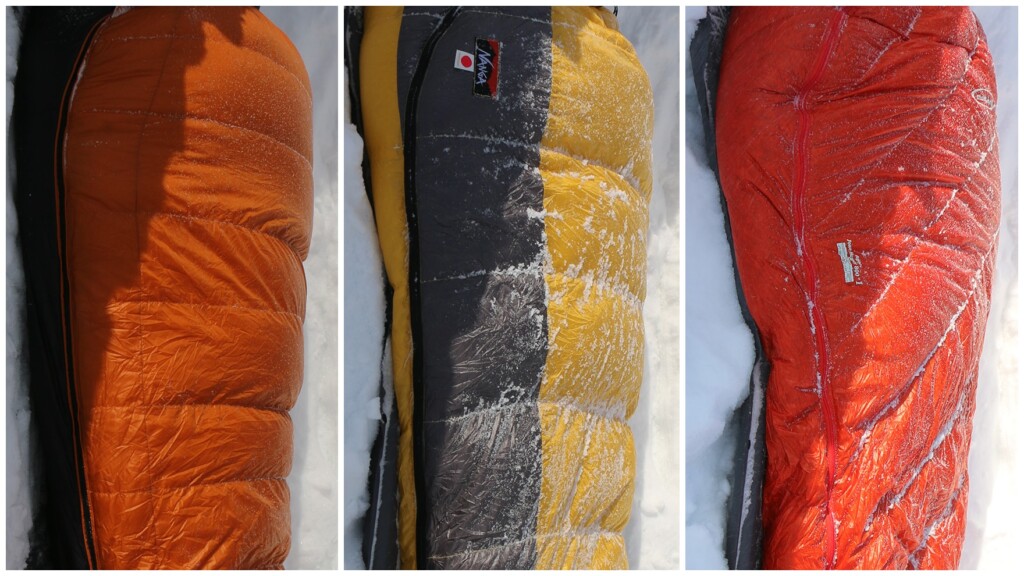
Comparison Review: Winter Down Sleeping Bags - Which one will keep you warm and sound asleep even in the freezing cold of the winter mountains?
Written by TAC
On the previous page, we introduced the rankings of the compared models, a list of their ratings and specifications, and our recommendations based on that. From here, we will provide additional information about the ratings, the criteria used, and why we came to those ratings
table of contents
Detailed review of each item
Heat retention
Heat generated inside a sleeping bag has the tendency to move and rise from warm areas to cold areas. The key to a warm down jacket is how effectively it can retain heat by preventing this warm air from escaping and by using the sleeping bag, which also acts as an insulating layer between the warm air and the outside air. For this reason, the quality of the down, FP, and the structure of the sleeping bag are all important factors. For more detailed information on this topic, please see this article .
Of the three models, ISUKA and Montbell 800FP goose down, NANGA uses 770FP duck down. What we learned from this comparison is that ISUKA and Montbell leads to a difference in heat retention, while Montbell and NANGA appears to lead to a difference in heat retention.
We also tested the windproof and heat-retaining properties of the sleeping bag by sleeping inside it for about an hour outdoors in strong winds (maximum instantaneous wind speed of 13.0 m/s). Normally, you would be inside a tent and not be directly exposed to the wind, but we conducted this test as a field test
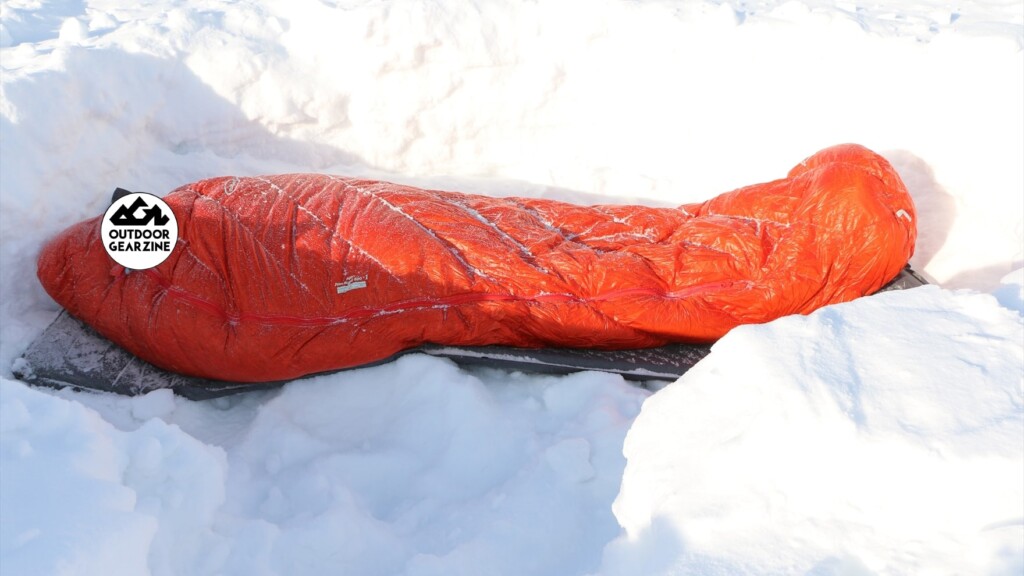
When you sleep on exposed snow, you can clearly see how easily the cold air passes through
As a result, the ISUKA offered excellent wind protection and warmth for the body, but the shallow hood meant that the head was exposed to a lot of cold air. In comparison, the Montbell had a deep hood that protected the head, kept the body warm, and was windproof, so I was able to withstand it for an hour without any problems. On the other hand, the NANGA allowed me to feel the cold all over my body, and after an hour my body became cold, making it far from comfortable.
weight
To ensure warmth, it is necessary to increase the amount of padding, and heat retention and weight are proportional. While it is best for mountaineering equipment to be compact and lightweight, achieving this balance is difficult for winter sleeping bags, which must maintain warmth. In terms of the three models reviewed here, I think all of them are quite lightweight considering their heat retention. Of these, the Montbell Alpine Down Hugger 800 #1 is noteworthy, weighing in at just 924g, which is below 1000g for its class.
Comfort
Of course, it's important to be warm inside your sleeping bag, but you also want to sleep comfortably. Looking at the materials used for the interior walls of the sleeping bags, the fabrics of ISUKA and NANGA were very soft and comfortable against the skin. Montbell felt a bit crisp and hard, and it also made the loudest noise when turning over. It wasn't to the point where it was difficult to sleep, but it bothered me. However, the stretchability was excellent, and even I, who sleeps in an awkward position, was able to sleep soundly.
The fit the ISUKA was excellent. While the other two models tighten around the neck with a drawcord, the ISUKA 's U-shaped shoulder warmers fit snugly, keeping the neck warm. Its unique 3D structure also conforms to the body, ensuring the entire body fits snugly into the sleeping bag, minimizing wasted space that can reduce warmth. Meanwhile the Montbell 's neck area feels slightly less comfortable than the other two.
Portability (storage)
NANGA is the most compact, Montbell . ISUKA is the largest While it has excellent heat retention, it does have to compromise on weight and size.
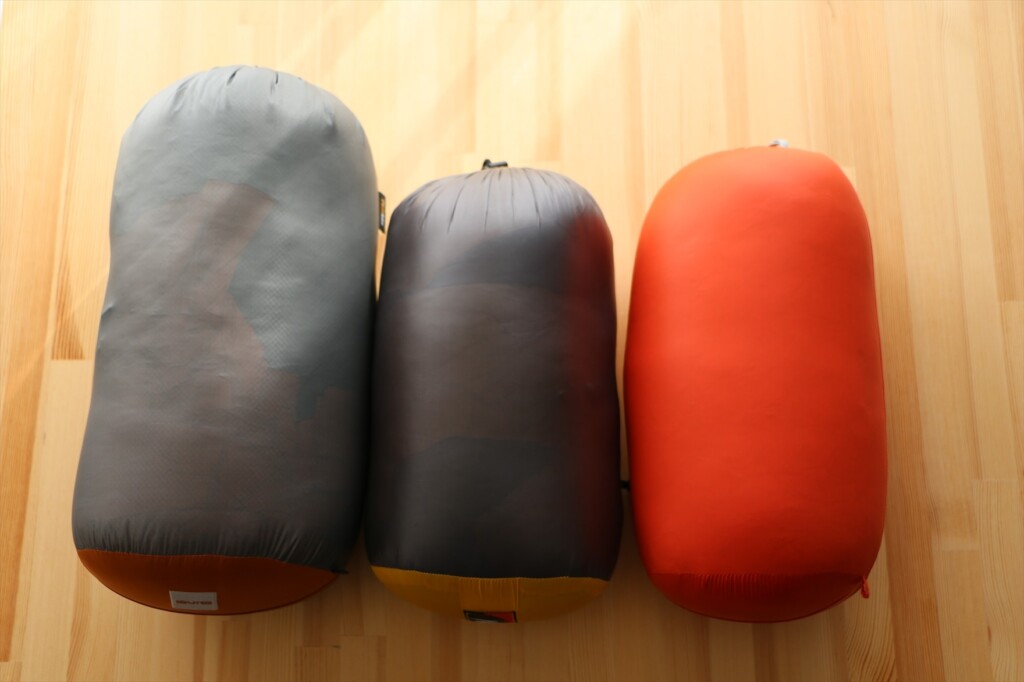
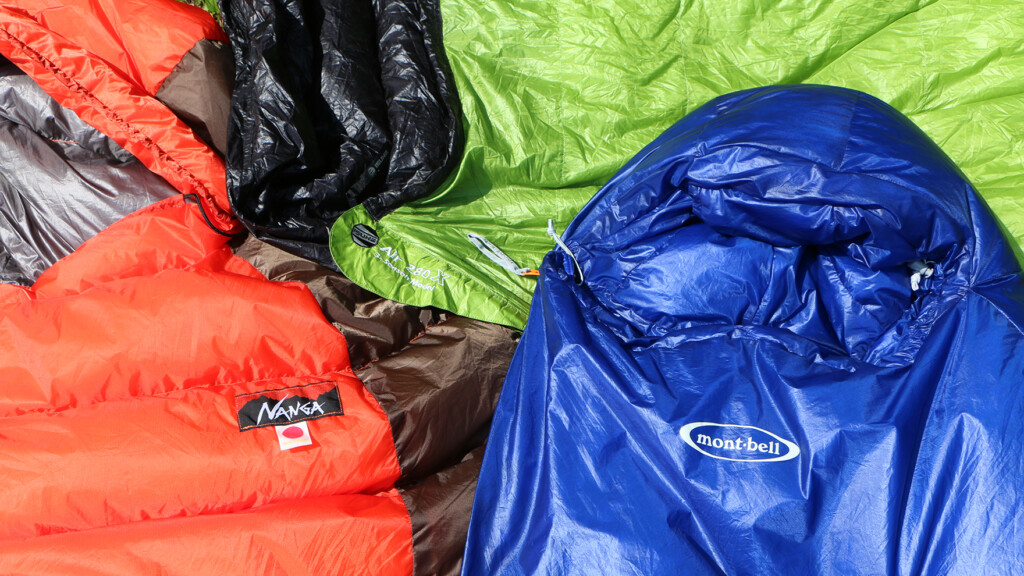
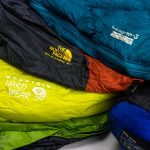
From left: ISUKA AIR 630EX, NANGA UDD BAG 630DX, mont-bell Alpine Down Hugger 800#1
On the other hand, packing a down sleeping bag can be surprisingly difficult, and depending on the item, it can require a great deal of effort. To reduce this burden, manufacturers have devised ingenious stuff sacks to accompany it. In this regard, Montbell 's stuff sack was exceptional. It uses the same spiral stretch system as sleeping bags, so the fabric stretches as you compress the sleeping bag, reducing the burden during storage. Another plus point is the wide opening. It also changes shape when packing; rolling it around stretches it out, elongates, and becomes slim. This is incredibly convenient, allowing it to fit perfectly into the dead space inside the backpack. The stuff sack also has two drawcords, making it extremely easy to compress. Models with two drawcords are indeed extremely convenient.
Functionality
First, let's talk about zippers. Honestly, each manufacturer has devised ways to prevent jamming, but there is no zipper that is completely jam-proof. The probability of jamming increases when closing the zipper from the inside with any model. Of the zippers, ISUKA had the least jamming frequency and was extremely smooth when opening and closing. Furthermore, NANGA zippers use phosphorescent resin, making them highly visible in the dark. This was a very useful feature.
Next, we looked at the water repellency of the surface. We conducted two tests to verify this
In one test, we continuously exposed the sleeping bag to shower water for 3, 5, and 10 minutes before evaluating the water repellency of the outer material and the penetration of water through the zipper. In the other test, we submerged the sleeping bag completely in a bathtub, soaking the down in water to see if it was still usable

We tested the product by showering it for a certain period of time to check whether it was watertight
The results showed that after three minutes of continuous showering, the NANGA jacket was damp overall, while the other two models did not allow water to penetrate the down until five minutes later. This water-repellent performance is truly impressive. In particular, the Montbell jacket showed some water penetration into the down after 10 minutes, but most of it was through the zipper, and the water-repellent properties of the outer fabric remained intact. You can have great confidence in the water-repellent properties of Polkatex, which boasts "the world's highest level of water repellency." None of the three models were able to prevent water from penetrating through the zipper. This may be an issue for the future.
Next, we submerged the sleeping bags in water stored in a bathtub. NANGA 's ultra-water-repellent down performance was outstanding. Even when submerged, the sleeping bag immediately floated up, making it difficult to submerge the entire bag. We repeated this several times, but the result was the same: the down never got soaked. The other two models sank completely into the water after about three minutes, becoming completely soaked.
If you just want to repel a little bit of water, the water-repellent fabrics from Montbell or ISUKA will likely work well enough, but if you're in a situation where humidity or moisture is chronic, then the UDD BAG 630DX seems like a safe bet.
summary
There were various evaluation criteria, but I think the main things people look for in a winter sleeping bag are heat retention and light weight. Through this test, I decided that if I were to use it on a 2000m-class winter mountain, I would go for the ISUKA AIR 630EX the Montbell Alpine Down Hugger 800#1 if I wanted something that would be able to withstand the cold but was also lightweight and portable . It would also be a good choice for people who prioritize cost performance.
On the other hand the NANGA UDD BAG 630DX showed that in terms of heat retention, the UDD BAG 810DX, which is one class higher, may be the equivalent of the two models compared here (or the AURORA light 600). While it depends on personal preference, we recommend this model for long mountain trips spanning several nights, with the temperature range mentioned above being a little stricter.
Finally, through this test, I was reminded that, although it goes without saying, when choosing a sleeping bag, heat retention performance is the most important thing. If a sleeping bag doesn't keep you warm, all other features are useless. After determining the temperature range that suits your needs, it's best to choose a bag while being mindful of the compromises and priorities you're willing to make, such as lightness, compactness, comfort, and other small features and parts. It's not a cheap purchase, so you want to choose carefully. I hope this test will be helpful when choosing your sleeping bag
We also recommend this article about sleeping bags
- Stay warm from the inside out with the perfect sleeping bag – How to choose and 8 recommendations
- How to choose a winter sleeping bag for a comfortable winter tent stay in the mountains and our top 8 recommendations
- Comparison Review: Ultralight 3-Season Sleeping Bags - A showdown of the best products for ultimate lightness and warmth
- What to throw away and what to keep? How to choose the best sleeping pad (mat) and our three recommendations
TAC
 I live in Hokkaido. On my days off, I can't stay still at home and am always doing some kind of activity. In the summer, I enjoy mountain climbing, fishing, and camping, and in the winter, I enjoy snowboarding and smelt fishing. I'm a fan of this site, and I joined because I was excited to share the appeal of the gear. I hope to review not only mountain climbing, but also a variety of other activities
We are looking for reviewers
Outdoor Gearzine is always looking for members who love the outdoors and want to write reviews about outdoor gear. For more information, please visit the REVIEWERS page here !
Related reading
 Comparison Review: Summer Sleeping Bag: How does Montbell's latest high-tech sleeping bag perform? We compared it with popular domestic models
 Comparison Review: Ultralight 3-Season Sleeping Bags - A showdown of the best products for ultimate lightness and warmth
 How to choose a winter sleeping bag for a comfortable winter tent stay in the mountains and our top 8 recommendations
 Stay warm from the inside out with the perfect sleeping bag – How to choose and 8 recommendations