Our review articles earn a small amount of revenue from product purchases made through affiliate links

[Monitor Gift Included] Is it time for shoelaces to evolve? We tested the new "no-tie shoelaces" to see how they perform

According to previous theories, the oldest known shoes around 3,500 BC, discovered in a cave in Armenia . These shoes were made of leather and fastened with laces. If this is the case, humans have been tying their shoes with laces in the same way for over 5,000 years, right up to the present day. This is a much older history than that of umbrellas, which are often ridiculed for never evolving.

It's about time that humans seriously consider the evolution of shoelaces. At the very least, wouldn't it be nice to be freed from the need to tie them?

I heard about this from Nifco, who have just recently started developing and selling new shoelaces, and when I looked into it, I realized that a number of groundbreaking items have appeared in recent years that make me think this way

So, in this article, I'd like to break away from the conventional idea of ​​"just use the laces that come with your shoes" and share my findings on trying out and researching these new and improved shoelaces. By taking a fresh look at my own feet, I hope to discover a more ideal running style

table of contents

Have you ever had this experience with shoelaces?

When you think about shoelaces, which we use every day and take for granted, you realize that their simplicity does not come without its problems. While this is not true for all shoelaces, I'm sure everyone has experienced the following inconveniences

Reason 1: It's a hassle to tie it every time

Depending on the type of shoe and laces, it can be a hassle, so if possible, it's definitely better not to have to tie them

Reason 2: It comes undone easily

Everyone adjusts their shoelaces to their own liking. However, even after adjusting them, it can be extremely disappointing and stressful if the laces tend to come undone easily. This is especially true for round laces rather than plain laces

Reason 3: It's easy to loosen

Have you ever experienced your shoelaces loosening, especially when walking or running on hilly mountains (especially downhill)? Experienced runners take this looseness into account when tying their shoes, but there's no point worrying about the quirks of each individual shoelace!

The new shoelaces and test environment I tried this time

For those people, we would like to introduce a new type of shoelace called "no-tie shoelaces," commonly known as quicklaces, which are said to overcome the weaknesses of conventional shoelaces. We will select representative products from these new quicklace shoelace products based on popularity and performance, and test them in various ways to see if they can actually replace shoelaces

Candidate 1: SPLC

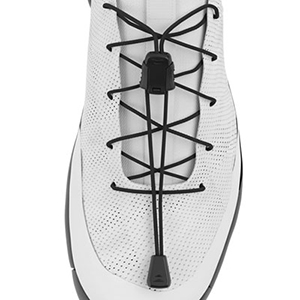
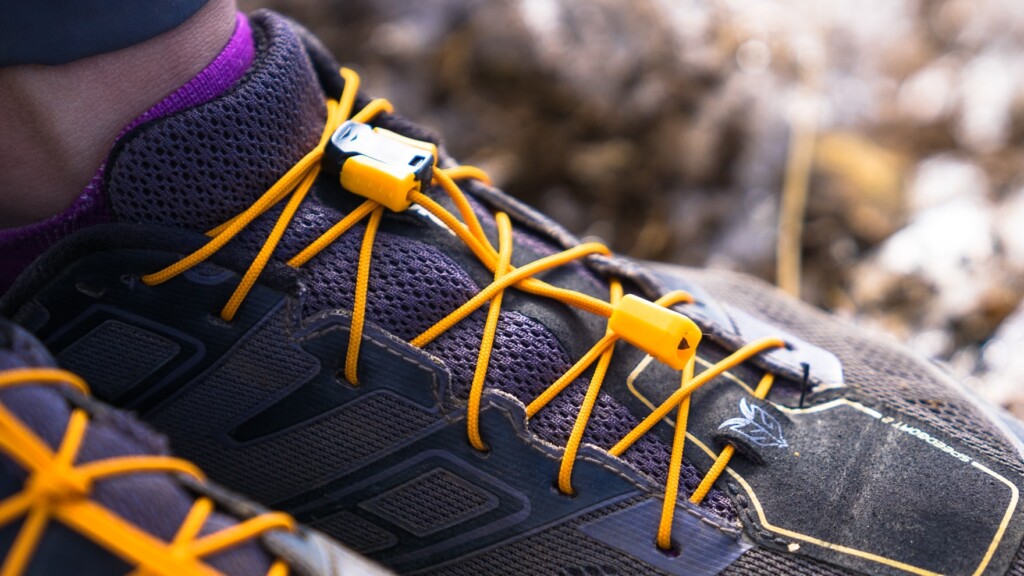
the SPLC , developed by parts manufacturer Nifco, which is what sparked this story received 1141% support in a 2018 . They boast a locking force capable of withstanding a weight of 10kg and can be locked and released with a single action. Nifco, a manufacturer of buckles and other parts, has a long history of developing quick shoe systems for various outdoor manufacturers, and has now launched its own brand and begun development of this product (for more information on this manufacturer, please refer to our past interview ). Incidentally, when it comes to no-tie locking shoelaces, many people probably think of SALOMON's QUICKLACE KIT, but the SPLC because it is positioned as the latest model of its type.

Official page

Candidate 2: Run Laces

NATHAN, a manufacturer of running gear, sells Run Laces .

Official page

Candidate 2: CATERPY [ RUN ]

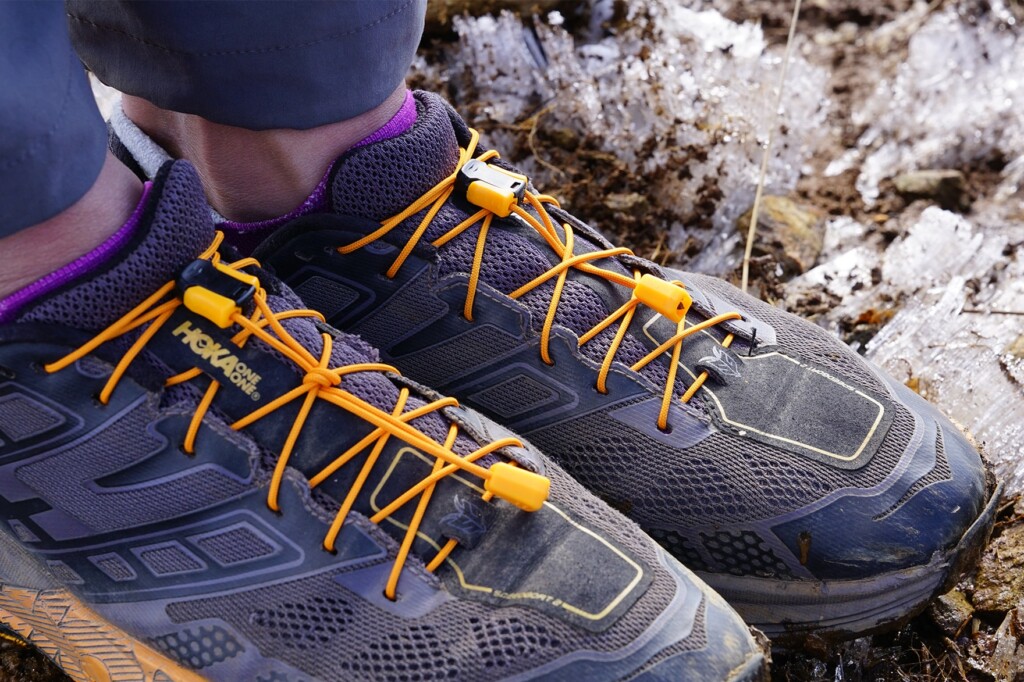
CATERPY [RUN] (and CATERPY [AIR] , hereafter referred to as CATERPY is a type of shoe that adjusts by hooking a knobbed elastic band onto the shoe eyelet . It is a product that has been appearing frequently recently online and in running shops, and is designed with both running and fashion in mind.

Official page

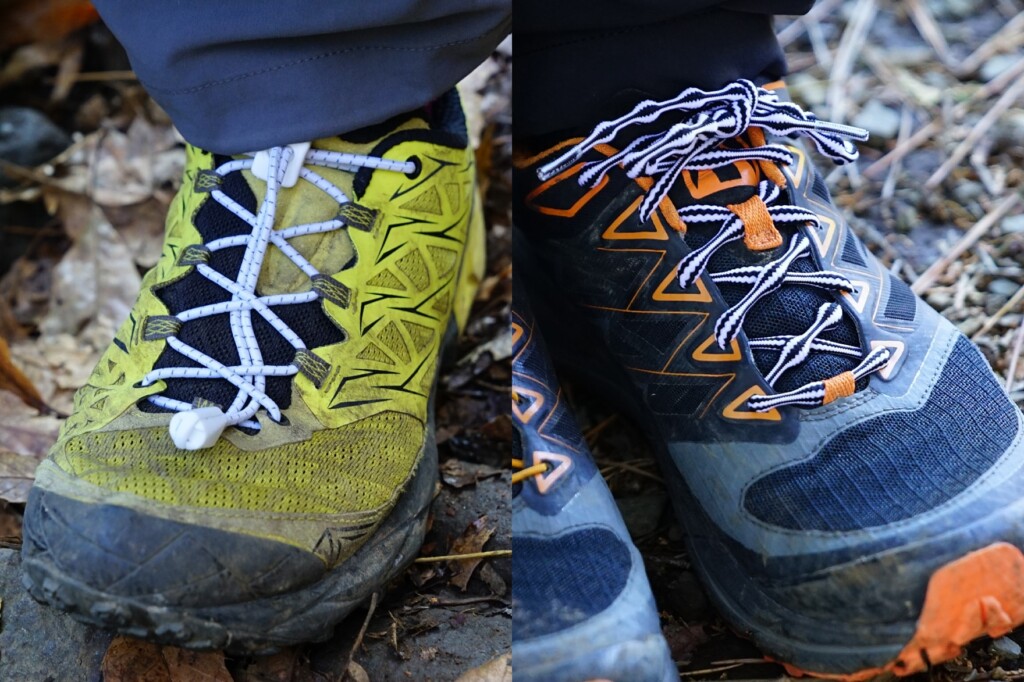
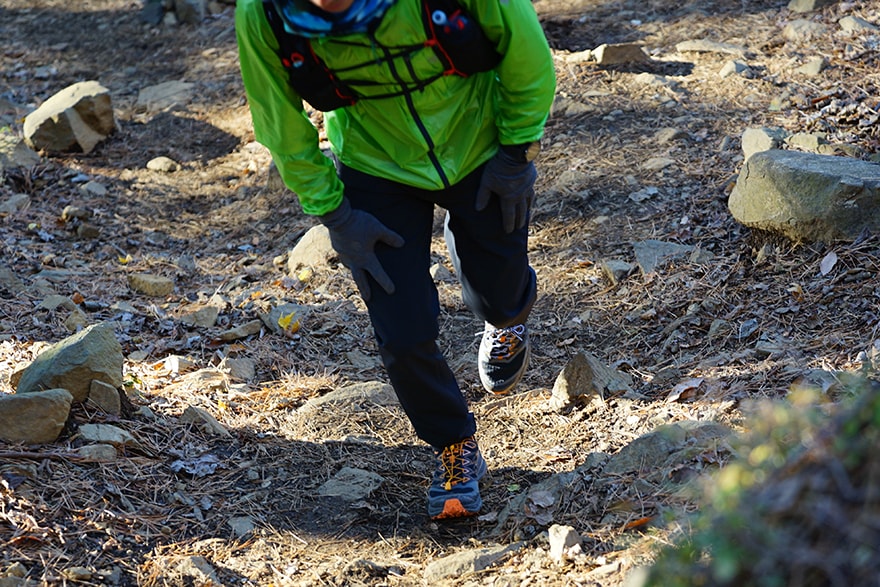
SPLC is made up of lock-and-release parts and non-stretch shoelaces Run Laces is made up of parts plus elastic rubber CATERPY almost entirely of elastic rubber . We attached these to various types of shoes and tried them out while hiking and trail running, under a variety of conditions such as road surface, incline, and speed.

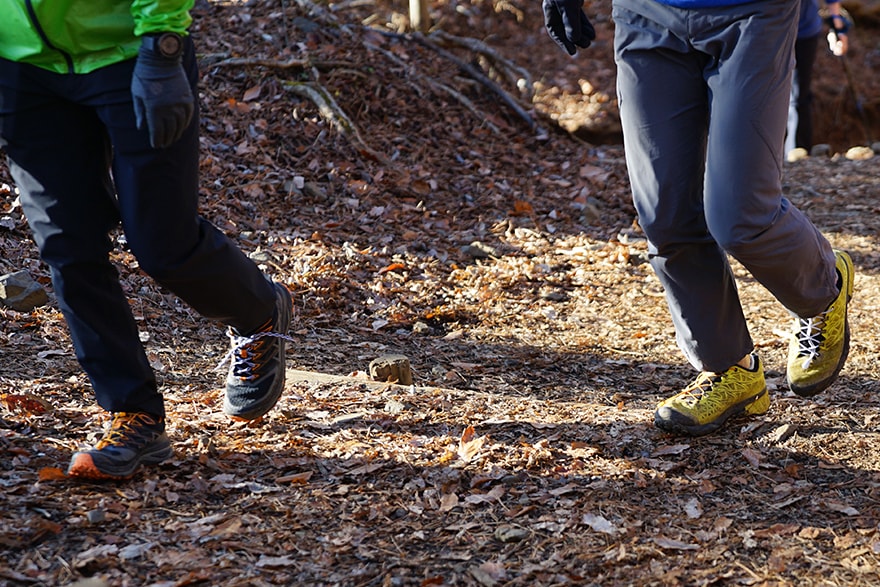
Together with two SPLC staff members who were climbing Tanzawa for the first time, we climbed from the Okura bus stop in Tanzawa to Tonodake!

Detailed comparison

Setting

The SPLC has a diameter of 2mm, making it easy to thread through shoe holes and suitable for most shoes.

On the other hand, Run Laces (approximately 3mm in diameter) and CATERPY (approximately 6mm in diameter) have thick laces, so they may not fit in shoes with narrow eyelets.

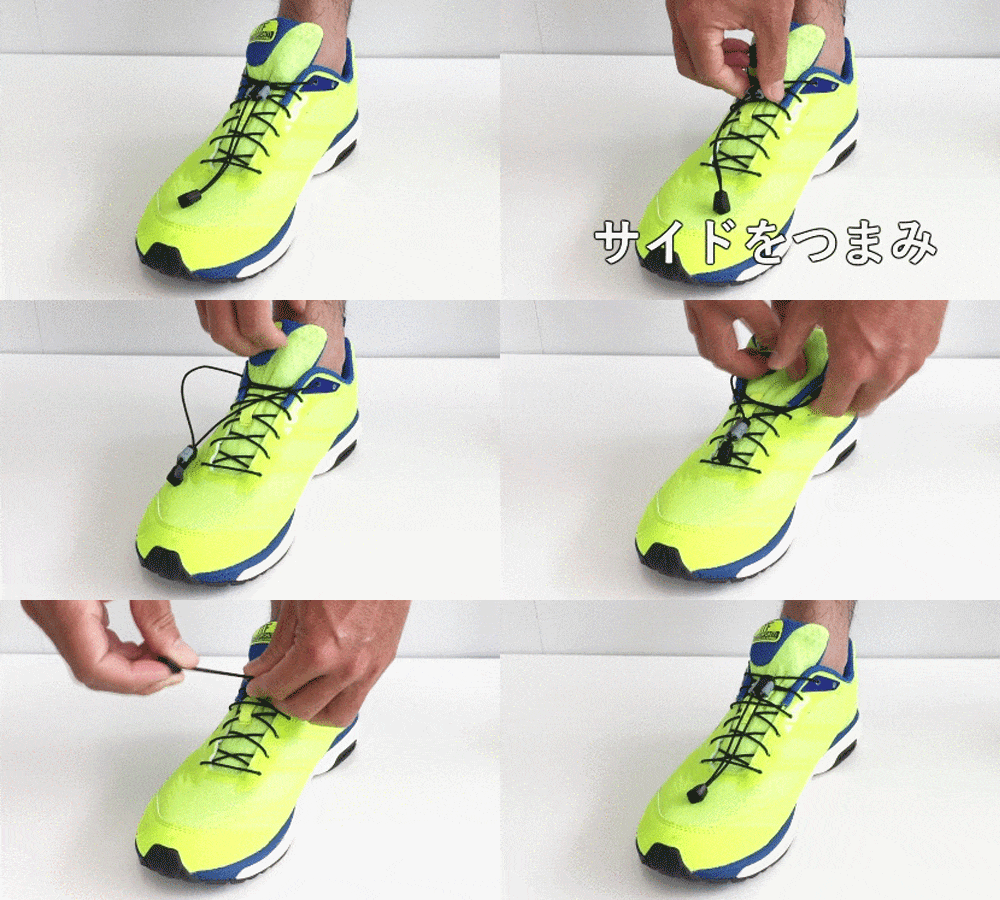
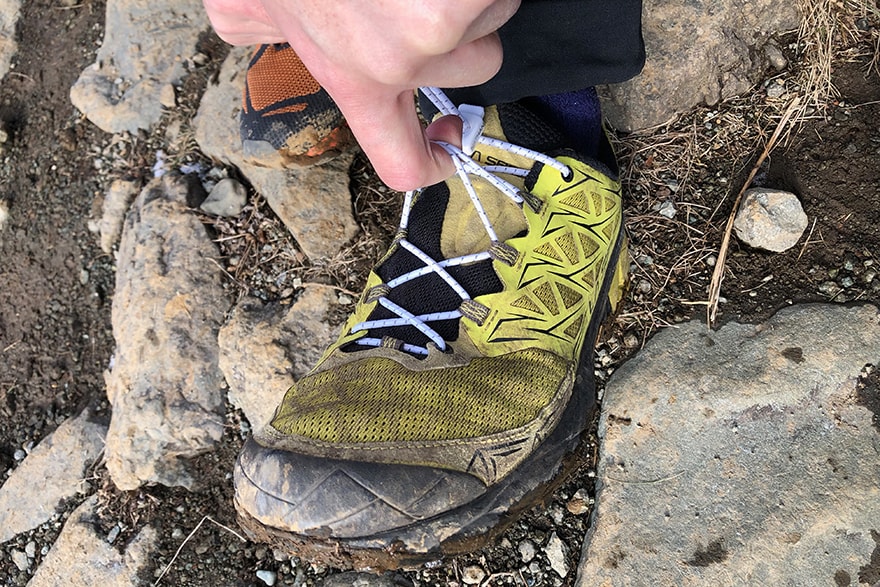
Run Laces and SPLC require a relatively little effort to assemble, but once you learn how to do it, they are easy to install even if you are not very dexterous (the photo below shows how to set up SPLC on the official website).

Can I change to a different shoe?

CATERPY can be set up in the same way as regular shoelaces, and can be easily transferred to other shoes. However, care must be taken if the excess end is cut off. SPLC , which fastens the end of the shoelace with a part, can also be removed, so it can be transferred to other shoes.

On the other hand, the Run Laces has a very stiff claw that locks the device in place. While it's not impossible to remove it with force, it's not designed to be easily swapped between different shoes.

exterior

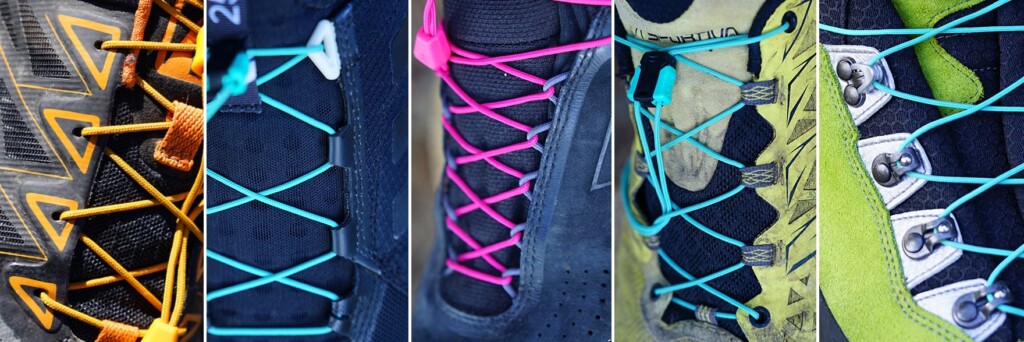
SPLC and Run Laces the lace ends are tucked under the laces on the upper, which can be a bit of a visual distraction. SPLC , which comes in a wide range of colors, is easier to match with the color of your shoes. On the other hand, CATERPY , the stretched ends can be noticeable when tightened, but it has a cleaner appearance compared to the others (the [Air] has fewer bumps and a cleaner look). There are also a wide variety of colors available.

fitting

For SPLC

The biggest advantage is that it's easier to tighten and loosen your shoes than regular shoelaces. The smoothness of the SPLC lock and release was particularly impressive. The action of tightening and loosening the laces is incredibly intuitive and smooth, allowing for speedy setup that's incomparable to regular shoelaces (the photo below shows how to use the SPLC on the official website).

Furthermore, when adjusted correctly, SPLC uses a non-stretchy, abrasion-resistant material, so the fit is almost the same as regular . And the locking system, which can withstand a weight of up to 10 kg, is certainly likely to loosen . As long as the length allows, you can instantly adjust the fit with a single action on a variety of shoe styles, including mid-cut and high-cut styles.

The SPLC allows for smooth adjustment and is difficult to loosen once set, and its fixing power is said to be quite excellent among previous part locking systems

For Run Laces & CATERPY

On the other hand, and this was somewhat expected, the Run Laces and the CATERPY are made of rubber, when you fasten them firmly, the upper inevitably tightens. The CATERPY , has a mechanism where the knobs on the laces fasten to the eyelets, making it difficult to make fine adjustments. The Run Laces have a part that tightens the laces at a moderate point, but the upper still ends up being tight. On the other hand, if you adjust the laces too loosely, your heels will feel like they're lifting up when you move vigorously. This is particularly fatal for trail running, as not only does this cause your landing and push-off to be unstable, but it also makes it easier for pebbles and other debris to get into the shoes. Furthermore, the Run Laces and the CATERPY are made of stretchy rubber, so they tend to loosen easily. The laces gradually loosen up within a few hours of running.

The entire upper is always held in place by elastic rubber, so you feel a constant tightness

Does the fit differ depending on the eyelets?

Just to be sure, I'm trying to see if there is any difference in the tightness depending on the type of eyelet (lace hole)

SPLC , the fit remained consistent regardless of the hole type—fabric, plastic, metal, or lace loop—and the tension was evenly distributed. On the other hand, Run Laces and CATERPY , friction is a factor, so tension tends to be uneven when using non-slip holes like fabric or lace loops, making the fit difficult (although this depends on personal preference).

SPLC strings have a small diameter and low friction, so they feel the same no matter what hole you use

Ease of running on the field

SPLC: Secure fixing force even on hard surfaces, stress-free operation

The shoes fit well with just the right amount of adjustment. They barely loosen while running, going uphill or downhill. They're neither too loose nor too tight, and always maintain just the right amount of hold. They don't loosen even when going downhill or pushing hard, which puts a lot of tension on the shoe. In general, they seem to work well with a variety of shoe uppers

When I tried wearing different types of shoelaces on each shoe, the difference was immediately obvious. I could really feel the high level of fixation provided by SPLC

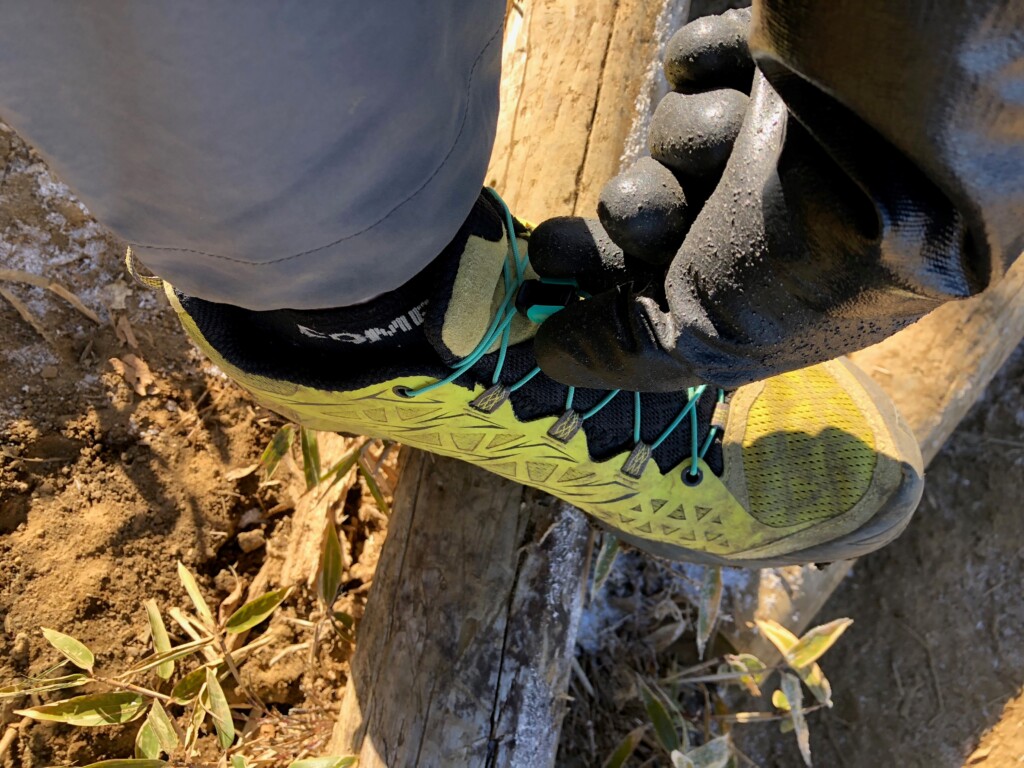
The parts fit comfortably in your hand, are easy to adjust the hold, and can be locked and released with a single action. The ergonomic operation makes putting on and taking off your shoes a breeze. Once you get used to it, you can even release them quickly with one hand! It's easy to operate with bare hands or even with gloves on

Another major advantage of the parts type is that they can be adjusted even while wearing gloves

Run Laces & CATERPY: I'm concerned about using it off-road or on steep slopes

First, the Run Laces . Because the shoelaces are made of rubber, adjusting the tension is difficult (until you get used to it). Even when you loosen the upper part, the toe area always feels tight. When climbing mountain trails, my heels often lift off the heel cup. However, if I tighten them too much, the hold becomes too tight, which could lead to blisters or injury. When descending, the tension on the upper part causes it to slip (loosen) for a moment, which is a concern. I'm a little worried about them in technical areas like scree. Also, locking and releasing is quite difficult without using both hands and bare hands.

Because the laces are stretchy, you will inevitably feel them slipping when pushing hard or braking downhill

Similarly the CATERPY is adjusted using rubber material and knobs, it's undeniable that it's difficult to fine-tune the fit to suit your running style. The upper also the Run Laces . When I actually ran in the field with them, I got the impression that they loosened momentarily on downhill sections, where tension is more likely to be placed on the upper, and always felt tight on uphill sections. Conversely, if they're adjusted too loosely, the heel tends to lift off the heel cup when lifting your foot. Pebbles and sand can also easily get inside the shoe. They're not suitable for people with wider feet or bunions. Some people may experience instability that could cause them to twist their ankles.

About durability

Considering that it will be used in the mountains and in harsh conditions, it will be necessary to check the fragility of parts. Since it is not possible to use large-scale measuring equipment, we checked the fragility of parts by actually using it in the field and by subjecting them to strong impacts

Run Laces and CATERPY shoelaces are made of rubber and are stretchy, so I'm not sure how strong they are. They're also weak to friction, so if they get caught on something like a tree root and start to fray, I think that's the end of it. The SPLC , on the other hand, are resistant to friction and have a core material for added strength, so they're not only stable on the field, but they also showed no signs of deterioration even after washing the shoes with a brush, so there were no problems. Just to be sure, I also tried hitting the locking part with a special gear structure with a hammer, and it didn't break.

"SPLC shoes" vs. "regular lace-up shoes"

So far, out of all the new shoelaces, the SPLC has been far superior in ease of use and running comfort for trail runs. So, just to be extra sure, I tried wearing them on both the left and right sides of my trail running shoes with regular laces to further check the running comfort.

I also compared them with regular shoelaces. Aside from a slight difference in feel, both are fine as shoelaces

To sum up, I don't think there will be any difference in fit while running, so unless you're a sensitive runner, no one will notice the difference. If I had to say, SPLC has less friction than simple flat-woven shoelaces, so when you tighten them, the tension tends to be more easily distributed across the entire upper. If you're particular about subtle comfort, such as wanting to fine-tune the tightness of the instep and ankle, you might find that it doesn't suit your sense of style.

However, distributing tension throughout the entire upper is not a bad thing, and this subtle tightness will become accustomed to as you run, so it's not always effective. Once you get used to it, this shouldn't be a problem. The tendency for shoelaces to loosen is also less noticeable than with previous part-type laces, and it wasn't a problem compared to regular shoelaces. As mentioned at the beginning, shoelaces do have their weaknesses, such as being "annoying to tie every time," "easy to come undone," and "prone to loosening depending on the material and shape." It's important to remember that SPLC overcomes these weaknesses, achieving comfortable operability and a secure hold with a single-action lock and release.

Summary of evaluation results

itemSPLCRun LacesCATERPY
Here is ◎One-action lock and release, secure hold, and versatile for a variety of shoesEasy lock and releaseEasy setup and design
Here is △Nothing in particular (if anything, it's difficult to fine-tune the tension)Rubber gives a tight feeling and loosens easily when subjected to strong impactsRubber gives a tight feeling and loosens easily when subjected to strong impacts
Ease of setup★★★☆☆★★★☆☆★★★★☆
Design and Appearance★★★★☆★★★★☆★★★★☆
Ease and accuracy of fitting★★★★★★★★☆☆★★☆☆☆
Driving comfort and stability★★★★★★★★☆☆★★☆☆☆

summary

Can this new type of shoelace really replace shoelaces? We tested it under the harsh conditions of off-road running and heavy walking, and the results showed that SPLC has the potential. Other elastic shoelaces may be sufficient for flat paved roads, but they are not very suitable for off-road running, such as trail running, where there are frequent ups and downs.

The one-action lock and release is ergonomically designed, can be operated even with gloves on, and requires almost no re-tying. It holds firmly without loosening or unraveling, even on downhill runs where tension is high. Even during intense movements, your feet stay steady and stable, allowing for stable footwork. SPLC provides a running feel almost identical to shoelaces, and its evolved ease of use is truly exceptional. Only those who have used SPLC can truly appreciate this.

However, since there are individual differences, there are some aspects of compatibility between SPLC and shoes (or uppers) that cannot be determined until you actually try them out. If you are wondering if this is true, we encourage you to take this opportunity to try out SPLC. For this reason, we were able to get Nifco to run a monitor campaign, so if you are interested, why not apply?

"SPLC" Monitor Giveaway Campaign Announcement

Nifco, who provided us with the opportunity for this comparative review, would like to inform our readers about a monitor giveaway

100 people who actually use SPLC and answer a questionnaire will be entered into a drawing to win one SPLC. Those who also share their experience on social media will receive an additional SPLC

The application process is simple. All you have to do is register as a new "SPLC SHOP member" on the official SPLC sales website during the campaign period. SPLC will contact the winners with a free coupon at a later date. The detailed process is explained below

Application Guidelines

Monitor gift campaign flow

  1. If you would like to be a monitor, please read the "Application Conditions," "How to Apply," and "Notes" below, and then go to the membership registration form page linked to the "Apply here (SPLC membership registration)" button below by Thursday, January 31, 2019
  2. In the information input field , there is an item called "Monitor Campaign Application Field." Please enter "Apply for the monitor campaign"
  3. The Nifco Campaign Office will hold a lottery and contact the winners on Monday, February 4th to inform them of the shipping of the product and details of the monitor program.
    *Please check the winning notification for details on the process and important points to note.

Application Deadline

Thursday, January 31, 2019

Application conditions

  • Those who agree to register as SPLC SHOP members
  • Anyone who answers the online survey after using the product will receive
    a free gift. *If you also have your own blog or social media account (Facebook, Twitter, Instagram) and post your impressions, we will give you another free gift.
  • Those who agree to have their posts and survey responses published on SPLC SHOP in a way that does not identify individuals

About the lottery and product shipping

The lottery results will be announced upon shipping of the product. Winners will be shipped their products in order after the deadline. Details of the monitor will be explained individually once the winners have been confirmed and the product has been shipped

What monitor participants need to do

What you must do:
After using the product, please answer the feedback survey we will provide you with by the specified deadline.

What we would like you to do if possible:
Write a blog post or social media post about the test product, including your impressions after use, by a specified date.

Number of winners

100 people

How to Apply

Clicking the "Apply here" button below will take you to the SPLC SHOP membership registration page. There, in the information entry field, there is a section called "Monitor Campaign Application," "Apply for the monitor campaign" , enter the other required information, and then apply.

*Applications for the campaign closed on January 31st. Thank you to everyone who applied!