



Buying Guide: CASIO, GARMIN, and EPSON: Finding the Best GPS Outdoor Watch for Your Purpose [Part 1]

Written by Yasushi Hisatomi
Sports watches with built-in GPS have become increasingly popular in recent years
It all started with the release of the Apple Watch in 2015, which led to a rapid expansion of the smartwatch (wristwatch-type wearable device) market At first, they were simple devices that only recorded things like running distance and time, but recently, models have been released that can view, record, and analyze detailed data tailored to various activities and even provide advice, and they have continued to evolve steadily. For many people, smartwatches are now becoming indispensable gear in the sports and outdoor fields. I am one of them.
Among these smartwatches, outdoor watches with built-in GPS, ABC (altitude, barometric pressure, direction) functions, and offline map display functions are useful for mountain climbing, where you need to know your current location and be aware of external dangers, including the weather
This time, with the cooperation of CASIO, we were able to try out three representative models of GPS outdoor watches at the same time. In this field, products are unfortunately expensive, but their actual functionality and usability are difficult to gauge from the outside, so this project was a godsend for this site. We're sure that many of our readers were interested in this
When actually comparing them, there were many advantages and disadvantages that cannot be measured by price alone. This time, assuming use for mountain climbing, I would like to thoroughly compare them in two parts, including the good and bad points. Of course, this review is only based on what I saw during this trial, but I hope it will be of some help to those who are unsure which one to buy to find out which is best for them
table of contents
table of contents
- Items compared and test environment
- Detailed comparison review
- Summary: What are the recommendations for each type? [Jump to the second part]
- [Reference] Specs and function comparison table
About the items tested this time
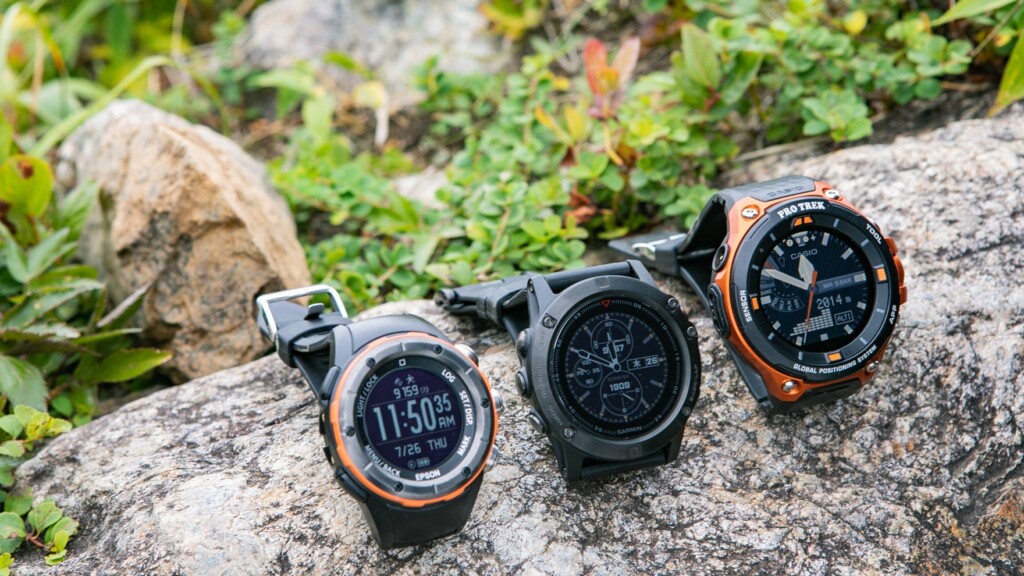
The three models available this time come standard with the ABC functions required for mountain climbing, and are also capable of displaying routes using GPS and offline maps
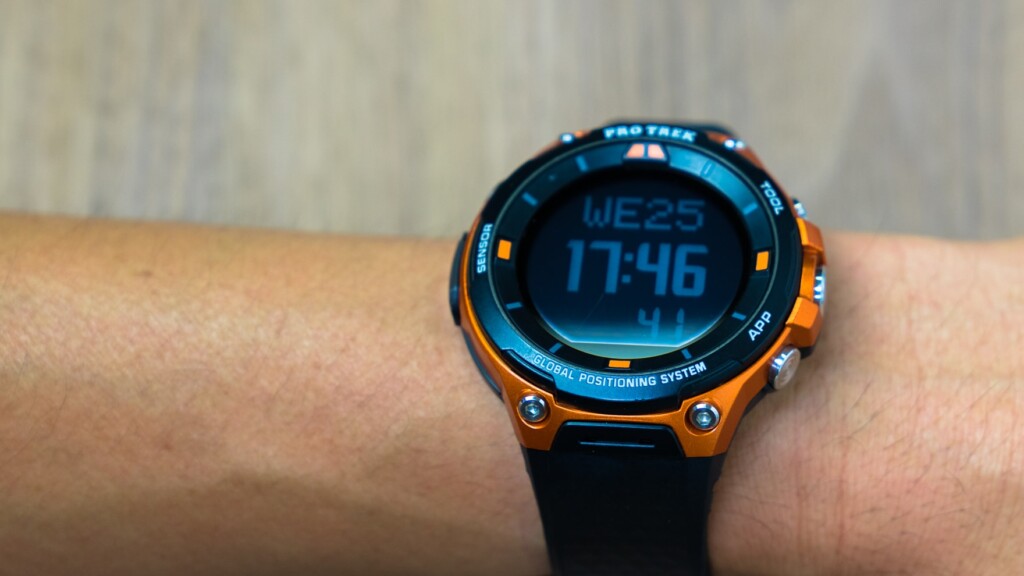 One is the PRO TREK Smart WSD-F20 (hereinafter referred to as WSD-F20), an outdoor smartwatch from the CASIO PRO TREK series, which has earned the trust of professional mountain guides, climbers, adventure racers, and others .
the fenix 5X Sapphire (hereafter referred to as fenix 5X) 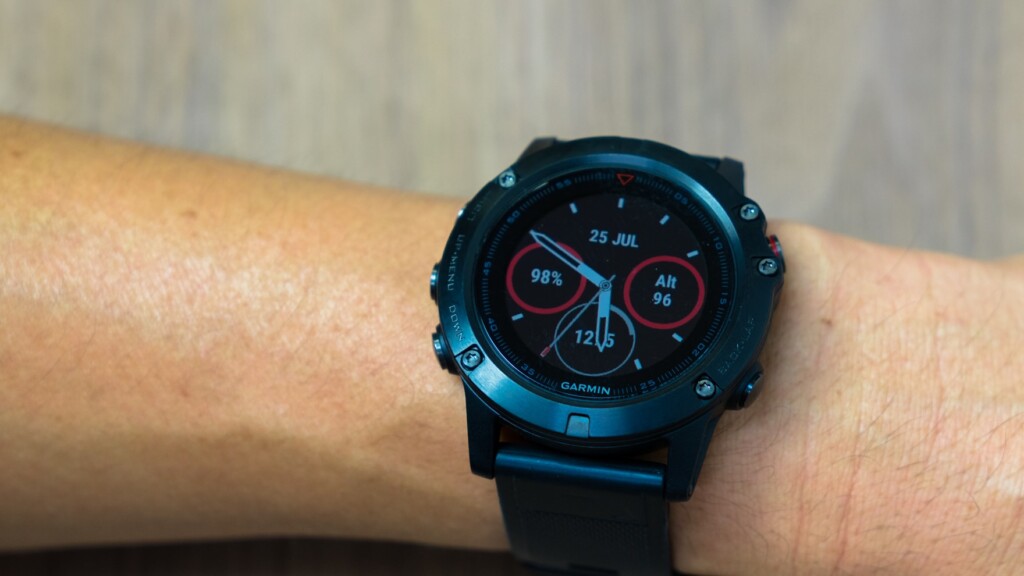 , a high-end multisport GPS outdoor watch from GARMIN, a global leader in portable handheld GPS navigators . A top-of-the-line model, the fenix 5X Plus, was recently released. However, the changes were limited to the music function and improved battery life, so we chose the standard model, which is still on sale, as the comparison model.
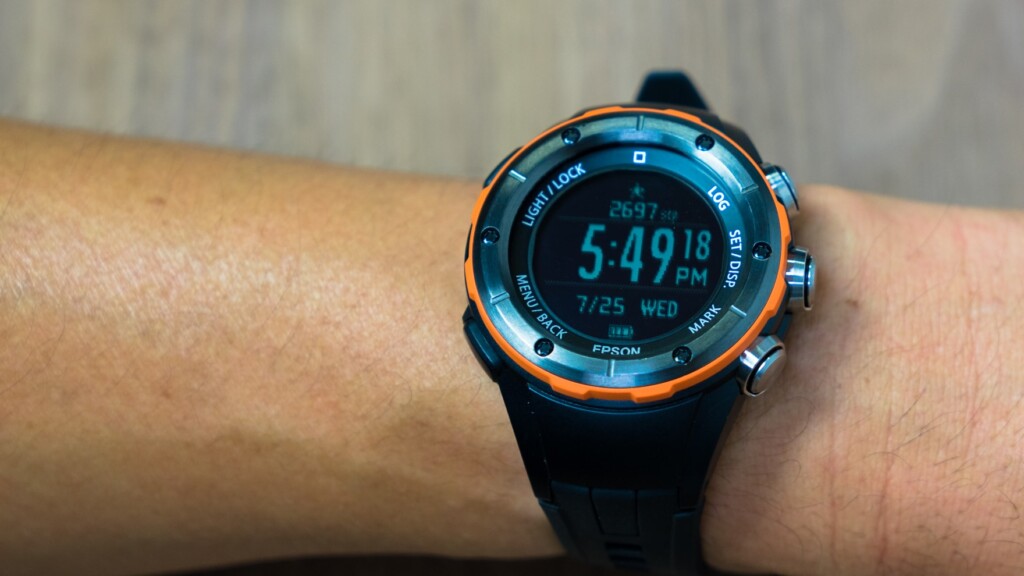 Finally, we have the Wristable GPS for Trek MZ-500 (hereinafter referred to as MZ-500) .
Although these three models are all introduced as being for mountain climbing, subtle differences in their concepts mean that their usability varies greatly. It's a good idea to understand the strengths and weaknesses of each model to avoid regretting your expensive purchase later
Test environment
I tested this GPS outdoor watch for about a month in July 2018, mainly on courses in Okutama and the Joshinetsu region, in mountain climbing and hiking mode (I decided not to compare it in running mode). The test was conducted by me and a few support people. Starting with a 100% charge, we tried out all of the built-in functions, including normal use, app use, and planned route navigation, all at the same time on the same route
Detailed comparison review (Part 1)
1. Appearance: GARMIN with a luxurious feel, CASIO with an outdoor feel, and EPSON with a compact design
First, let's compare their appearances
At first glance, the compactness of the MZ-500 the WSD-F20 and fenix 5x look and feel bulky. The WSD-F20 has a large bezel and strap connection (lugs), making it feel quite noticeable when worn.
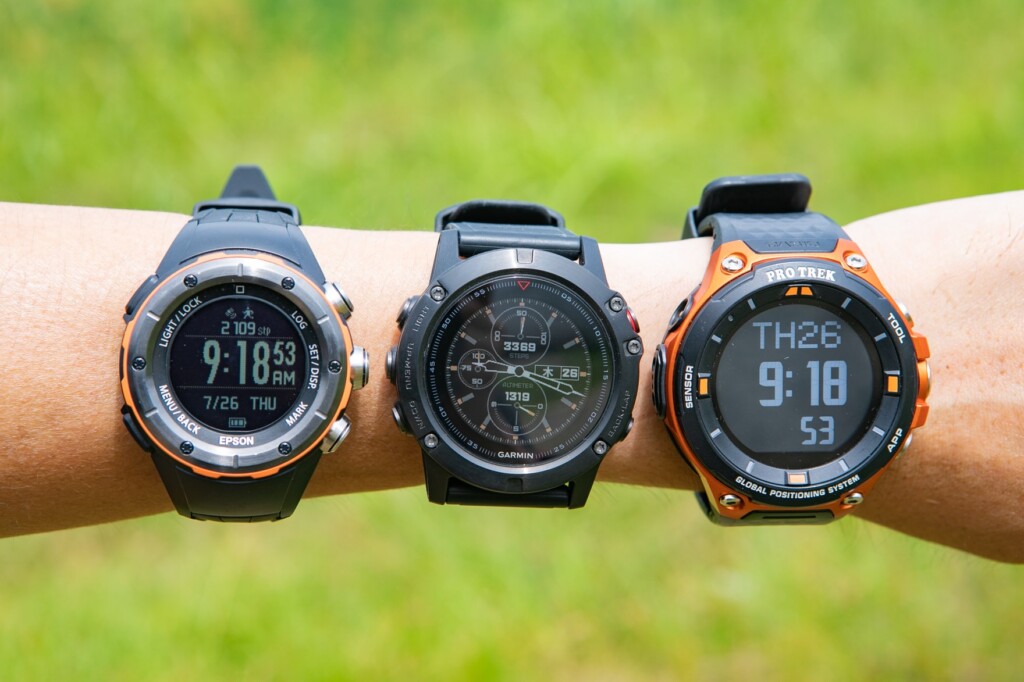
The bezel on the Epson is small, while the Casio is large. The Garmin isn't small either, but it's just barely within the acceptable range
Design is a matter of personal preference, but the WSD-F20 , for better or worse, is typical of PRO TREK, with a design that strongly emphasizes a rugged, mechanical impression, the MZ-500 can be said to be in the same lineage. If you're looking for an outdoor feel, it's not a bad look. On the other hand, the fenix 5x , as you'd expect from a camera in a significantly higher price range, has a matte stainless steel texture that exudes a sense of luxury. Although it's a bit bulky, I feel like it would go well with a gym suit. This is quite important for a model that needs to be worn constantly to measure heart rate.
On the other hand, they are all about the same thickness. Frankly, they are "thick." They get caught every time I put on my backpack. Is there anything I can do about it?
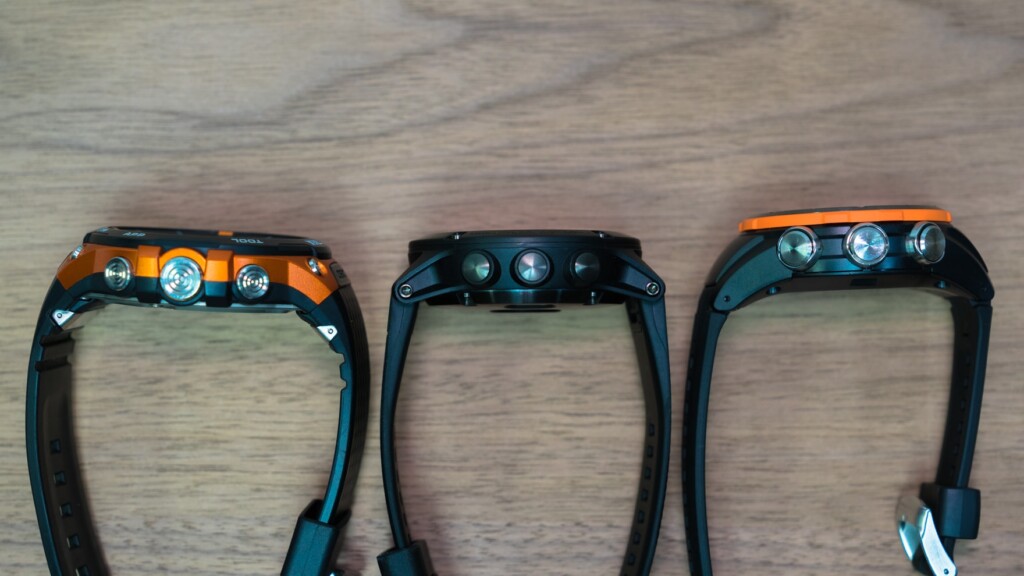
The thickness of the watches is thicker than that of regular watches
| Item Name | CASIO PRO TREK Smart WSD-F20 | GARMIN fenix 5x Sapphire | EPSON Wristable GPS for Trek MZ-500 |
|---|---|---|---|
| weight | Approximately 92g | Approximately 98g | Approximately 67g |
| size | Approximately 61.7 x 57.7 x 15.3 mm | 51.0 × 51.0 × 17.5 mm | Φ47mm t=17.6mm |
2. Overall screen and map visibility: CASIO's LCD display is a cut above the rest
Next, let's compare the screen displays. The WSD-F20 and fenix 5x have color displays, the MZ-500 has monochrome displays, which is a big difference. In that sense, the MZ-500 's expressive power is inevitably inferior.
So what's the difference between the Casio and Garmin models? The conclusion is that the WSD-F20 is clear, bright, and easy to read. The 1.32-inch, 320 x 300 pixel, dual-layer color TFT LCD screen offers high resolution, crisp text, and excellent visibility in both shade and sunlight. Even for those accustomed to smartphones, the display feels completely natural.
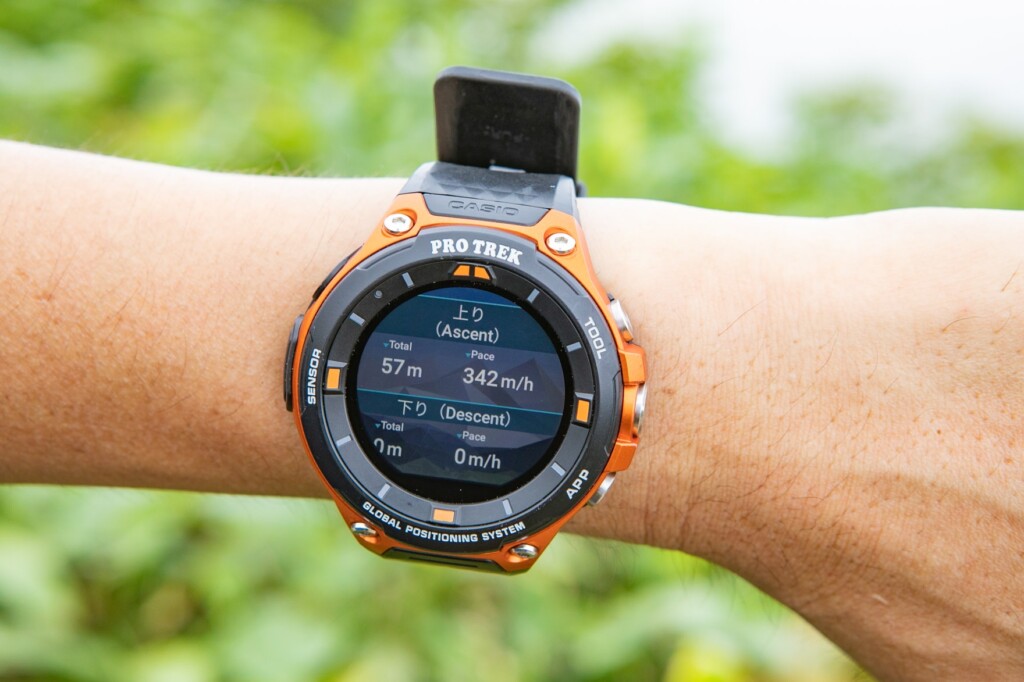
It's a small difference, but the clarity of the Casio LCD is in a class of its own
On the other hand the fenix 5x 's 1.2-inch, 240x240 pixel transflective MIP LCD screen, while contributing greatly to battery life, feels a generation behind in terms of color depth and text quality. However, it's not enough to be particularly dissatisfied, and this is purely a relative term.
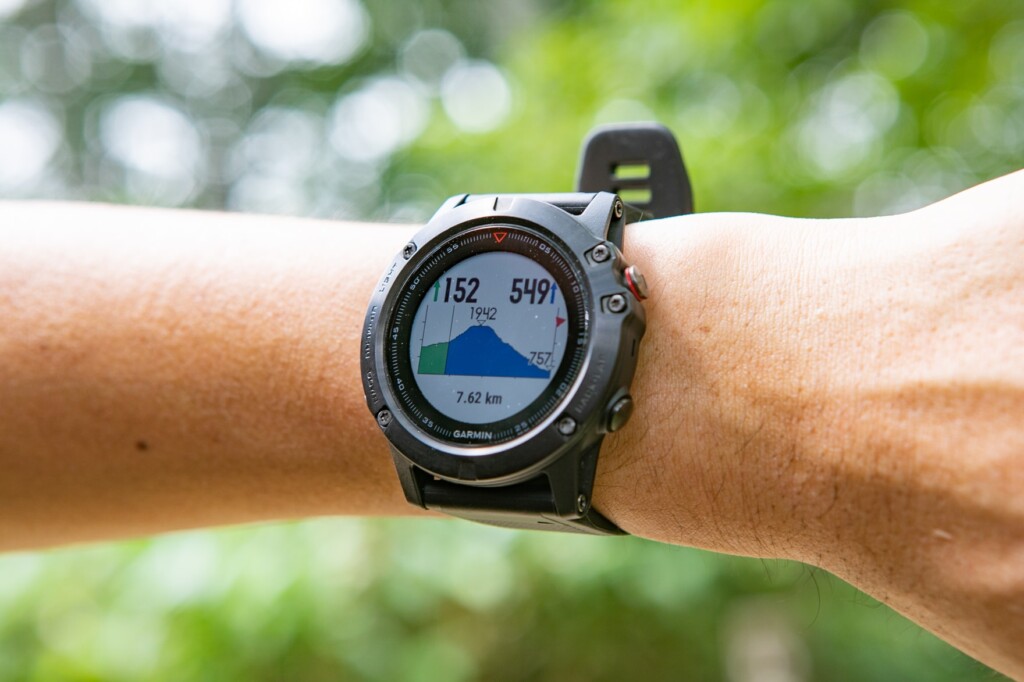
It's not that it's difficult to see, but Garmin's LCD display is relatively rough
The most critical aspect of the screen's visibility is when displaying a map, which is one of the highlights of this comparison. Seeing is believing, so the photo below shows maps displayed side by side. Both were compared at maximum brightness with the backlight on

The Casio can clearly see the YAMAP 250,000 map. The Garmin topo map has the minimum brightness and detail
You'll notice that the WSD-F20 the fenix 5x is familiar to me in a way, but those who normally use maps on their smartphones may find it a little lacking. Incidentally, with the Epson, if you set a course on the watch in advance, it will display your current location as shown in the photo, but you can't do anything more with the map, such as checking your current location outside of the course.
3. Waterproof and durable – High durability for a smartwatch
Since they are used outdoors, they need to have a certain level of durability and weather resistance to be of any use. Here we will compare their durability
| Item Name | CASIO PRO TREK Smart WSD-F20 | GARMIN fenix 5x Sapphire | EPSON Wristable GPS for Trek MZ-500 |
|---|---|---|---|
| Display Type | Inorganic glass/capacitive touch panel (with anti-fouling coating) | Sapphire Lens | Mineral glass (anti-fogging treatment) |
| waterproof | 5 atmospheres | 100m | 10 atmospheres (100m) |
| durability | Compliant with MIL-STD-810G (US military procurement standard established by the US Department of Defense), low temperature resistance (-10°C) | Operating temperature -20~50℃ | Operating temperature -20~60℃ |
the fenix 5x in that it uses sapphire crystal, a material that is scratch-resistant and often used in luxury watches. However, when hiking, the watch is prone to strong impacts that are not common in everyday life, such as dropping it on hard rocks. Even though it's sapphire crystal, it can easily get scratched (tears).
In terms of water resistance, the Epson and Garmin models are waterproof to 10 atmospheres (100m). Both models are resistant to splashes of water, but you should avoid leaving the WSD-F20 in water for long periods of time
In terms of overall environmental resistance, only the WSD-F20 has passed the MIL-STD-810G durability test set by the US Department of Defense, so it's safe to say it can withstand some tough usage, including drops and vibrations