



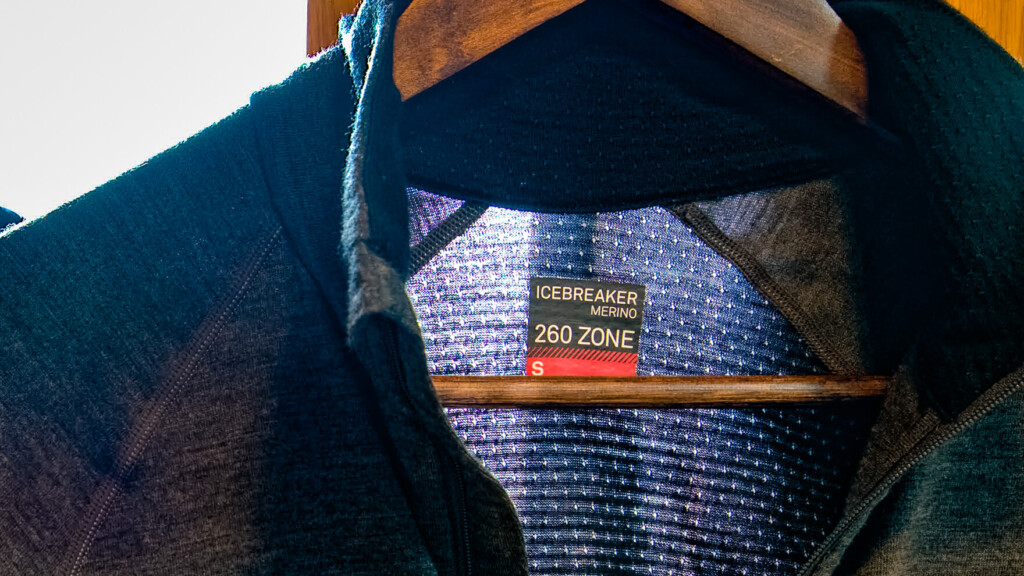
Review: icebreaker Merino Wool Base Layer Zone Series The latest merino wool is not just "warm!"

The days when the company was founded in 1995 and no one paid any attention to it because it was made of wool are long gone
Icebreaker's merino wool, which overturns conventional ideas about wool, is gradually gaining popularity and is now chosen by a wide range of athletes, from mountaineers to hikers, runners and climbers. Thanks to its easy maintenance and high odor resistance, it is now widely worn by businessmen and travelers alike
In recent years, not only is it comfortable, but it has also been rediscovered as being useful in times of disaster due to its properties such as requiring less washing (saving water), being resistant to heat and cold, and being flame-retardant (even if it burns, it will not char and stick to the skin)
we tried out the autumn/winter model from the Zone series , a new lineup of merino wool base layers from icebreaker
In recent years, a wide variety of base layers have been released for a variety of activities. Whether you're already a merino wool lover or have never worn one before, we'll take a look at what makes these latest models different from the previous models
table of contents
A look at the properties of merino wool
Icebreaker's Merino wool is made from the raw wool of sheep raised at an altitude of 1,800m in New Zealand. The wool of sheep raised in a harsh climate with large temperature differences, ranging from 35°C in summer to -20°C in winter, has the following natural protection properties. These features allow you to stay comfortable during activities in a variety of harsh environments, from winter to the heat of summer
Moisture absorption and humidity control
Unlike synthetic fibers, merino wool has moisture-wicking properties, so it constantly absorbs and evaporates the water vapor emitted by the body, even when you're not sweating. When you exercise and sweat, the fabric actively absorbs the moisture through capillary action, keeping your skin dry
Merino fibers have high moisture absorption properties, absorbing moisture vapor emitted by the body before sweating and releasing it into the air. Also, sweat produced during exercise is absorbed and evaporated by capillary action, keeping your skin dry and comfortable at all times. Furthermore, wool retains moisture, so it won't dry your skin out like synthetic fibers, providing the perfect dry feeling you expect from natural materials
temperature control
In cold winters, the heat absorbed when sweating and body heat are stored in the air pockets created by the ultra-fine fibres of merino wool, helping to maintain an appropriate temperature inside the garment. Conversely, in hot summers, the moderate breathability and gradual moisture absorption and evaporation promote naturalised cooling
Antibacterial and deodorizing
The cause of unpleasant odors is the fat and salt in sweat that adheres to fibers, causing bacteria to grow and produce unpleasant odors. Merino wool is less susceptible to these bacteria, so odors are less likely to develop and you can wear it for days without washing
Other features that are unimaginable for ordinary wool products include UV protection, pilling resistance, and the ability to be washed in a home washing machine. Unlike synthetic fibers, icebreaker's products made from high-quality merino wool are made from nature without using petroleum, making them recyclable. The spirit of sustainability that modern society should strive for is also one of the company's philosophies
About Icebreaker base layers
Icebreaker now offers a wide variety of clothing and accessories, but their lineup of base layers, which have been synonymous with the brand since its founding, is particularly extensive. Customers can choose the appropriate model for the season, use, or purpose, and for the 2019 season, they offer the following lineup, which differs in merino wool content, amount (thickness), knitting method, etc
- "Zone" series
- "Tech" series
- "Oasis" series
- "Anatomica" series
Each base layer is rated 260, 200, or 150 depending on the weight (thickness) of the wool fabric used. These numbers represent the weight per 1m2, so 260 means that 260g of merino wool is used per 1m2. Therefore, the higher the number, the thicker the fabric and the better its heat retention
Zone Series
The Zone Series is a base layer designed to be comfortable during high-intensity activities by blending merino wool with synthetic fibers, adding stretch and other properties to the inherent advantages of merino wool, improving the fit and making it suitable for everyday wear. A key feature is the use of mesh fabric in areas where sweating is high. Thinner mesh fabric on the back, sides, and torso provides increased breathability and quick-drying properties.
The fabric thicknesses are 260, 200, and 150, each with a different percentage of merino wool. 150 is designed for more vigorous activities, with a lower percentage of merino wool and a higher blend of differentiated fibers for quick-drying, warmth, and durability. As the thickness increases to 200 and 260, the percentage of merino wool increases, providing better warmth and corresponding lower exercise intensity
"Tech & Oasis" series
Both Tech and Oasis are long-selling, classic series made from 100% merino wool. The difference between the two models is the thickness of the fabric: Tech is 260g/m², while Oasis is 200g/m². They are available in crew neck and half-zip models. Compared to the tight-fitting Zone, the design and form are more basic. Even with the same weight, they offer higher levels of warmth, making them versatile models that can be used as layering for low-intensity activities or as a cut-and-sew top for everyday use in cold weather
"Anatomica" series
Unlike Zone, Tech, and Oasis, Anatomica was developed with everyday wear and use as underwear or undergarments in mind. To achieve this, the fabric is thin and light, while at the same time, it uses core-spun yarn, a structure in which wool yarn is wrapped around a more durable nylon core to prevent deterioration through washing. The wide range of styles in the lineup, from long sleeves to short sleeves, tank tops, and boxer shorts, is also a reflection of this concept. The fabric is thin at 150 g/m², making it suitable for year-round use, making it ideal for everyday wear as well as travel
Icebreaker base layer lineup comparison chart
If you find it difficult to see the table on the lightweight display for smartphones, click here.
| item | 260 Zone | 200 Zone | 150 Zone | 260 Tech | 200 Oasis | Anatomica |
|---|---|---|---|---|---|---|
| material | Main body part 97% Merino wool Lycra® 3% Mesh part: Inserts: | Body: Mesh part:
| Body: Mesh: | 100% merino wool | 100% merino wool | 83% Merino wool, 12% Nylon , 5% Lycra® |
| Fabric Thickness | 260g/m2 | 200g/m2 | 150g/m2 | 260g/m2 | 200g/m2 | 150g/m2 |
| Variations |
|
|
|
|
|
|
| Comfort | ★★★★★ | – | ★★★★☆ | – | – | – |
| Breathable | ★★★★☆ | – | ★★★☆☆ | – | – | – |
| quick drying | ★★★★☆ | – | ★★★☆☆ | – | – | – |
| Sweat absorption | ★★★★☆ | – | ★★★★★ | – | – | – |
| durability | ★★★☆☆ | – | ★★★★☆ | – | – | – |
| Heat retention | ★★★☆☆ | – | ★★★★★ | – | – | – |
Detailed Review
260 Zone and 150 Zone base layers, which are designed for high-intensity activities . We selected the 260 as a long-sleeved half-zip jacket and the 150 as a long-sleeved crew neck jacket.
260 Zone Long Sleeve Half Zip

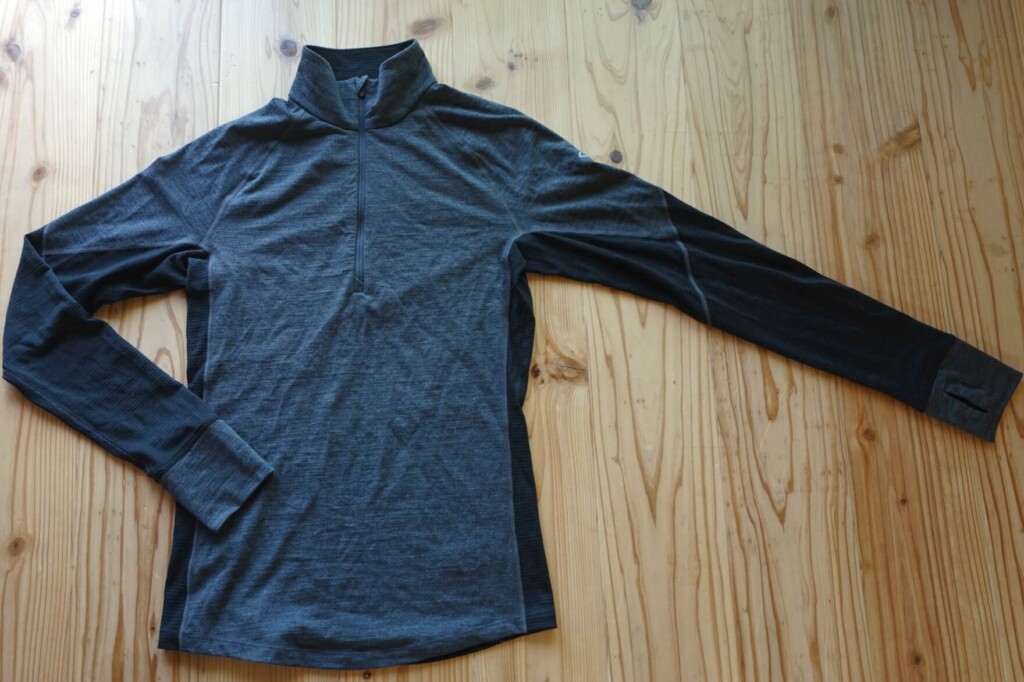
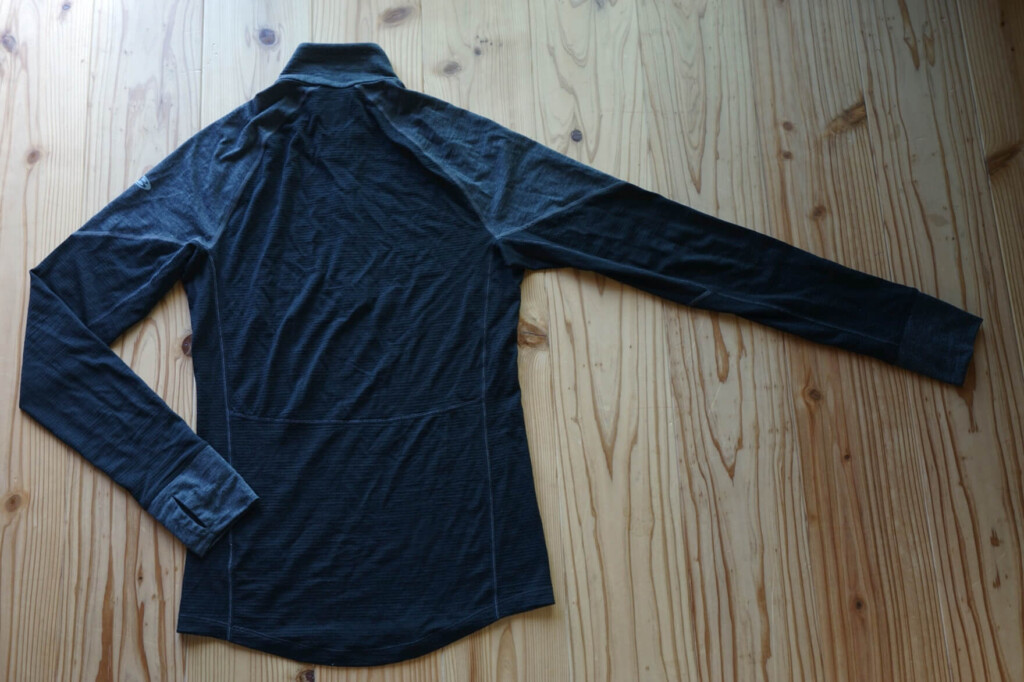
The 260 Zone is the thickest of Icebreaker's base layers, with a fabric thickness of 260/m² and a high merino wool content of 97%. It's also blended with 3% Lycra for added stretch. To further enhance comfort, body mapping technology is used to place different fabrics in the right areas. Mesh fabric is placed on the back and underarms/torso, areas prone to sweating, to improve breathability, while thicker waffle-weave fabric is placed around the waist and under the elbows, areas prone to wear and tear and requiring durability
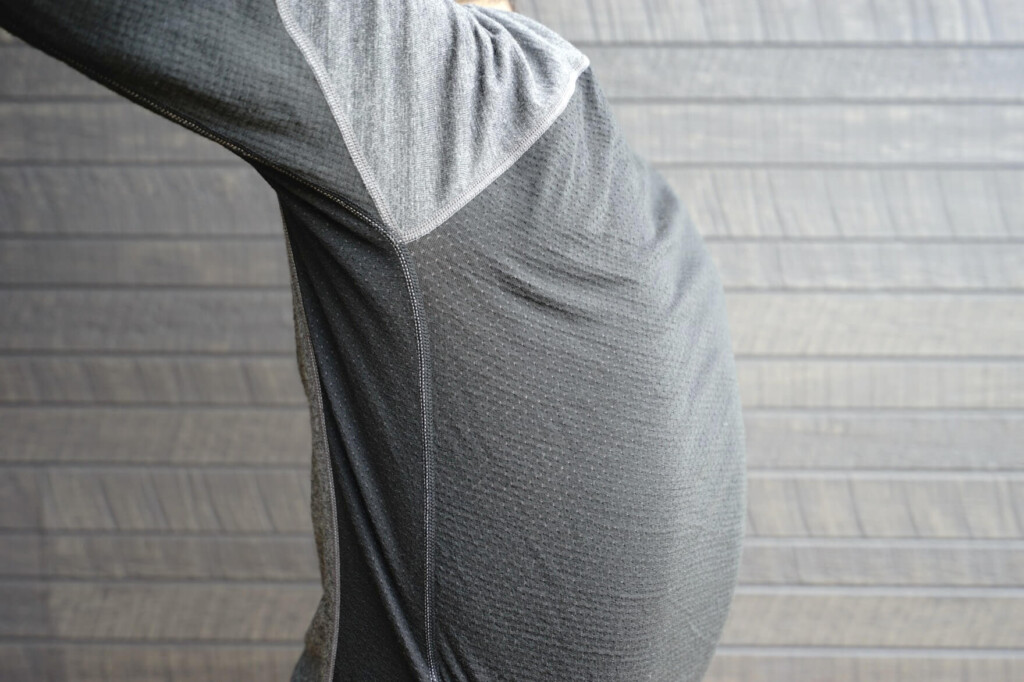
Mesh panels are placed on the back, sides, and torso sides to improve breathability, and thick waffle fabric is placed on the sleeves
The fit is slim and not too loose. However, it doesn't impede movement, so it's stress-free. It's amazing how much difference just a few percent of Lycra can make. The raglan sleeves allow for good shoulder movement. The sleeves are a little long, but considering the thumbholes, it's not too long. The thumbholes are made of double-layered fabric, which improves durability
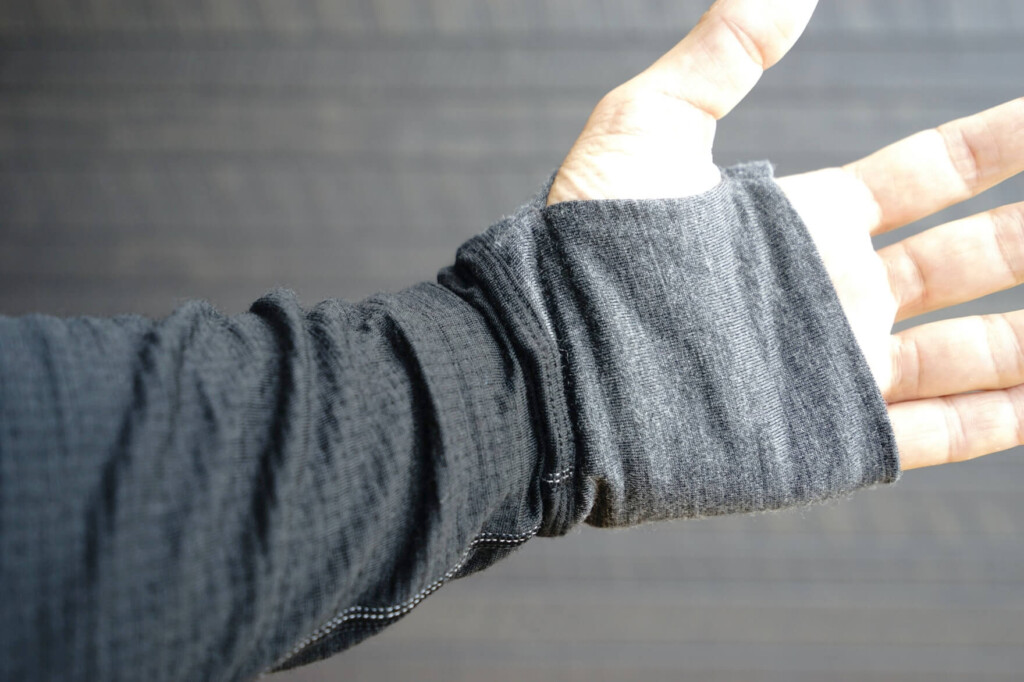
The thumbhole area (light grey) is made of double-layered fabric for increased durability
As you'd expect from the thickest fabric, it's extremely warm and insulating. Merino wool quickly absorbs sweat, so you won't have to worry about sweating if you wear it in cold weather. The absorbed sweat evaporates more slowly than synthetic fibers, so your body heat won't be lost all at once due to radiative cooling. Synthetic fibers don't retain the absorbed sweat, so they evaporate it quickly, which can make you cold, especially in cold weather, but you don't have to worry about that with merino wool
For high-intensity runs, this jacket is quite warm while you're running, so you can run even in winter with just this jacket. However, it can get quite cold when the wind blows, so if you go to the mountains for trail running or other activities, simply throw on a windproof jacket over it, and it seems like it could be used for a wide range of activities. However, as mentioned above, it's quite warm, so it may be too warm for running in really cold weather or in areas other than snowy regions. Rather, the characteristics of this model would be best utilized in activities that involve a good balance of activity and stillness, and where temperature differences are common, such as winter mountain climbing, backcountry skiing/snowboarding, climbing, and ice climbing
In addition to the half-zip style reviewed here, the 260 comes in three other styles: crew neck and half-zip hood. Personally, I think the half-zip or half-zip hood styles are a good choice for the 260. The zipper is quite long, reaching almost to the navel. Opening it all the way down allows heat to escape all at once, which is very convenient
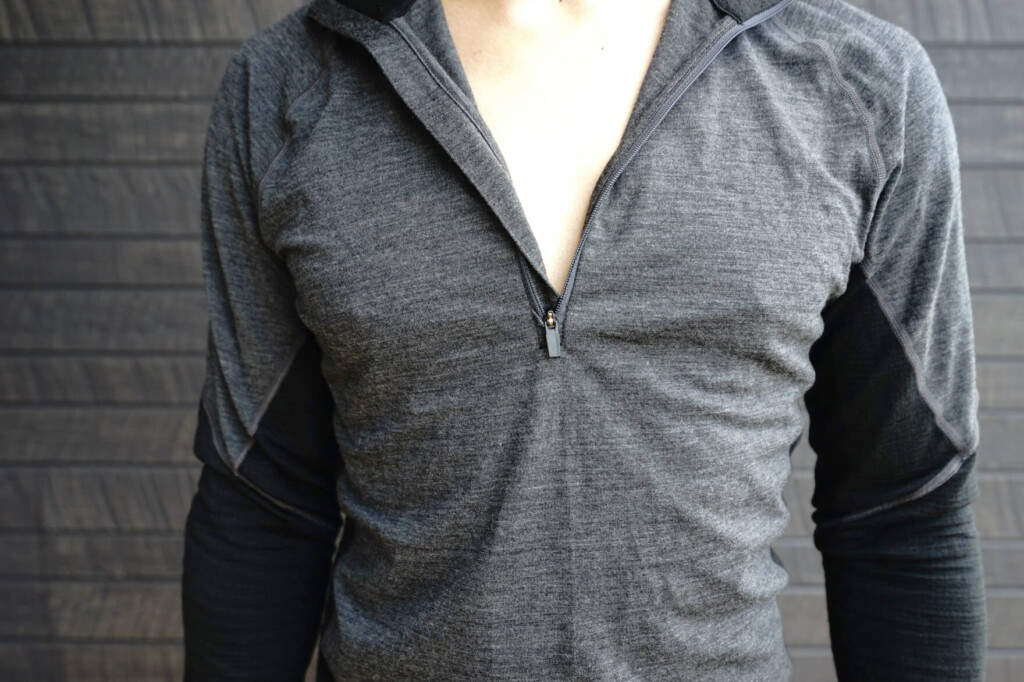
The zipper is long enough to go all the way down to your navel, allowing you to release heat quickly
In addition, the zip-up model has fabric all the way up to the neck, so if you zip it up it can double as a neck warmer, making it very versatile. Since the fabric is thick and highly insulating, this adjustable feature broadens the range of uses
150 Zone Long Sleeve Crew

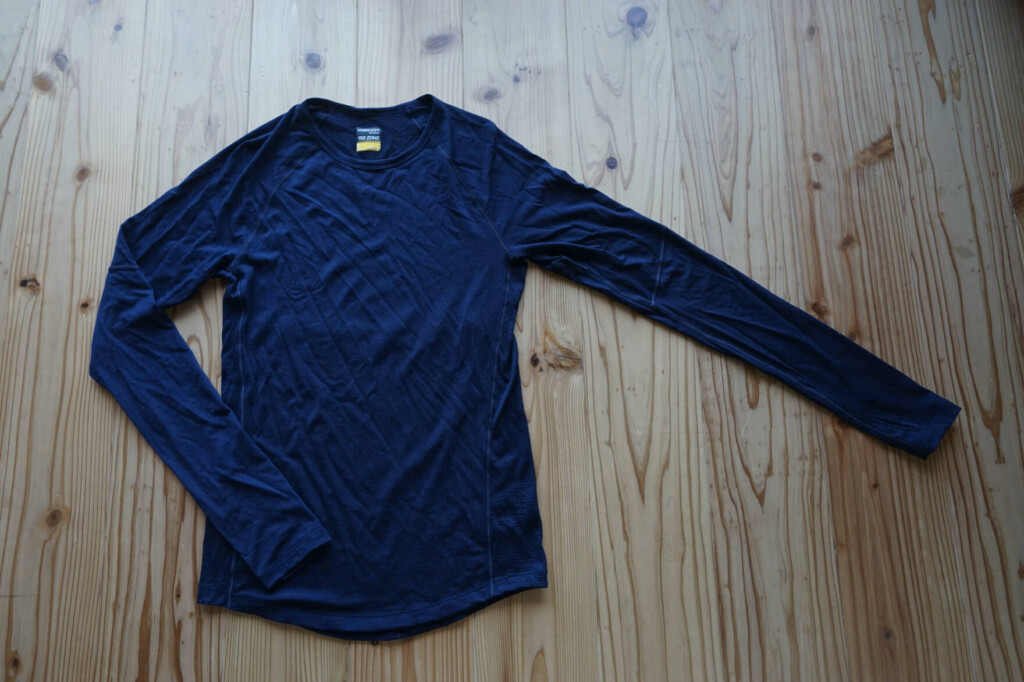
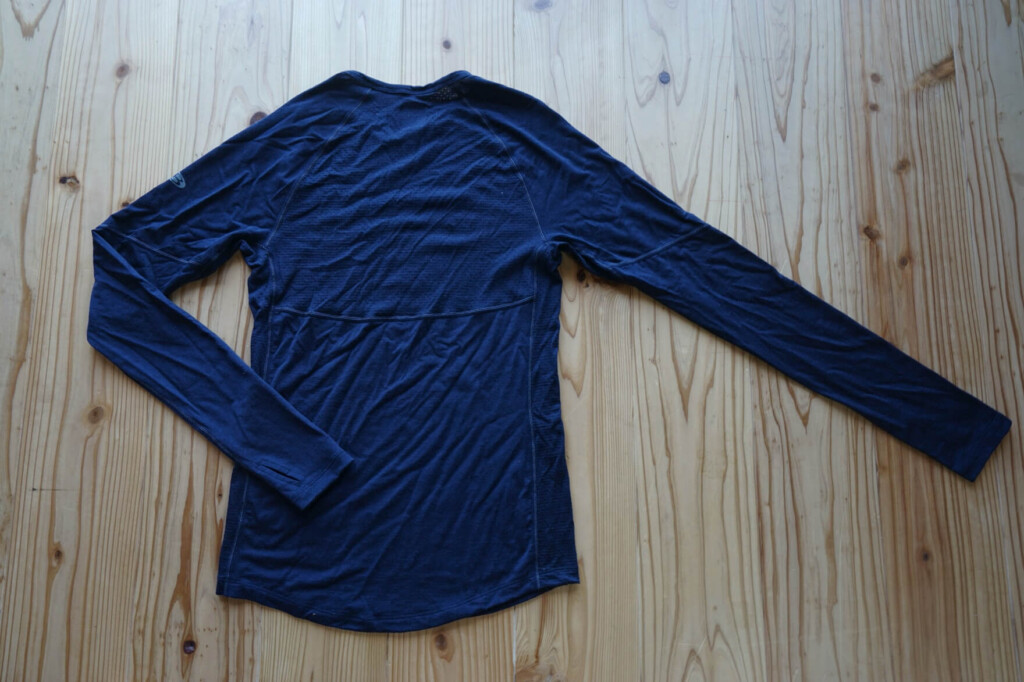
The 150 Zone is the thinnest of Icebreaker's base layers, with a fabric thickness of 150 g/m². Its low merino wool content (83%) comes from the use of core-spun yarn. Core-spun yarn is made by wrapping merino wool around nylon yarn, making it highly durable and able to withstand repeated washing without losing its elasticity. Similarly, the slightly higher Lycra content enhances quick-drying and stretch properties without sacrificing the benefits of merino wool, making it suitable for more vigorous activities like running
Like the 260 Zone, mesh fabric is placed in the upper back and underarm to torso sides, areas where sweat tends to accumulate, to improve breathability. This is quite effective, as sweat tends to accumulate around the armpits, but it dissipates moderately, making it comfortable. Even though this is a model designed for running, if breathability was increased too much, it would become unusable when the wind blows or the temperature drops, but mesh is not placed around the chest, where sweat tends to accumulate, just like the back, and it maintains moderate warmth
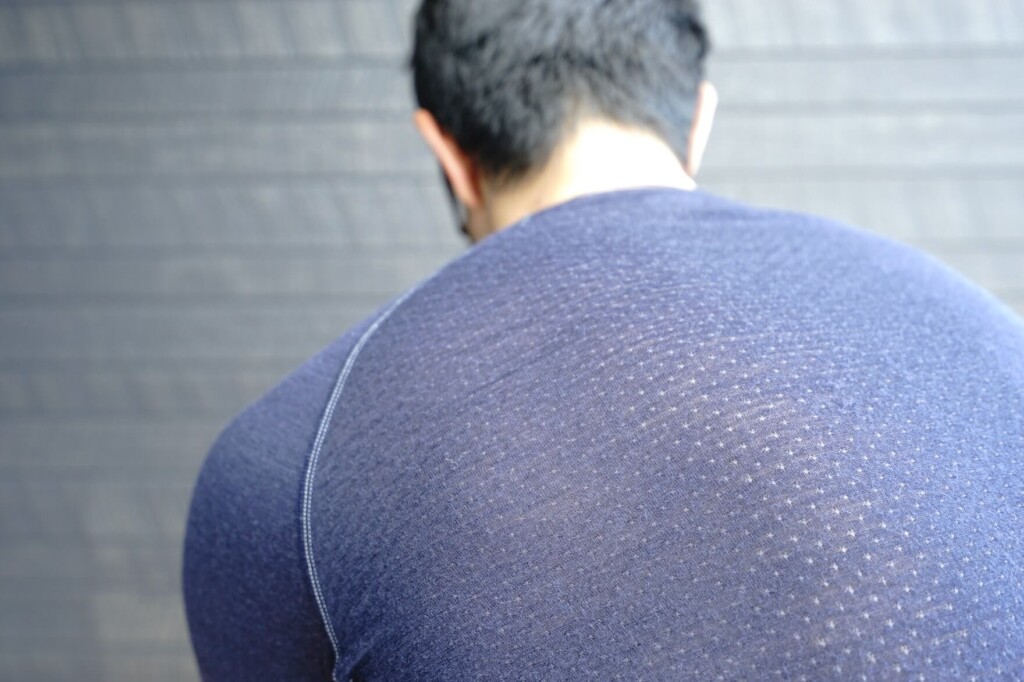
There is a large mesh panel on the back
When you look through the mesh fabric, you can clearly see the holes
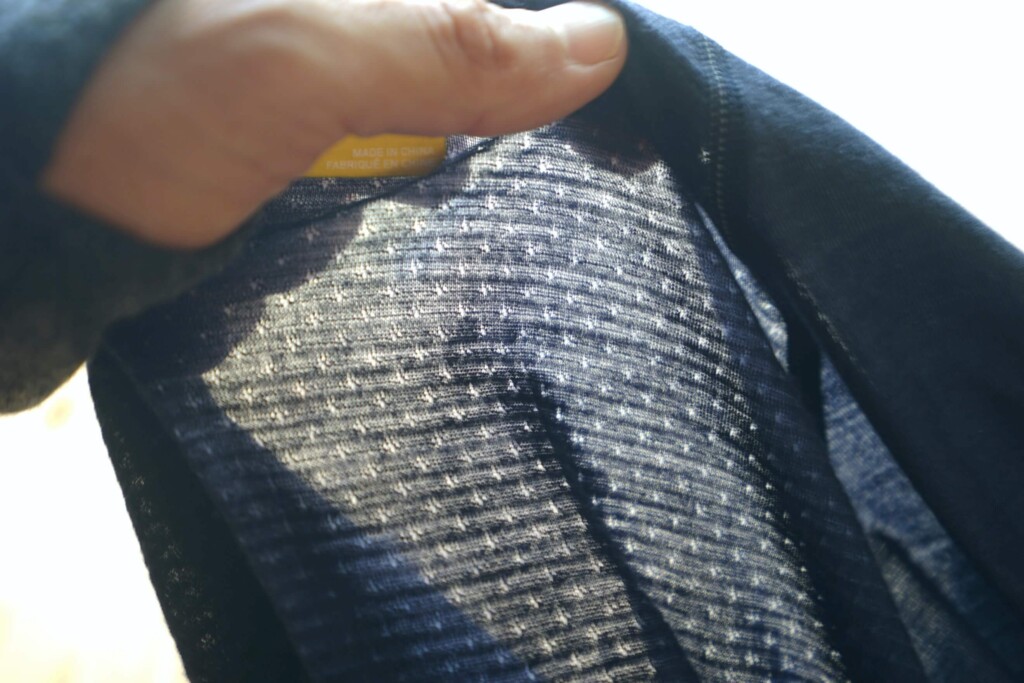
Thanks to its moderate stretch, it also meets the necessary requirement for a base layer: "stress-free movement." It doesn't feel too tight, even when running or performing dynamic arm movements like climbing. The raglan sleeves, in particular, allow for stress-free movement around the shoulders

The panels are arranged in a way that makes it easy to raise your arms, allowing you to move without stress
The cuffs have thumb holes to prevent cold air from blowing in, so they are perfect for preventing your extremities from getting cold
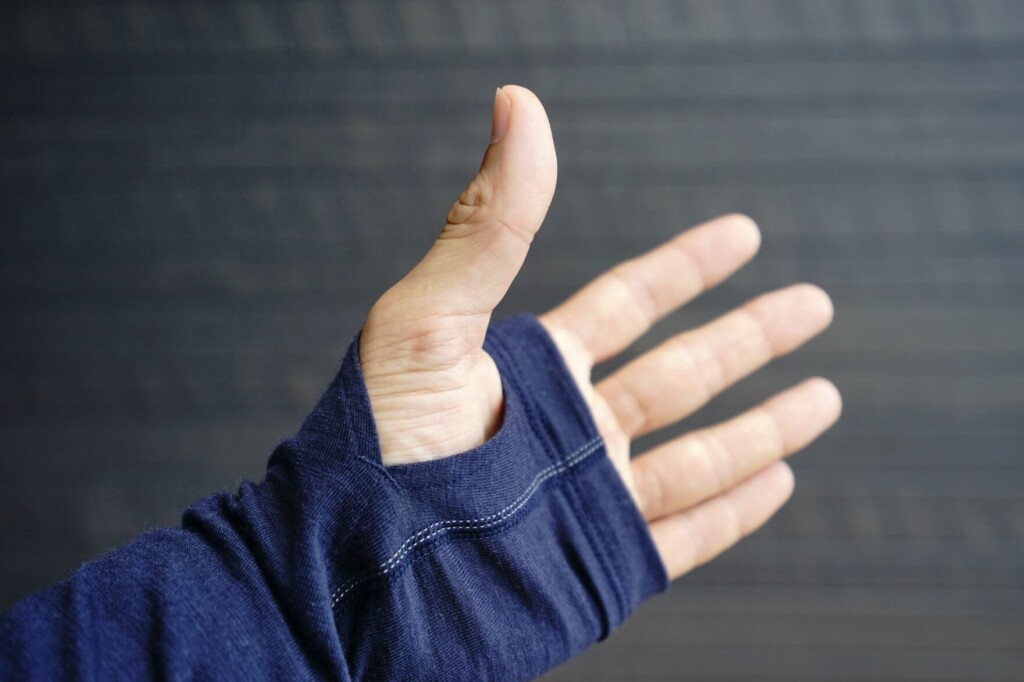
The thumb holes prevent cold air from entering through the cuffs and keep your hands cool
The stitching is also carefully done, the back is seamless, and it feels smooth against the skin
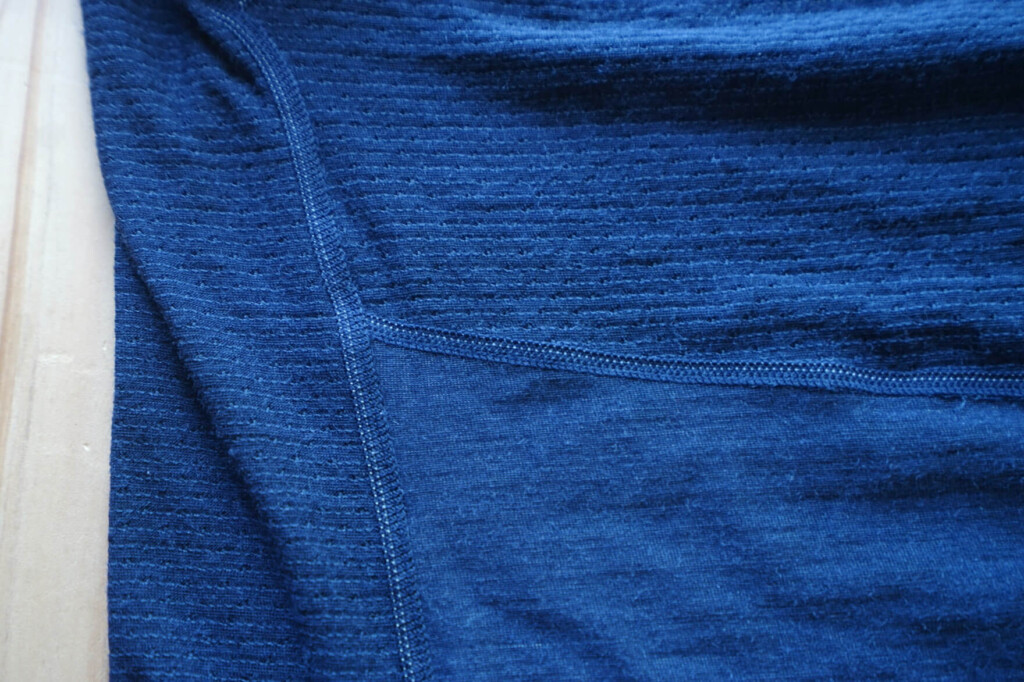
The back side that touches the skin is seamlessly sewn together to prevent stress
While the model reviewed here was the long-sleeve Cool Neck, there are also short-sleeve Cool Neck and long-sleeve Half Zip options available. The short-sleeve version is thin (150g/m²), and coupled with the odor-resistant properties of the merino wool, it seems like it would be comfortable enough to run all day, even in the summer. It seems especially comfortable on trails with lots of elevation changes. The advantage of the half-zip is its increased breathability. If humidity builds up, simply lowering the zipper, which reaches all the way to the solar plexus, allows for quick ventilation, which is extremely convenient. However, some people may find the half-zip model's fabric up to the neck a bit of a concern. While it's convenient as a substitute for a neck warmer, I personally think that the versatility of the base layer itself would be enhanced if you were to use a jacket when it's cold enough to require one
summary
We've provided an overview of Icebreaker's base layers and Zone Series the 100% Merino wool Tech and Oasis the Zone Series offers a better fit and mobility thanks to the synthetic fibers, and it also effectively manages sweat, making it an ideal base layer for high-intensity activities like running, trail running, fastpacking, and climbing. For active individuals, the Zone Series offers better climate regulation inside the garment than 100% Merino wool base layers, allowing you to stay comfortable and focused on your activities.
especially the Zone series , features a thin fabric that's naturally highly breathable. Mesh panels further enhance breathability, making it ideal for high-intensity activities like running, trail running, and fastpacking, where sweating is constant. However, because it's still thin, it can feel cold in winter when you're stationary for long periods of time. For activities like mountaineering and ice climbing, choosing the 260 will keep you warm even when you're stationary, thanks to its high insulation, even with lots of stop-and-go activity. The half-zip adjustment function is especially useful with the 260.
that merino wool doesn't smell , but those who don't use it will find it hard to believe. However, even if you sweat a lot, if you hang it out to dry, the next day it will smell as if nothing had happened and you can continue using it. I was quite surprised at first. This feature will surely be very useful as it will allow you to reduce the amount of luggage you carry when hiking or traveling. I personally find icebreaker boxer shorts very helpful when traveling. If you incorporate merino wool into your daily life, rather than just using it for activities like mountain climbing or trail running, you'll be hooked on its soft feel and comfort, and your underwear in your wardrobe will be completely renewed.
For product information on Icebreaker, please visit the official website here .
Related reading
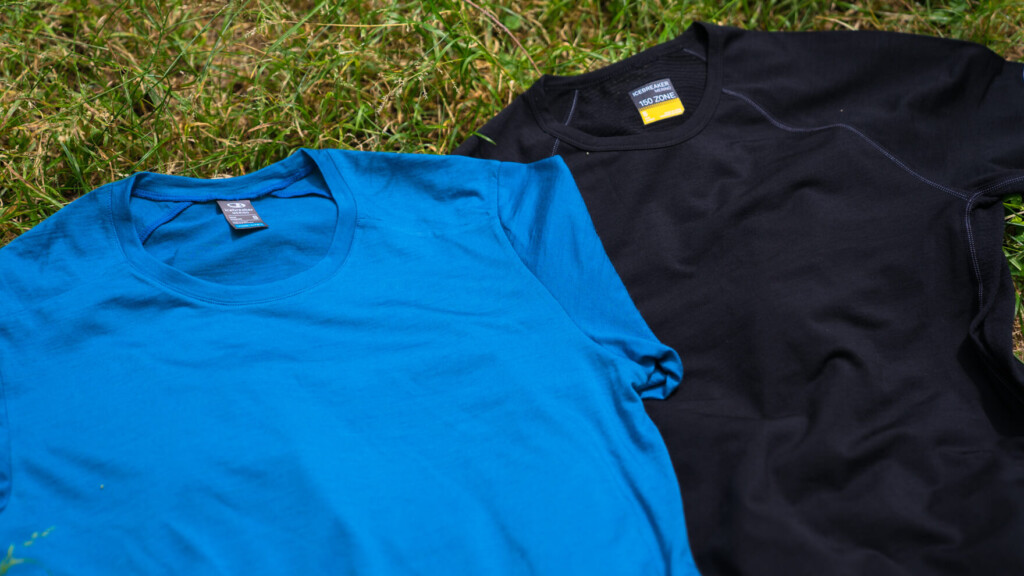 Is it really this comfortable even in summer? Icebreaker's merino wool base layer is perfect for both outdoor activities and everyday use
 Review: icebreaker Merino Wool OASIS LS CREW
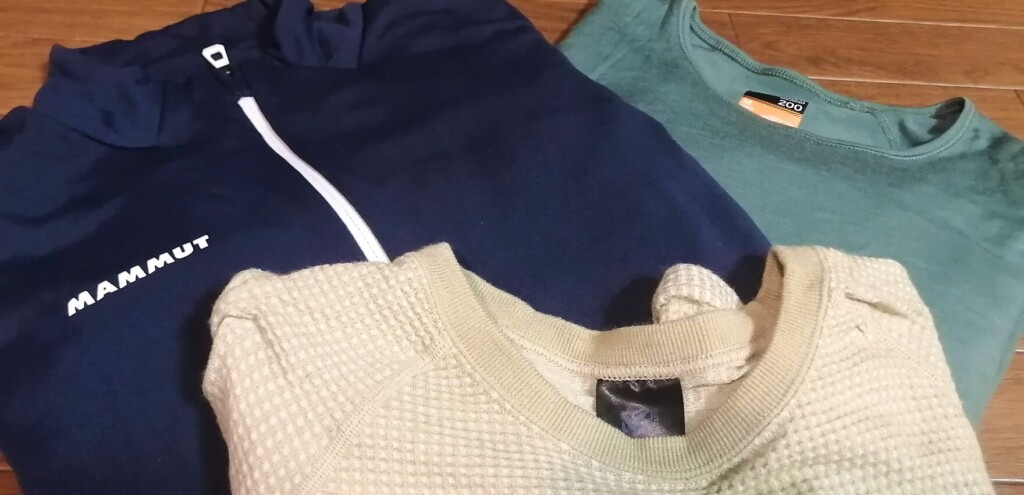 [A no-nonsense, self-funded comparison review] A mountain-loving woman compares and contrasts winter base layers: wool, synthetic, and hybrid
 Review: Montbell's Merino Wool Super Merino Wool is amazing!