



【忖度なしの俺ギアリスト】秋冬テント泊ハイキングにおすすめの「理想の装備リスト」をまとめてみる
written by Yasushi Hisatomi
自分がフィールドとしている関東近郊の山々にとって9月下旬から11月頃あたりまでは、ハイキングやトレッキングに最適な時期です。
気温は高すぎず風は涼しくてさわやか、ジメジメしていないし、虫も少ない。何よりも標高の高いところから徐々に紅葉が始まり、10月下旬ごろには麓でも最盛期を迎えていきます。11月に入ってからは雪の心配もやや出てきますが、低山であれば静かで情緒のあるウィンターハイクを楽しむことができます。
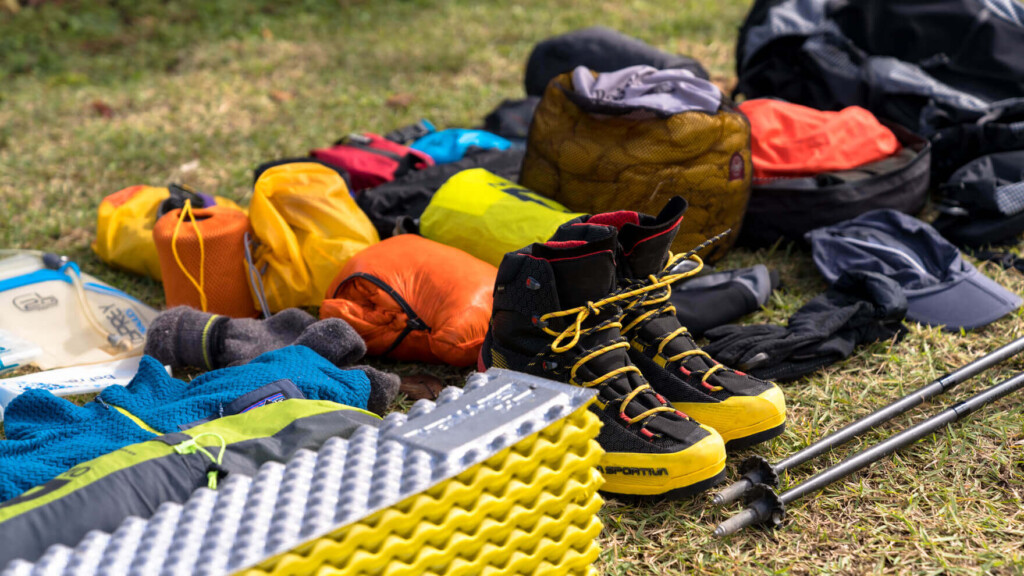
そこで、そんな季節のテント泊ハイキングでピッタリの個人的におすすめの最強装備「ファーストチョイス(以下、FC)」リストを考えてみました。
ここではこのサイトを運営しながら日々いろいろな道具を実際に使ってみた結果、総合的にみてスタメンに落ち着いた「今使うならこれ」という山道具をまとめています。想定している季節は9月下旬あたりから先の秋~冬~春先、ちょうど先日も泊りで歩いてきた奥秩父~奥多摩周辺エリアで標高2,000m位までのテント泊トレッキングです。夜でもぎりぎり氷点下にはならない程度の寒さを基本に想定していますが、秋口と厳冬期ではもちろん気温がかなり違いますので、その辺はいくつか複数の選択肢を用意しました。もちろんこんなにハイスペックな道具をすべて揃えなくても、上記のような想定ルートでなら十分にハイキングを楽しむことはできます。ただ山歩きをする誰もが少しは思うであろう「よりよい道具で歩きたい」そんな長年に渡るいわゆる理想の山道具探しの集積といえます。
このギア・リストが新たに登山を始める人にとっての持ち物チェックリストに、また旅慣れた人にとっては自分だけの夢の装備表を妄想するための燃料にでもなってもらえれば幸いです。
秋冬ハイキング装備リストの他選択肢も含めた一覧はこちらのリンクで公開しています。
おすすめギアリスト詳細
いろいろな考え方はあると思いますが、チョイスの基本は「軽量で」「丈夫で」「使いやすく」「汎用性がある」こと!ここでピックアップした道具たちは、それぞれの項目で濃淡はありながらも、こうした良さを多くの点で必ず何かしら備えています。
身につけるもの
| タイプ | アイテム名 | 備考 | 重量(g) |
|---|---|---|---|
| アンダーウェア | MILLET ドライナミック メッシュ ショートスリーブ | 汗冷えしやすい秋冬には特に必須。 | 110 |
| ベースレイヤー | MONTANE プリミノ220 ジップネック | メリノウール入りで、換気を調節しやすいジップネックがおすすめ。 | 276 |
| 中間着&アウター | Patagonia R1エア・ジップネック | 朝夕の肌寒いときの行動着に。風が強そうな場合には防風機能があるジャケットに。 | 262 |
| トレッキングパンツ | Arc’teryx ガンマ AR パンツ | 二重織りの中厚手ソフトシェルを基本に、動きやすさ、シルエットを重視。 | 474 |
| ハット・キャップ | MILLET ベンチ キャップ | 基本は好みで。このキャップは吸汗・速乾性に加えてムレにくく折り畳みやすく何かと使いやすい。 | 53 |
| トレッキンググローブ | Black Diamond ウィンドフードグリッドテック | 指先の冷えを防ぐためある程度保温性と防風性を兼ね備えているのが良い。このモデルは防風のありなしを切り替えられるので便利。 | 55 |
| トレッキングポール | LEKI Black Series マイクロバリオ カーボン | 軽さと丈夫さ、握りやすさの観点で総合的におすすめ。 | 408 |
| 時計(GPS) | GARMIN Fenix 6X Pro Dual Power | オフライン地図、トラッキング用に。GPSの精度、バッテリー寿命の2点で抜きんでている。 | 82 |
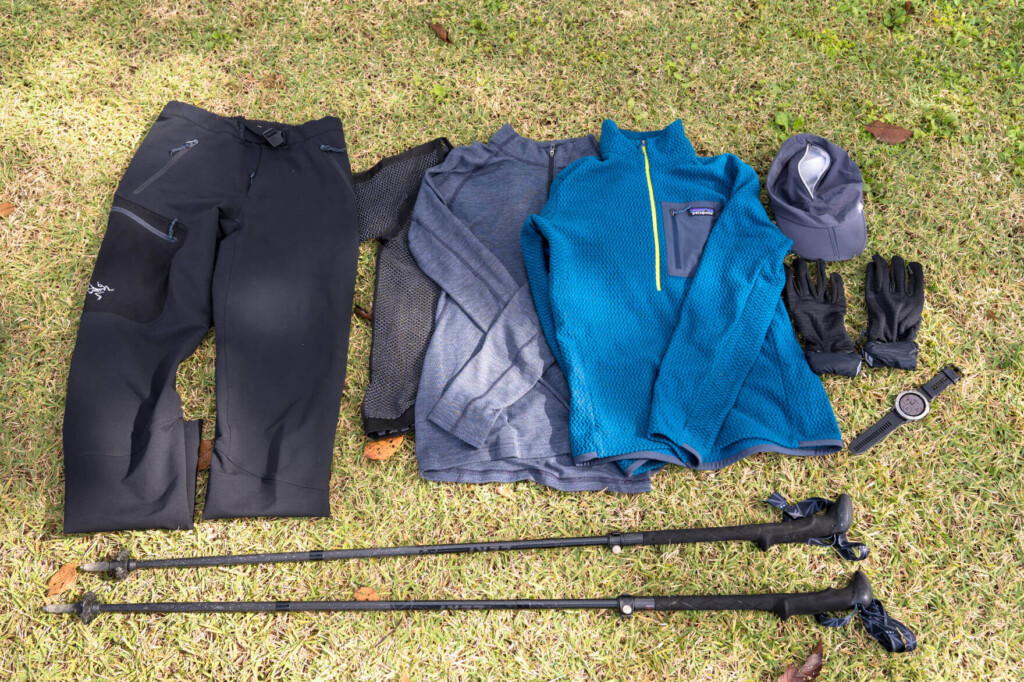
まずは行動中に着用・装備しているアイテムについて。
秋冬時期は吹き抜ける風は冷たく、でも歩き出したらやっぱり汗だくになるということが多いので、特に上半身のレイヤリング(重ね着)には経験がある程度必要になってきます。
自分の場合は汗っかきのためもあるかもしれませんが、この季節、行動中はほぼアンダーウェアとベースレイヤーだけで十分、そして約5分以上立ち止まるときには何か羽織りたくなってくるパターンが多く、穏やかな天気であれば行動中ミドルレイヤーが必要になってくるケースは少ないかもしれません。
そんな自分にとっては、暖かさ・快適さのウールと、耐久・速乾性の化繊をミックスしたベースレイヤーがやはり今のところ最良の選択。中でもプリマロフトのプリミノ素材はよくできていて、それを使用したMONTANE プリミノ220 ジップネックは一番のお気に入りです。季節によって薄手・厚手・フード付きなどいくつか選択肢があり、それらはギアリスト一覧ページで細かく紹介しています。
ミドルレイヤーについては、秋までなら行動中は着ないことが多いとはいえ、寒い季節のテント場での夜間や早朝行動に(もちろん冬真っ盛りでは日中の行動着として)役に立つことも多いため、その場合に備えて動きやすいフリースジャケットか、風が心配になる場合には防風の表地が付いたミッドレイヤーを持っていくことにしています。
おすすめはPatagoniaの高機能フリース、R1エア・ジップネックか、MILLETのブリーザー トイ アルファ ダイレクト フーディー。特にMILLETは「ポーラテックアルファダイレクト(断熱・通気・速乾)」+「ブリーザー(防風・撥水)」という、現在のところトップクラスの実力と機能性を備えた2つの素材を採用している、個人的には信頼性抜群の1着です(実のところ最新モデルは入手できていないのですが、昨シーズンモデルまでの愛用者としてはもう着る前からヘビロテ確定かと)。
それ以外で特に気をつけたいのはトレッキンググローブ。秋冬の風は冷たいので、少なくとも防風機能をしっかりと備えたモデルを選ぶということを心がけています。Black Diamond ウィンドフードグリッドテックは通常の薄手フリース手袋としても、また簡易的な防風グローブとしても素早く切り替えて活用できるので(カメラを出し入れする)自分にとっては現状最も使い勝手のいいアイテムといえます。
足周り
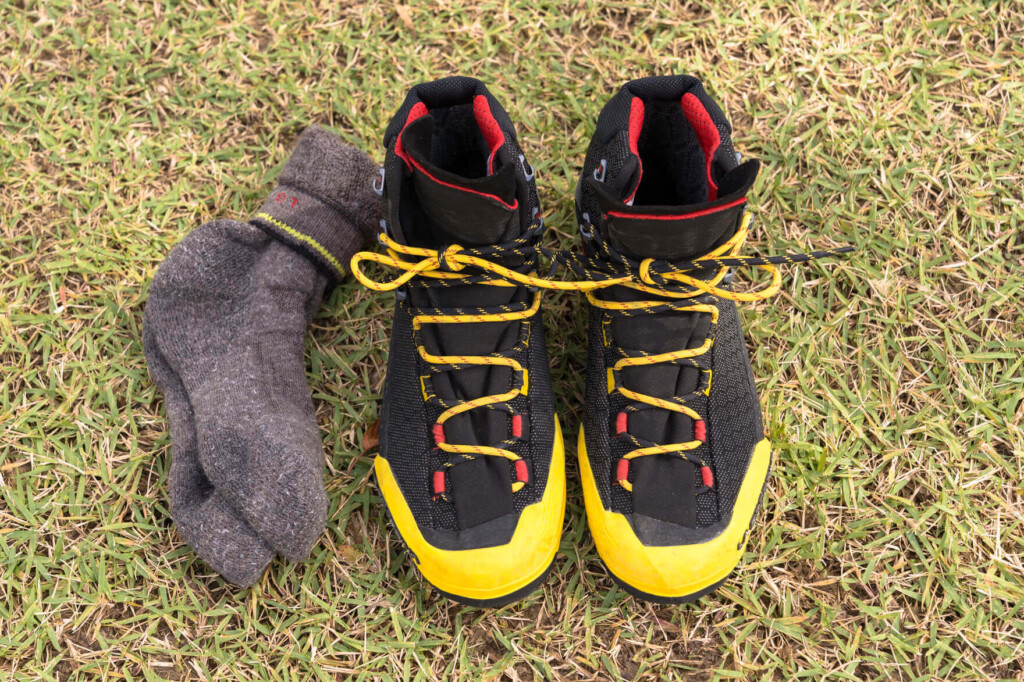
| タイプ | アイテム名 | 備考 | 重量(g) |
|---|---|---|---|
| 登山靴 | LA SPORTIVA AEQUILIBRIUM ST GTX | ミッドカット以上が基本。荷物が軽くない場合。岩場などテクニカルな地形が多いとき。低山ならばもっとスニーカーぽくていい。 | 660 |
| トレッキングソックス | Smartwool PhDアウトドアヘビークルー | 厚手過ぎず保温性を備え、クッション性高く、サポート性もしっかり。 | 95 |
| インソール | バネインソール バネインソール メリノウォーム(スマートシリーズ) | オールラウンド性重視で保温性も少しプラス。 | 48 |
登山靴についてはコースの距離や主な地形、荷物の量、走るか・走らないかなどさまざまな検討要素によってベストの選択が大きく異なってくる厄介な分野です。
それぞれの特定のケースでの最適というよりも、そうした微妙な差異をあまり気にせずに、オールラウンドに安心なブーツということで現段階の1足を挙げるならば、LA SPORTIVA AEQUILIBRIUM ST GTXということになります。
これ1足あれば、テント泊を想定した10キロ程度以上の荷物を背負っても十分に快適で疲れにくく、岩・泥などタフな地形が出てきてもグリップ・堅牢性といった点である程度安心。そしてちょっと走ることもできるくらい軽量で、足首のフレキシビリティもある。そんなイマドキ登山にとって汎用性抜群の登山靴がこれ。さらに自分の足に合ったインソールを合わせることで、足周りはさらに安心です。もちろんソックスは厚手でクッション性・保温性・サポート性の高いモデルでいきましょう。
携行衣類
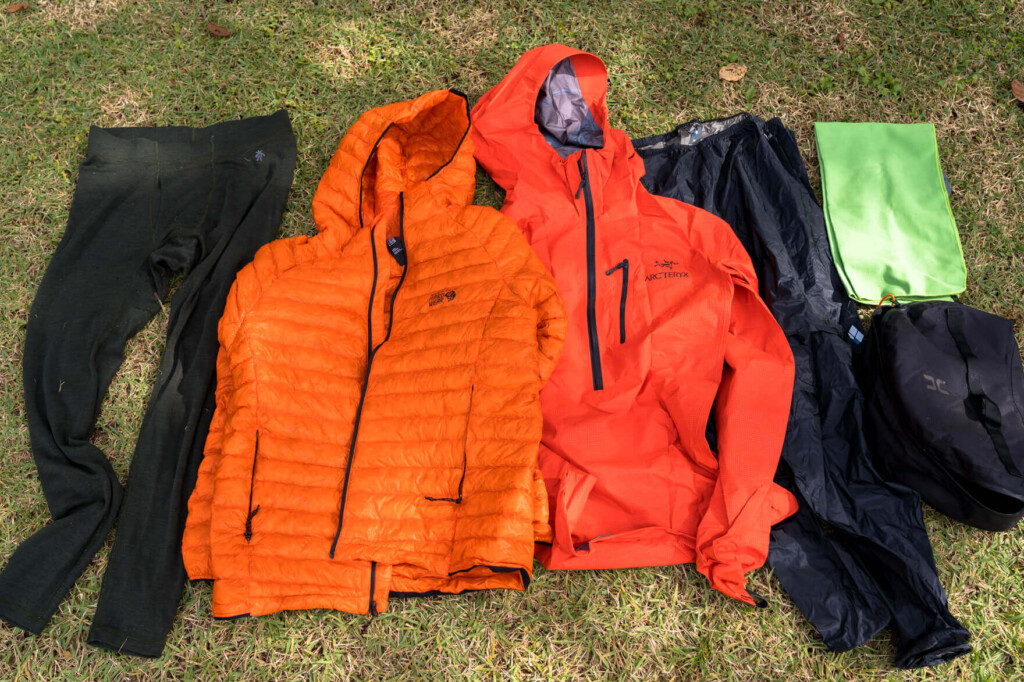
| タイプ | アイテム名 | 備考 | 重量(g) |
|---|---|---|---|
| 雨具(ジャケット) | Arc’teryx アルファ SL アノラック | 機動性重視のアノラックタイプ。脱ぎ着少な目の山行で。 | 198 |
| 雨具(パンツ) | mont-bell バーサライト パンツ | とにかく軽量コンパクト重視。 | 83 |
| 防寒インサレーションジャケット | Mountain Hardwear ゴーストウィスパラーULジャケット | 超軽量だけど保温性もできる限り妥協しないダウンジャケット。 | 174 |
| 防寒パンツ | Smartwool メリノ250ベースレイヤー ボトム | 基本はこれだけだが、夜が0℃近くになるようならさらに別のパンツがもう1着必要。 | 228 |
| タオル | Sea to Summit ドライライトタオルS | 62 |
次に普段身に着けることはないけれど、天候や気温によって、要するに雨の悪天時や寒い夜になると必要な衣類などです。
この季節の雨具についてはある程度の厚み(防寒性)は欲しい。でも重いのは勘弁。となると、防水透湿性に加えて防風・防寒性と耐久性といった面からも信頼しているGORE-TEXが候補に上がってきます。なおかつ軽量化を意識しているに越したことはありませんから、そこまで脱ぎ着するということはないのでアノラックタイプでもいいだろうとなります。そして何よりも動きやすくて汎用性も高いとなると、これらを全て兼ね備えたベストチョイスが、今シーズン満を持して登場のArc’teryx アルファ SL アノラック。お値段もアレですが、実力は計り知れません。なおジャケットに注力した分、逆にパンツはとことん軽量化。
防寒ジャケットについては正直言ってかなり迷います。その人の暑がり具合にもよりますし、寝袋との兼ね合いによってどれだけ断熱性の高いものにするかが変わってくるからです。
ただ、一般的に考えて間違いのないスタメンといえば、ここはシンプルに軽さと断熱性、着心地と三拍子そろったMountain Hardwear ゴーストウィスパラーULジャケットでしょう。前からお気に入りだったけどまだまだどんどん進化し続けている、ここ5年変わらないFCです。
防寒パンツは行動中どうしても下半身が寒い場合や、テント場について落ち着いたら履くものですが、基本的にはウールのインナーパンツか、もしくはダウンパンツといったアウターのインサレーションパンツの2択。ダウンパンツは活用シーンがほぼテン場だけだし、ちょっと価格的にも大きいので、基本的にはまずはウールのアンダーウェアがおすすめ。ただし激寒予報で突っ込む場合は、念のためダウンパンツとの両方持ちで行くのが安心です。
パッキング
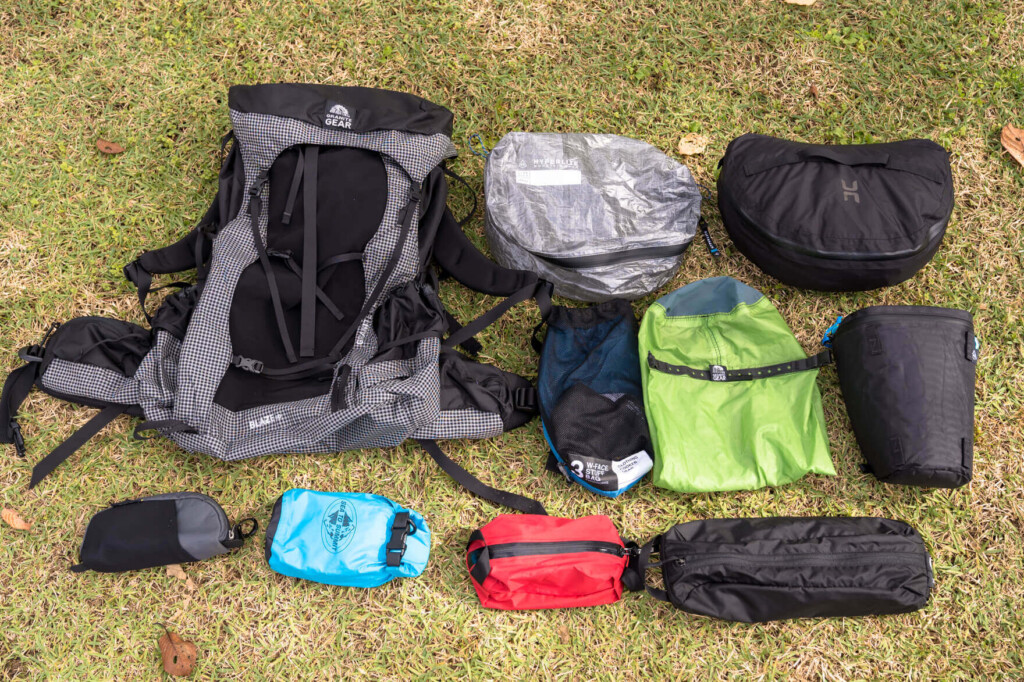
| タイプ | アイテム名 | 備考 | 重量(g) |
|---|---|---|---|
| バックパック | GRANITE GEAR BLAZE 60 | 2泊以上の長いコースや荷物が多いアクティビティに。軽量重視。 | 1360 |
| スタッフサック | HILLSOUND パックスタックプロ 60L ショート | 衣類・寝具系のパッキングに。 | 112 |
| スタッフサック | HYPERLITE MOUNTAIN GEAR Pods L | 衣類・寝具系のパッキングに。 | 37 |
| スタッフサック | PaaGoWorks W-FACE POUCH / W-FACE STUFF BAG | 行動食用に。食べる前と食べた後の包装紙を分けられる。 | 35 |
| スタッフサック | GRANITE GEAR パックポーチ L | 小物をまとめて。外側にも取り付けられる。 | 77 |
| スタッフサック | ISUKA ウェザーテックポーチ | 一応防水。トイレ用品をまとめて。完全ではないけど防水なので安心。 | 39 |
| スタッフサック | GRANITE GEAR EVENT SIL DRYSACK | 完全防水。ぜったいに濡らしたくないもの。 | 37 |
| スタッフサック | Sea to Summit ライトウェイト70D ドライサック | 完全防水。エマージェンシーセット用品など濡らしたくない小物用。 | 30 |
| カメラバッグ | HYPERLITE MOUNTAIN GEAR Camera Pod | 軽量重視。 | 106 |
| ポーチ・ホルダー | PaaGoWorks SNAP | 利便性重視の多機能ポーチ。 | 85 |
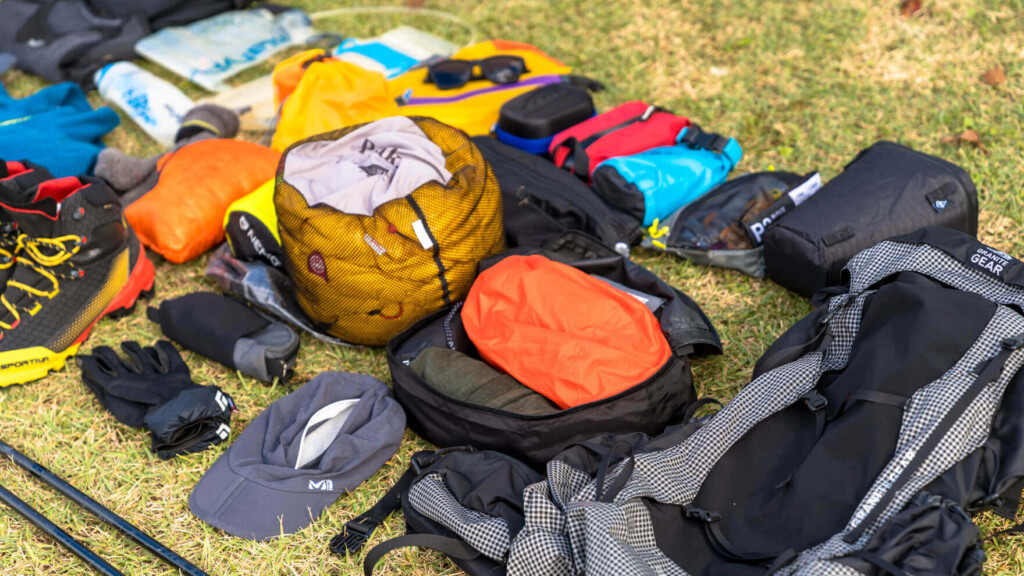
装着アイテムやウェア類の次は、いよいよパッキング系のアイテム。バックパック、防水や整理に使うためのスタッフサック。そしてカメラや小物などを携行するためのポーチ・ホルダー類です。
バックパック選びは、その人の山行スタイルに最も大きく依存するギアのひとつですから、正直誰がみても1番というものはないかもしれません。あくまでも参考事例という意味合いが強いことは承知のうえで、正直めちゃくちゃ悩ましいですが強いて挙げるならば、自分が今最も安心して荷物を預けられる4つの相棒を紹介します。
まず1泊までのハイキングで、疲れにくさを優先するならGREGORY パラゴン48、とことん荷物を減らし、軽さを追求するならGOSSAMER GEAR GORILLA 40 Ultralight。そして2泊以上のロングトレイルで快適さ・軽さのバランスを考えるならGRANITE GEAR BLAZE 60、長期縦走で重荷での疲れにくさと収納の利便性を重視するならばOSPREY イーサープラス 60、といったところが現在のFC。それぞれのよさは長くなりすぎるのでここでは書けませんが、どれも甲乙つけがたい魅力を備えた優れモノです。
スタッフサックについては「パッキング(整理)しやすい」「軽くて丈夫」「防水が必要なものには防水パック」といった視点から考えていくと、最近では従来のようなシンプルな巾着袋型のものは次第に少なくなっていきました。しかもHILLSOUND パックスタックプロ 60L ショートのようなバックパックの空間に添った形状の袋はパッキングが捗るだけでなく、寝るときにモノを詰めて枕としても使えるということに最近気づき、今やテント泊には手放せなくなってきています。
住まい・寝具
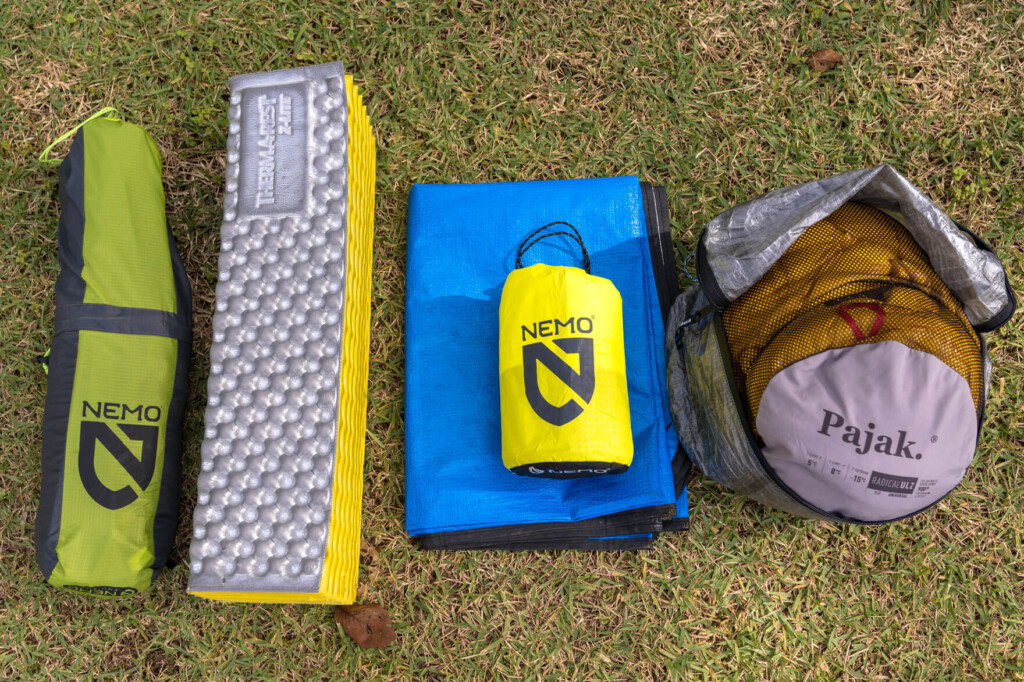
| タイプ | アイテム名 | 備考 | 重量(g) |
|---|---|---|---|
| テント | NEMO ホーネットストーム 1P | 軽さ・居住性・防寒性のバランス重視。 | 760 |
| テントマット・フットプリント | THERM-A-REST Zライトソル | 室内でテントマットとして。 | 410 |
| テントマット・フットプリント | Grabber オールウェザーブランケット | グランドシートとして。他にも毛布・テントマット・タープと多目的に利用できる。 | 325 |
| スリーピングパッド | NEMO ゾア ショートマミー | 寝るときのマットレスに。気温が低めの場合はさらに断熱性の高いモデルを。 | 295 |
| スリーピングバッグ | PAJAK RADICAL ULZ | Limit 0℃。気温が高めだったり、軽量重視の場合。夜が氷点下近い場合はさらに暖かいモデルを。 | 615 |
秋冬のテン泊ソロハイキングの夜を快適に過ごすためのテントは、軽さを前提としつつ、同時の快適さ(居住性)と「寒く無さ」を考慮したい。そんなわけで結露の少ないダブルウォール、そしてインナーはメッシュではない生地、なおかつ快適&軽量構造のテントがベストだと考えます。するとFCはこのNEMO ホーネットストーム 1Pに。季節やアクティビティ、コースなどによっても微妙に変わってくるため、それ以外の候補は一覧で紹介しています。
スリーピングパッド・バッグについては、まずここで紹介しているチョイスはやや寒さに強い人の、軽量化に寄ったチョイスだと考えてください。この組み合わせで持つのは自分の場合はおそらく10月中旬までくらい、秋の深まった頃~冬にかけてはマットレスも、寝袋ももう1段階暖かいものになっていきます(それらのチョイスは別途一覧で紹介)。
そのうえで、マット系は3種類の組み合わせがおすすめ。グランドシート代わりとしてのGrabber オールウェザーブランケット、テントマットとしてのTHERM-A-REST Zライトソル、そして寝るときのマットレスとしてのNEMO ゾア ショートマミーという役割を想定しています。予想される気温や地形によってこの3つをすべて持っていく場合もあれば、エアマットを除く場合、グランドシートを除く場合などケースバイケースで無駄なく揃えることができ、余計な重量を背負わなくて済みます。
最後にスリーピングバッグは、質の良いダウンを潤沢に使いつつ、耐久性と軽さを両立した生地、頭部分を省略、パッカブルと、隅々までよく考えられたPAJAK RADICAL ULZ(リミット0℃)は、自分史上、これ以上なく贅沢かつ機能的な超軽量寝袋です。夏の沢登りから秋のハイキングまで幅広く活躍してくれています。
調理・水補給
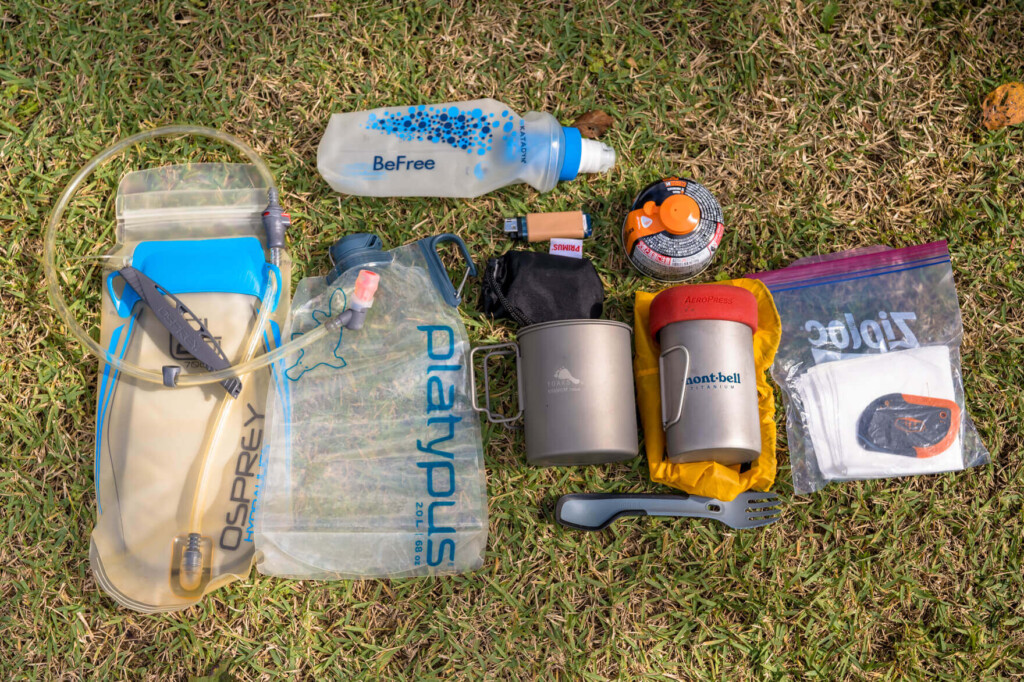
| タイプ | アイテム名 | 備考 | 重量(g) |
|---|---|---|---|
| ハイドレーション | OSPREY レザヴォア 2L | ハイドレーション。背面が硬質で出し入れしやすい。 | 250 |
| クッカー | Toaks チタニウムポット POT-750 | 湯沸かし前提で軽量重視の場合。 | 103 |
| マグ | mont-bell チタンカップ600 | AeroPress Goでコーヒーを飲むために必要。 | 80 |
| カトラリー | Morsel Morsel Spork (Mini) | フォーク・スプーン両用。柄が長い。ヘラとしても使える。 | 17 |
| 水筒 | PLATYPUS デュオロックソフトボトル | テン場での炊事用。コンパクトになる。 | 50 |
| ウォーターフィルター | KATADYN ビーフリー 0.6L | 59 | |
| ストーブ | PRIMUS 115フェムトストーブ | 湯沸かし前提で軽量重視の場合。 | 57 |
| ライター・マッチ | 23 | ||
| コーヒーメーカー | AEROPRESS AeroPress Go(本体パーツのみ) | コーヒーを贅沢に飲みたい場合。 | 165 |
| ヘラ | GSI コンパクト スクレーパー | 調理したりレトルト想定の場合に。水を使わないで食器をきれいにする。 | 23 |
| キッチンペーパー | 10 |
調理用具や水筒などのボトル類については、好みや馴染み方もあるので参考までに。ハイドレーションも使う使わないはその人の好みかと。自分の場合はザックを下ろしたりせずに簡単に小休止できるのでファストパッキング的なスタイルには便利だと感じています。その他は折りたたみ式のウォーターボトルとフィルターはセットで有用。
クッカーは、たとえお湯を沸かすだけだとしても、主食とスープなどで何だかんだ2つある方が便利。自分はAEROPRESS AeroPress Goをほぼ義務のように必ず持っていってそれでコーヒーを飲むため、やや特異なFCになっていると思いますので、その辺は各自の好みでよいかと思っています。
その他、カトラリーはどれを選んでもそれほど差異はないと思いますが、これしかない特徴を備えた便利なブキとして、本国サイトからでしか入手できないスポーク、Morsel Morsel Spork (Mini)を挙げたい。食べやすく、必要な機能に加えて食べた後の汚れなどをこそぎ落とす「ヘラ」としても使えるスグレモノですよ。
携行品・電子機器
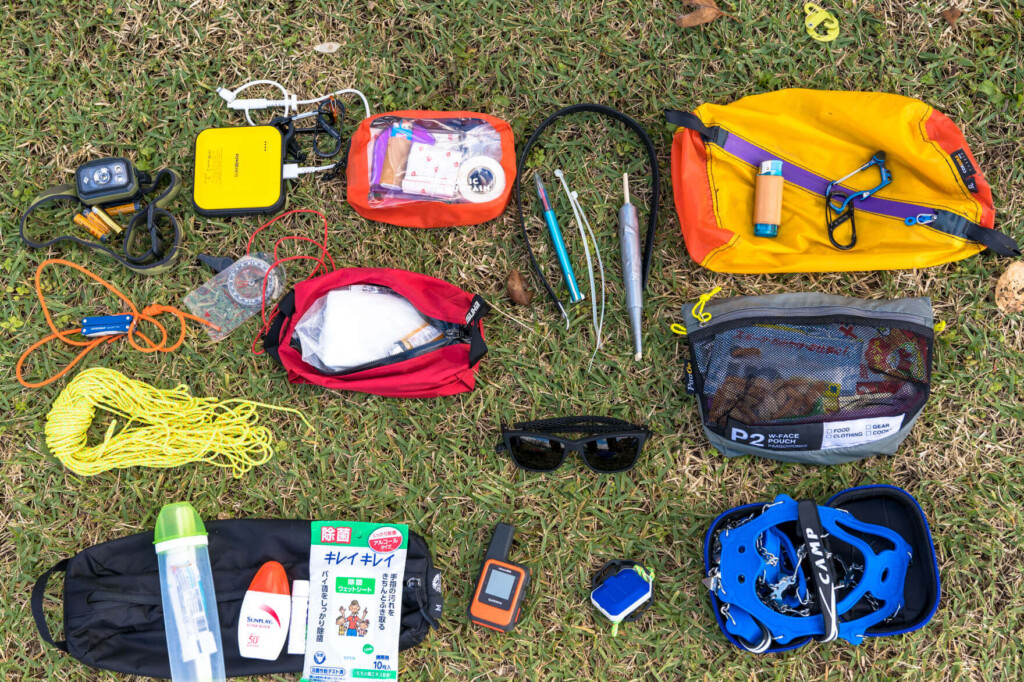
| タイプ | アイテム名 | 備考 | 重量(g) |
|---|---|---|---|
| ヘッドランプ | Black Diamond ストーム400 | 明るさと電池寿命、防水性を重視。 | 120 |
| 替え電池 | 44 | ||
| モバイルバッテリー | POWERNESS モバイルバッテリー U36 | 大容量・防水・耐衝撃。USB-C入力&出力で充電も早い。ランタンにもなる。 | 275 |
| ナイフ・マルチツール | LEATHERMAN SQUIRT PS4 | ハサミとプライヤーがついているゴトク。 | 56 |
| コンパス・ホイッスル | 35 | ||
| 薬、キズ薬 | 153 | ||
| トイレットペーパー | 116 | ||
| ビニール袋 | 10 | ||
| 予備靴ひも(細引き) | 計り売り 2mm×30m | 靴紐が切れた時や、タープを張ったり、ケガ人を搬送するために使ったり、万が一の際に何かと使える。 | 63 |
| 非常通信デバイス | Garmin inReach mini | 電波の届かない場所でも使える簡易なメッセージ送信や、非常時救助要請に使える衛星通信機器。 | 100 |
| ビーコン ココヘリ | ココヘリ | 28 | |
| ダクトテープ | 10 | ||
| 日焼け止め | 43 | ||
| サングラス | J Eyewear Lab Neuron4D Polarized | フィット感抜群で曇りにくい調光サングラス | 32 |
| 洗面用具 | 46 | ||
| 修理用具 | 33 | ||
| ポケットウェットティッシュ | 27 | ||
| 油性ペン | 5 |
その他電子機器や小物たちの一覧は、秋冬だから変わってくるということは特にありません。別の季節の装備リスト特集などでも何度か触れているように、紙の地図とコンパス、救急医療セット、ナイフ(ゴトク)LEATHERMAN SQUIRT PS4、非常用にGarmin inReach miniとココヘリ、万が一の際にいろいろな用途に使えるダクトテープや細引き2mm×30mなどはどんな山行でも持ち歩いています。
ここ最近で加わった新しいFCはモバイルバッテリーのPOWERNESS モバイルバッテリー U36。「耐衝撃」「防水」「大容量」のモバイルバッテリーを最近探し、有名なAnkerをはじめいろいろなメーカーのバッテリーを実は試していたのですが、結果無名の(おそらく中国)ブランドのこのモデルがベスト。何よりも入力・出力共にUSB-Cで充電できるため、充電時間が早い。0℃の夜でも使えたので、冬でもとりあえず心配なさそうです。
(万が一の)雪対策
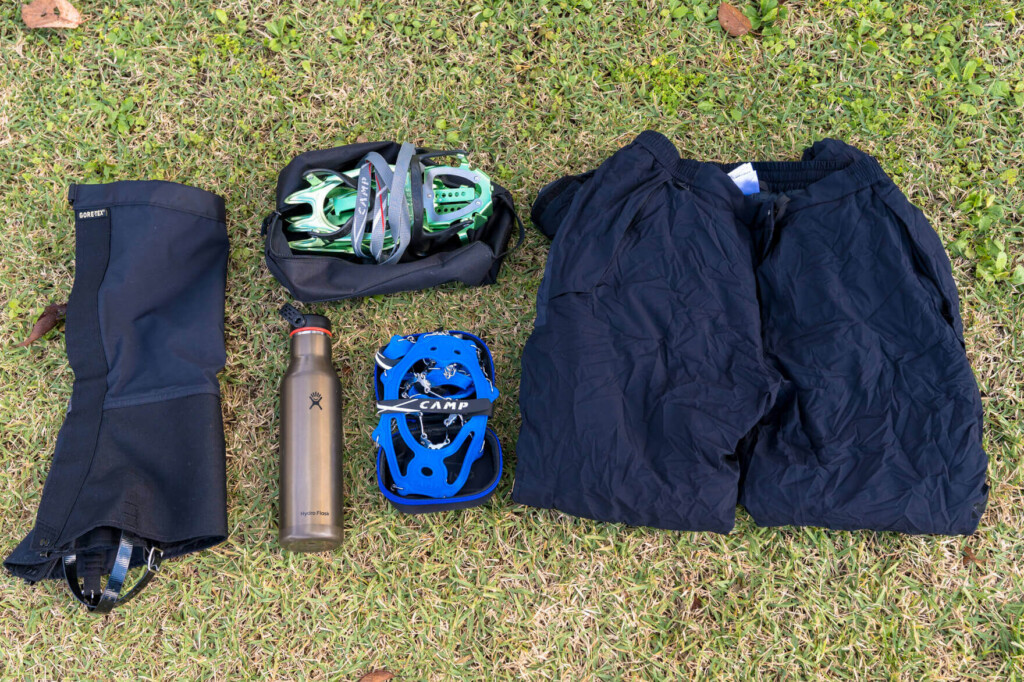
| タイプ | アイテム名 | 備考 | 重量(g) |
|---|---|---|---|
| ゲイター | Outdoor Research クロコゲイター | フィット感・雪を確実に防ぐ耐久性・防寒性重視。 | 289 |
| クランポン | CAMP CASSIN XLC490 | そこまで厳しい場面ではない想定で、軽量性と幅広い靴との相性重視。 | 585 |
| チェーンスパイク | CAMP CASSIN アイスマスター | そこまで雪の心配がなければクランポンではなくてもこのチェーンスパイクで十分。 | 495 |
| 保温ボトル | Hydro Flask TRAIL SERIES | 保温性重視なら他の選択を選ぶが、好みで。 | 268 |
最後にこれらは通常持っていくことはまずないと思いますが、万が一雪や凍結などが心配される場合にバックパックに入れておく装備。頂上付近などに岩場の斜面が出てくるのであればクランポン(アイゼン)、平地やなだらかな斜面の雪・凍結ならばチェーンスパイクを携行しておきます。ゲイターも積雪が予測されている場合には考慮しておいた方がいい。その他は寒さ対策としてダウンパンツや保温ボトルなどの冬用装備があると安心です。
持ち物一覧
秋冬ハイキング装備リストの他選択肢も含めた一覧はこちらのリンクで公開しています。
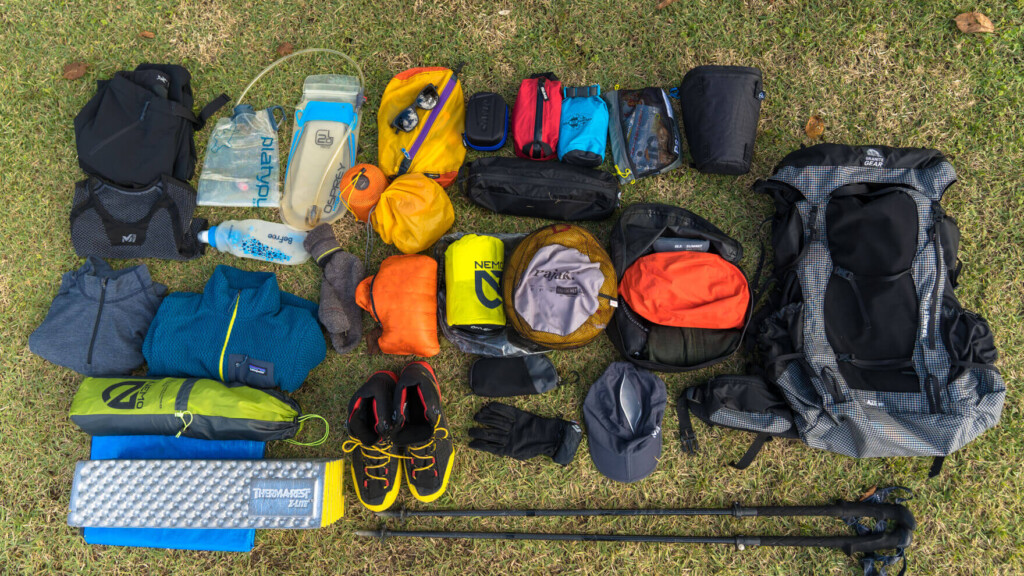
身に着けるもの
- アンダーウェア(トップス)
- ベースレイヤー(トップス)
- 中間着兼アウター(トップス)
- トレッキングパンツ(ボトムス)
- ハット・キャップ
- トレッキンググローブ
- トレッキングポール
- 時計(GPS)
足周り
- 登山靴
- トレッキングソックス(ボトムス)
- インソール
携行衣類
- 雨具(ジャケット)
- 雨具(パンツ)
- インサレーションジャケット(ダウン)
- 防寒パンツ(インナー)
- タオル
パッキング
- バックパック(軽量重視)
- ハイドレーション
- スタッフサック
- 防水スタッフサック
- カメラバッグ
- ポーチ・ホルダー
住まい・寝具
- テント
- ペグ
- テントマット・フットプリント
- スリーピングパッド
- スリーピングバッグ
調理・水補給
- クッカー
- マグ
- カトラリー
- 水筒
- ウォーターフィルター
- ストーブ
- 燃料
- ライター・マッチ
- コーヒーメーカー
- ヘラ
- キッチンペーパー
- 行動食・非常食
- 夕食・朝食・コーヒー
- 水
携行品・電子機器
- ヘッドランプ
- 替え電池
- モバイルバッテリー
- ナイフ・マルチツール
- コンパス・ホイッスル
- 地図
- 薬、キズ薬
- エマージェンシーシート
- スマートフォン
- トイレットペーパー
- ビニール袋
- 予備靴ひも(細引き)
- ダクトテープ
- 非常通信デバイス
- ビーコン
- 日焼け止め
- サングラス
- カメラ
- カメラ用予備電池・リモコン
- 洗面用具
- コンタクトレンズ
- 修理用具
- ポケットウェットティッシュ
- 油性ペン
- 身分証明書
- 保険証
- 登山計画書
まとめ
実際にはここで選択した道具以外も使っていますが、まとめではできる限り多くの人に参考になりそうな汎用性の高さを意識してチョイスしているので、いくつかは参考になったのではないかと思います。とはいえ、山の道具のこだわりは人それぞれ。これがベスト、ということではもちろんなく、みなさんの理想の装備リスト完成への助けになってくれれば幸いです!
最近では「〇〇登山のおすすめ装備ガイド」的な記事はそこら中にゴロゴロと存在していますが、その反面、本当に参考になる生きたリアルな参考情報はますます少なくなってきている気がします。
「ウルトラライト」とか「ファストパッキング」とか、そうした”スタイル”があるからといって、その種の道具だけを使わなければならないルールはありません。実際にはその人の体力や好み・スタイルによって、ある部分はULだったり、またある部分ではヘビーだったりと人それぞれしっくりくるカタチは違うはず。さらにいえば従来の広告やアクセス数による収入を頼りにしているメディアには、広告主の意向に反した物言いやユーザー受けの悪い商品はどうしてもプッシュしにくくなります。
でも自分が本当に欲しいのは、登山でも、ウルトラライトでも、ファストパッキングでも、〇〇登山でもない、それぞれのハイカーにはそれぞれにフィットした歩き方があって、それに則して試行錯誤して選んだ結果の情報です。その人それぞれの試行錯誤の過程も含めてアウトドアの楽しみのひとつであるということを共有できれば、そう思うわけです。
この装備リストで選択した製品は、メーカーと何らかの交渉があったり、提供されたものは一切なく、すべて私自身が実際に小売店から直接購入しています。これまで多種多様な山道具を使ってきたサイト運営が実際にそれらを使用して山を歩き、その結果素晴らしいと評価した道具のみで成り立っています。
ちなみにこの記事にもバナー広告やアフィリエイトリンクは存在していますが、それらは優れた道具としてリストアップされたうえで可能な商品のみであって、評価とは独立しています。ここで紹介されているラインナップ全体を見ていただければお分かりかと思いますが、あくまでもサイトの運用をなるべく円滑に運用していくための助けとする目的以上の意味は持ちません。
あわせて読みたい
 バックカントリースキーでの今シーズンレギュラー装備リストを晒してみる 前編【無謀な行動と言われないために】
 【持ち物リスト】夏山登山装備のベストチョイスを考える【随時更新】
 今シーズンお世話になりまくっているバックカントリースキーの装備リストを晒す【後編】
 冬の低山ハイキングで揃えたい、とっておきの装備リストをまとめてみた