



The day when it will surpass down is approaching! Lighter and warmer, PrimaLoft aerogel-based insulation is on the rise

Written by Yasushi Hisatomi
It is no exaggeration to say that the evolution of insulation jackets, the quintessential mid-layer (intermediate layer) for layering during winter mountain activities, has been driven by technological innovations in the synthetic fiber padding materials used inside
But did you know that this season, a new type of insulation material is being introduced into the synthetic fiber batting market? Silica aerogel is a unique, high-tech insulating material that was first commercialized by NASA and has been rapidly expanding in various industries in recent years
In the outdoor industry, PrimaLoft®, a familiar "giant in the insulation world," announced its new PrimaLoft® Cross Core™ Series in 2017, which incorporates aerogel into the fibers, and in recent years, products using this material have gradually become more accessible
table of contents
- The more you research it, the more amazing it becomes: this aerogel-embedded insulation jacket. The secret is its incredible thermal insulation
- Why hasn't aerogel become popular?
- PrimaLoft® Cross Core™ Series: "An incredibly light and incredibly compressible insulation material"
- How great is the PrimaLoft® Cross Core™ Series?
- 8 Notable Insulated Jackets Featuring PrimaLoft® Aerogel Technology
- lastly
The more you research it, the more amazing it becomes: this aerogel-embedded insulation jacket. The secret is its incredible thermal insulation
What's so exciting about this new material? Explaining it all from the beginning would be overwhelming, so I'll try to summarize the key points as best I can
Simply put, aerogel is a porous structure with a fine, uniform framework filled with gas (aero). Aerogel is made up of over 90% air, meaning it is a very hollow structure. Since aerogel itself refers to the structure, the framework can be made from materials such as silica, gelatin, agar, cellulose, and carbon, and the properties of each vary slightly, but delving any further into the topic would make things complicated, so for the purposes of this discussion, please think of it as "silica aerogel" unless otherwise specified
This substance, which is also called "frozen smoke" or "solid cloud" due to its transparent appearance, has the most notable feature that it the least dense, lightest, and most insulating solid on Earth .
The secret lies in its structure. The microscopic framework divides the space uniformly, so convection and molecular thermal momentum exchange that occur when gas transfers heat do not occur within aerogel. In other words, the dead air necessary for insulation is naturally produced in the material, like a natural, tiny thermos bottle
I found a video that is easy to understand and will help you understand the properties of aerogel, so please take a look
High insulation performance means that a small amount of material can be used to achieve high levels of heat retention. This means that jackets can be made lighter and warmer than ever before. This desirable feature is sure to be overlooked by the outdoor and apparel industries
In fact, aerogel itself was invented by scientist Steven Kistler nearly 100 years ago, in 1931. Even back then, everyone knew that this material was amazing
Despite this, it wasn't until well into the 21st century that it began to be fully applied to industrial use. Even then, apart from the first NASA spacesuits, shuttles, and satellites, its applications were limited to industrial insulation and optical components that took advantage of its low refractive index and high transmittance. Rather than being used for general purposes, its applications and scale were very limited
Why hasn't aerogel become popular?
Why did we have to wait so long? The reason why aerogel, which has excellent insulating properties, has not yet been adopted by the apparel industry is said to be mainly due to its structural characteristics, although of course this is due to cost issues
Aerogel is said to have a weakness in that it is easily affected by impacts and lacks durability. For example, even if you were to make glass out of aerogel, it would shatter if a flying insect hit it. It is such a weak material. Therefore, the only way to increase its strength is to thicken the skeleton, which would eliminate its benefits such as lightness and thermal insulation. In addition, its poor breathability and the fact that it changes properties and falls apart when wet make it difficult to apply this dream material to clothing
PrimaLoft® Cross Core™ Series: "An incredibly light and incredibly compressible insulation material"
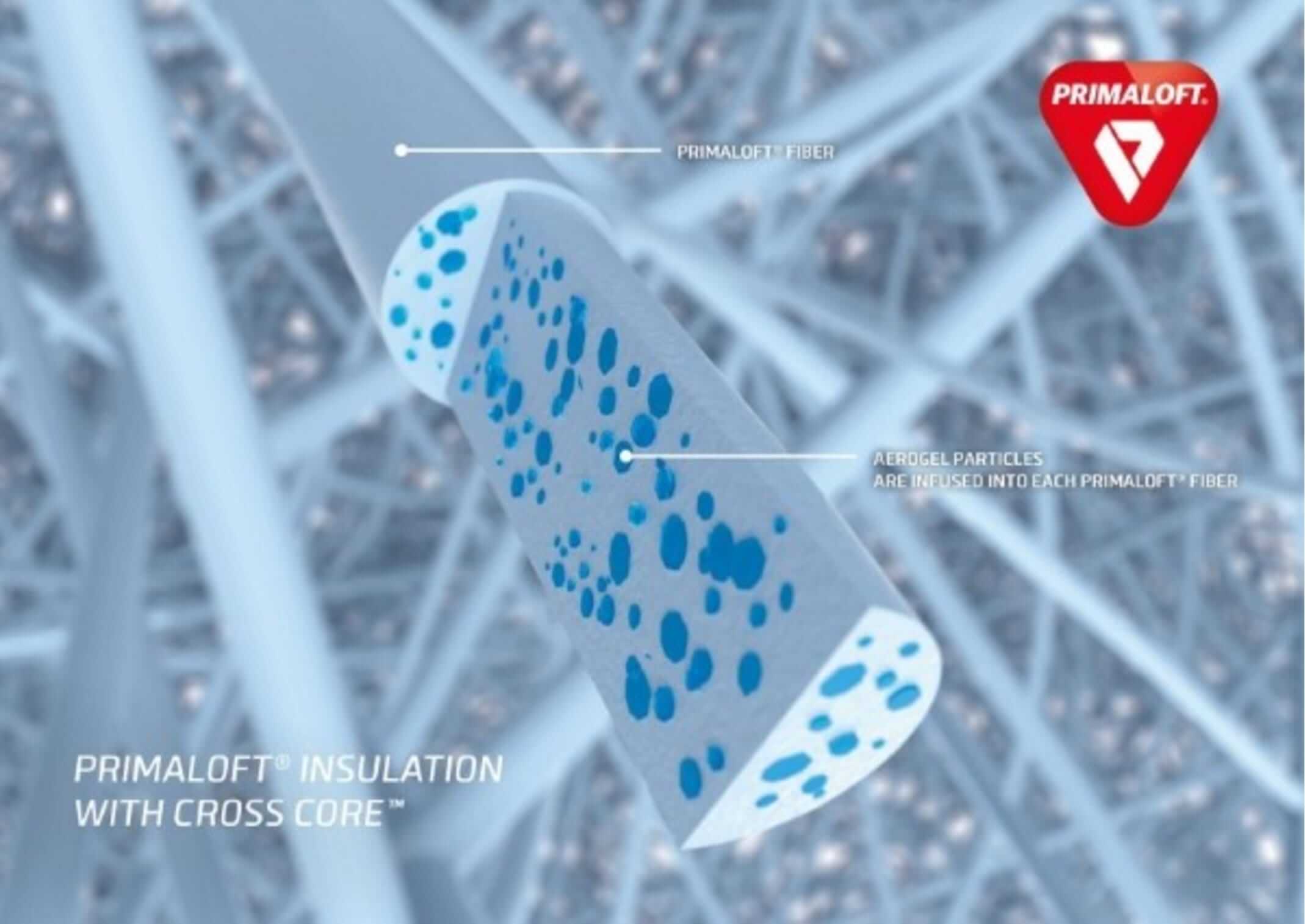
PrimaLoft designers spent years trying to use aerogel, a difficult but dream insulating material, in clothing, and after much trial and error, they finally overcame these obstacles and created the PrimaLoft® Cross Core™ Series
Here's how it works: PrimaLoft adds a thin, waterproof membrane around the aerogel to "encapsulate" it, and then integrates the particles with the fibers, thereby overcoming the biggest challenges of aerogel: resistance to impact and pressure, breaking down when wet, and blocking breathability (we won't go into the details of how it works, but here's a link to the patent information for those interested ).
"We are thrilled to partner with PrimaLoft to bring this exciting new product to the market," said Mike Joyce, president and CEO of PrimaLoft
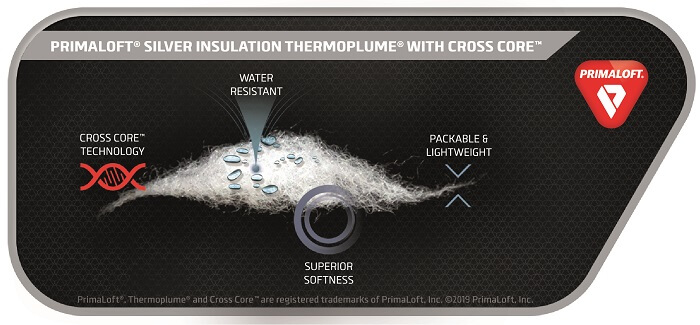
The PrimaLoft Cross Core series is
the culmination of our constant efforts to push the boundaries of material innovation to enhance consumer comfort, resulting in a significant performance advancement and products that boast previously unattainable levels of lightweight warmth, comfort and
How great is the PrimaLoft® Cross Core™ Series?
Now that we know the development process and difficulties involved, let's take a look at just how impressive it actually is in terms of specs
One way to measure the thermal insulation of clothing is through the "clo value," which is a measure of a clothing's thermal resistance, proposed by ASHRAE (American Society of Heating, Refrigerating, and Air-Conditioning Engineers). PrimaLoft's padding material has published values based on this standard, allowing comparisons with other products in the company's lineup, as shown in the table below. Of course, these values are merely a guideline, and numerical performance does not necessarily translate directly into actual experience. Evaluations will vary depending on actual use, conditions of use, and individual perception. Please note that we are not claiming that the ratings presented here are absolute
| Filling material | clo/oz/yd2 (dry) |
|---|---|
| PrimaLoft Black Insulation | 0.65 |
| PrimaLoft Silver Insulation | 0.79 |
| PrimaLoft Gold Insulation Active | 0.81 |
| PrimaLoft Silver Insulation Active | 0.82 |
| PrimaLoft Black Insulation ThermoPlume | 0.85 |
| PrimaLoft Gold Insulation | 0.92 |
| PrimaLoft Silver Insulation ThermoPlume with Cross Core Technology | max 0.95 |
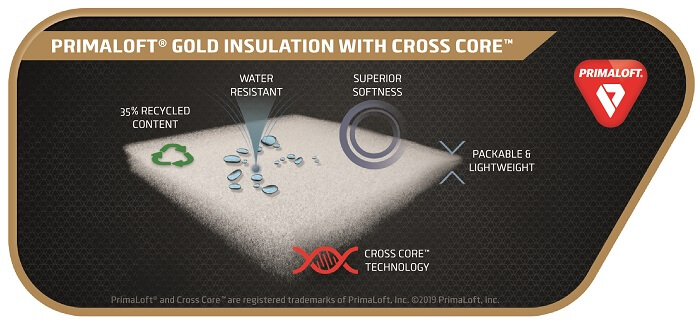
| PrimaLoft Gold Insulation with Cross Core Technology | max 1.40 |
*Excerpts from PrimaLoft press releases, manufacturer catalogs, etc
According to this, PrimaLoft® Gold with CrossCore™ technology can provide up to 1.5 times (0.92 to 1.40) the warmth per weight of PrimaLoft® Gold, which was the warmest synthetic fiber filling used as a basic insulation material. This means that even if the jacket looks exactly the same, it is now possible to make a jacket that is dramatically warmer and lighter than those made up until last year. It's hard to believe, but it's nothing but exciting
8 Notable Insulated Jackets Featuring PrimaLoft® Aerogel Technology
At the beginning of 2018, exciting new insulated jackets using PrimaLoft® aerogel technology were mainly available in clothing such as gloves and shoes, with only a few brands such as LLBean offering jackets. However, starting this fall/winter season, the number of brands using the technology has exploded, with many interesting items now appearing. We have procured several models on our website and have already begun reviews, but we would like to take a look at some of the notable models using aerogel technology this year
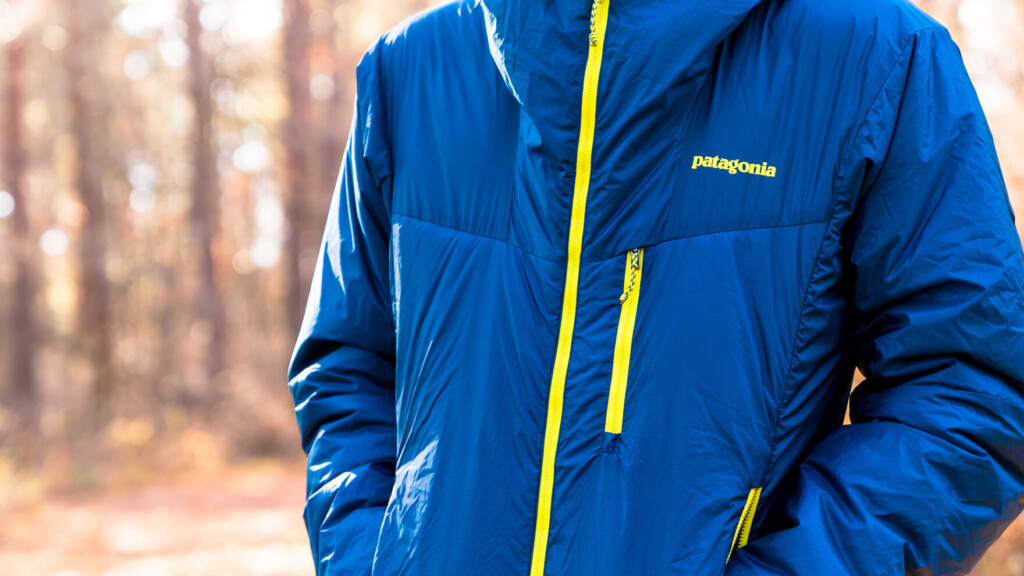
Patagonia DAS Parka

After being discontinued for a while, Patagonia's classic belay parka, the DAS Parka, is back this season with PrimaLoft® Cross Core™ technology. When belaying in winter climbing, not only do you have to stand still in the freezing cold, but if the temperature is high, you might be soaked by dripping water from melting ice or rain. In those situations, no matter how light and warm down is, it's useless if it gets wet
The DAS Parka is an insulation jacket designed to meet the demanding demands of climbers, providing the warmth they need without worrying about getting wet. PrimaLoft® Cross Core™ technology is perfectly suited to these demands. Taking into account the characteristics of this new material, the DAS Parka focuses entirely on warmth. It's truly the ultimate belay parka and the warmest, lightest synthetic-insulated jacket available. This eco-friendly version of PrimaLoft Gold Insulation with Cross Core Technology boasts the highest Clo value in the lineup, and features a generous 133-gram fill, with an additional 40 grams of padding in key areas. It's fluffy and comfortable, almost like wearing a sleeping bag. And yet, it's surprisingly light, almost weightless when worn
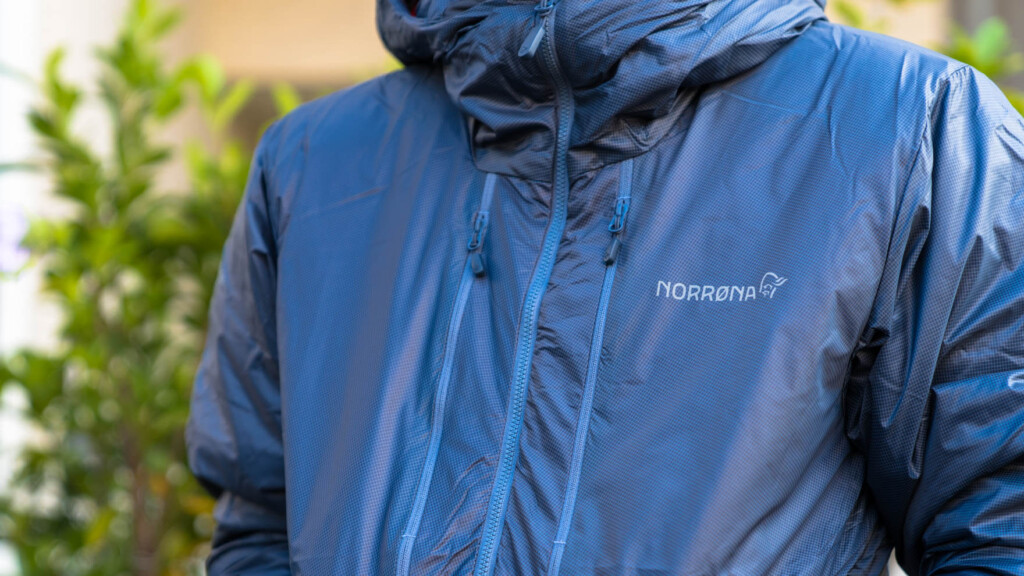
NORRONA trollveggen Primaloft100 Zip Hood
Norrona, another Scandinavian brand for serious alpinists, offers an ultra-warm synthetic insulation jacket that's sure to be a valuable addition to any winter mountaineering or climbing adventure. Norrona has closer partnerships with Norrona than other manufacturers, so this model was released earlier, in 2019. This jacket also features PrimaLoft Gold Insulation with Cross Core Technology, focusing almost entirely on warmth. However, at around 100g, the padding volume is slightly less than the DAS Parka, making it feel slightly lighter and more compact. However, the fluffy, puffy, and fluffy feel when you slip it on in the cold is exceptional, providing instant warmth, while its unprecedented lightness provides a moment of relief. The three-dimensional cut ensures a comfortable fit and ease of movement, making this an insulated jacket perfect for belaying, as well as for use as an outer or mid-layer during winter outdoor activities
NORRONA lofoten Primaloft80 Anorak

Also from the Norrona line, this insulation offers technical specifications for skiing and snowboarding, including freeriding and backcountry skiing. Its padding is PrimaLoft Gold, featuring the same Cross Core Technology, but with a more environmentally friendly material made from biodegradable materials. Its volume is a relatively thin 80g, achieving the perfect balance of insulation and mobility for any activity. Meanwhile, GORE-TEX® 2-Layer reinforcement on the shoulders, lower torso, and cuffs adds wind and waterproof protection where needed, making it versatile enough to be used as an outer layer. The ventilation zippers from the hem to both elbows are also an interesting addition. Other features skiers will appreciate include large handwarmer pockets and a chest pocket with a goggle cloth
LLBean Primaloft Packaway Hooded Jacket

LLBean's long-standing partnership with PrimaLoft allowed them to quickly commercialize this new material. LLBean's PrimaLoft Packaway Hooded Jacket, released in spring 2018, fully utilizes the lightweight nature of the new aerogel-infused material, making it a lightweight, compact yet warm model. While the 60g weight of PrimaLoft Gold Insulation with Cross Core Technology may not be enough for winter mountaineering, it's just right for fall and winter wear or everyday wear. What's more, the pockets are packable, allowing you to turn them inside out and fold them into a bag. It's similar to Patagonia's Nano Puff. We're still testing this jacket, so please wait for our test drive review for more details
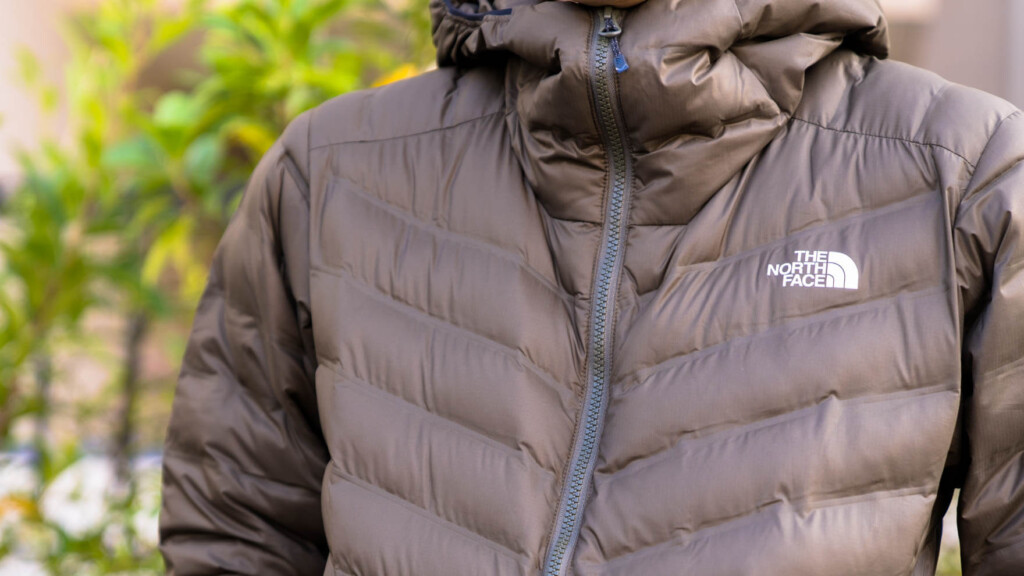
THE NORTH FACE Wanderlust Hoodie

While it looks almost like a down jacket, The North Face Wanderlust Hoodie is actually filled with the latest aerogel-infused insulation. What's unique about this model is that, unlike the typical aerogel-filled Gold batting, it uses PRIMALOFT® Silver ThermoPlume® PRO, a type of insulation that incorporates aerogel into ThermoPlume®, a batting material introduced a few years ago that's very similar to down. While its insulation performance is inferior to PrimaLoft Gold Insulation with Cross Core Technology, this type offers the same fluffy feel and resilience as a down jacket, combining warmth, lightness, and design. Additionally, the baffles are bonded using a threadless method, reducing down loss, reducing weight, and preventing cold air from leaking out. The use of eco-friendly materials throughout provides peace of mind for the wearer, making this a versatile piece for both city and outdoor use
THE NORTH FACE Polaris Insulated Hoodie

This is a purely expedition-oriented model that uses the same PRIMALOFT® Silver ThermoPlume® PRO as the Wondrous Hoodie above, but with increased padding and a durable 100% nylon PERTEX® Quantum outer fabric for added protection. As described as "designed for long-term winter mountaineering," it takes advantage of ThermoPlume's benefits: it packs compactly while retaining high resilience and retaining its insulating properties even when wet. Other features include a bag-like baffle structure that reduces cold spots and can be easily washed at home. Despite its high functionality and ease of care, it also combines stylishness that blends in well with everyday wear. Personally, I think it's a highly performant piece of clothing
THE NORTH FACE Red Run Pro Hoodie

 This jacket features THERMOBALL® PRO, an aerogel insulation that The North Face has been producing for a long time, even before the PrimaLoft®. Yes, this is an aerogel-embedded insulation, but strictly speaking, it's not part of the PrimaLoft® Cross Core™ Series. However, upon opening the lid, I discovered that this year's product specifications for THERMOBALL® PRO prominently feature the phrase "THERMOBALL® PRO (PRIMALOFT® CROSS CORE™)," which wasn't present until last year. While I'm not sure why, the aerogel insulation that The North Face developed in collaboration with PrimaLoft is thought to be a different insulation material, ultimately developed under different concepts, using the same underlying technology as the PrimaLoft® Cross Core™ Series. The THERMOBALL® PRO used in this jacket is actually a round, spherical insulation, and judging by its appearance, its properties appear to be different from those of the PrimaLoft® Cross Core™ Series. As for my impression of the Red Run Pro Hoody, it has a resilience that's hard to believe is synthetic. The ball-shaped padding doesn't shift easily, and I like the shape it takes when you put it through the sleeves. This year's model has 4-way stretch fleece under the armpits that extends to the underarms, making it even easier to use during exercise. This is a piece you'll want to wear for running or trail running in cold weather
OMM Barrage Jacket

While previous models only featured a durable water-repellent (DWR) outer fabric, OMM's Barrage Jacket is a fully waterproof, insulated jacket made with Point Zero H2O fabric, boasting a water column resistance of 10,000mm (10,000g breathability). This alone is enough to satisfy mountain enthusiasts, but the interior is filled with 80g of PrimaLoft Gold Insulation with Cross Core Technology, providing ample volume for winter use. Originally a brand focused on fast and light activities in the snow-free season, it's certainly suitable for snowy mountains and skiing, but it also boasts many features that make it more suitable for trail running and everyday wear. It also includes connectors that allow it to be combined with the company's Mountain Raid series to create a sleeping system, which can be used as a sleeping bag. This clear concept, combined with streamlined equipment that eliminates unnecessary elements, is another appealing aspect of this brand
lastly
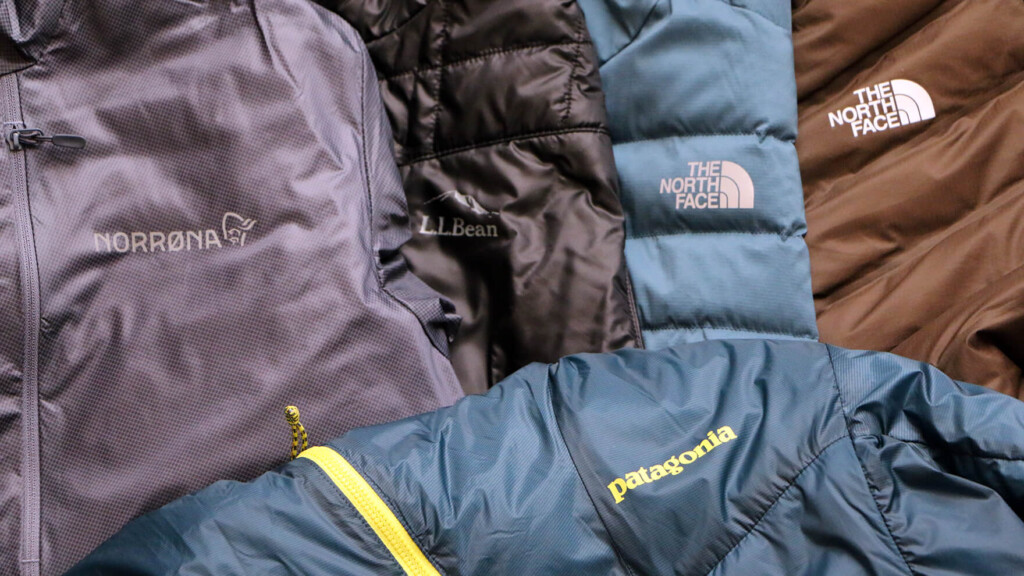
Aerogel padding has been gradually gaining popularity over the past few years, but with the popularity this season, it looks like it's finally becoming a standard item, so we'll be keeping an eye on it from now on. We've actually purchased some noteworthy models to thoroughly test their capabilities, and we're currently conducting our own comparative tests. We'll be releasing a comparison review as soon as it's ready, so please look forward to it
Related reading
 A review of an insulated jacket made with the mysterious "aerogel" insulating material in Hokkaido during the winter
 Rab Generator Alpine Jacket Review: "Cutting-edge insulation" combined with "expert know-how and technology" = a lightweight, compact, warm, and moisture-resistant insulated jacket
 [Fall/Winter 2025] Down? Synthetic? Fleece? The key to comfortable layering is choosing the right material. The best mid-layers for mountaineering (cold weather gear) by type, and tips for choosing the right one
 Comparison Review: The Best Synthetic Insulated Jackets This Winter