



Here's a list of the best gear you need for winter hiking in the low mountains

Written by Yasushi Hisatomi
At this time of year, when the Siberian air mass from the continent covers the Japanese archipelago and a full-fledged winter atmospheric pressure pattern continues, many of Japan's mountains are covered in deep snow, ushering in the full-scale winter mountain climbing season. Meanwhile, even the low mountains around Tokyo can be hit by snow depending on the timing, so in that sense, the current conditions are just right for tackling snowy mountains
So, for my first post of the new year, I've compiled a list of my favorite mountain gear that I actually use for low-mountain winter hikes, as well as the best gear from my comparative reviews. While it's important to note that this list is largely based on personal preferences, I'll be introducing my "personal best choices for low-mountain winter day hikes" that I think will be useful for anyone, from those about to tackle low-mountain winter day hikes for the first time to those who haven't found the gear that's right for them (this is actually the first update in two years)
table of contents
- Packing list for winter day hikes in low mountains
- What to bring: "Clothing"
- What to bring depending on the situation: "Clothing"
- Must-have "Tools"
- backpack
- Trekking poles (temporary)
- Crampons
- Sunglasses and goggles
- Water bottles and insulated bottles
- Knives and multi-tools
- Cooker
- Stoves and fuel
- Cutlery
- compass
- Maps and course materials
- headlamp
- Spare batteries (mobile batteries)
- medicine
- sunscreen
- Lighters and matches
- Mobile phones and smartphones
- roll paper
- Snacks
- Emergency food
- plastic bags
- Spare shoelaces (thin string)
- clock
- duct tape
- Emergency seat
- "Tools" to take depending on the situation
- summary
Packing list for winter day hikes in low mountains
Introduction
This packing list assumes the following time and destination: the mountains near Tokyo (Okutama, Tanzawa, parts of Okuchichibu, etc.) from January to March. Even though there's snow, it's not so deep that you're knee- or waist-deep and unable to proceed. It's intended for day trips where, if the timing is right, you'll be able to see a clear, snowy landscape near the ridge. Therefore, snowy mountains above 2,000 meters, where 12-spike crampons and an ice axe are essential, are out of my league. However, most of the items listed are high-quality and versatile snow mountain gear, so I think they'll be useful, with a few exceptions. Of course, the situation will vary greatly depending on the amount of snowfall that year and the recent weather. The difficulty and required equipment will also vary slightly depending on the experience and physical strength of the person hiking, as well as the level and number of companions. Please use this list only as a general guide
I chose my packing list based on the following two basic criteria:
- Musou: The best choice if you're looking for performance without worrying about price. Frankly speaking, there are many models that are good enough for serious winter mountaineering, but would be a waste to use in low mountains
- Cost performance: It's a great product that's easy on the wallet and very useful. Some people say that this is enough to start with
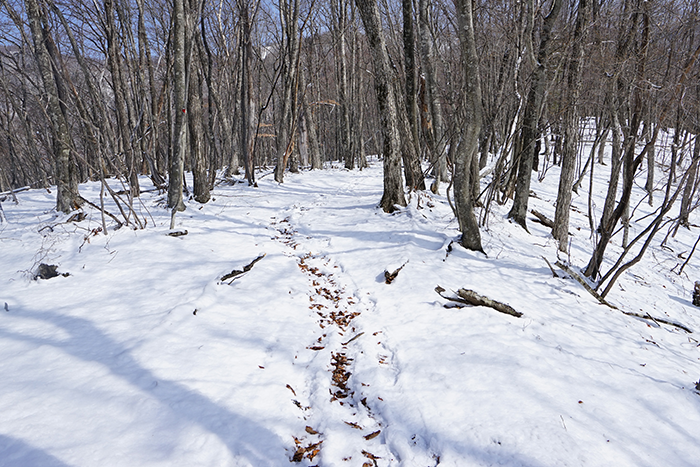
The image is of Takanosuyama (photo, 1,737m) in Okutama during the harsh winter months, around March, when there is only a few centimetres of snow
*Click on the text links in the list below to jump to each item
| kinds | Wear |
|---|---|
| Be sure to bring (wear) | |
| Bring appropriate gear depending on the situation (wear) | |
| Be sure to bring (tools) |
|
| Bring tools depending on the situation |
|
What to bring: "Clothing"
Underwear
Unrivaled: MILLET Drynamic Mesh Short Sleeve

COSPA: ATION Crater Mesh Short Sleeve Shirt

Some people may say this is an essential item, but personally I can't imagine being without it in the winter
So-called "high-performance mesh underwear," which is worn directly against the skin to increase dryness and prevent chills from sweat, is often considered a summer staple. However, in winter, when layering clothes can easily trap dead air inside, it is extremely effective not only for sweat management but also for insulation. Millet's Drynamic, in particular, offers a high level of dryness and insulation thanks to its high-volume mesh. Just having it reduces bulkiness, making it an essential item, especially in winter
Base layer (top)
Unrivaled: Arc'teryx Satoro AR Zip Neck Shirt LS
Cost performance: mont-bell Super Merino Wool LW Round Neck Shirt
[Official Online Store]mont-bell Super Merino Wool LW Round Neck Shirt
Merino wool is ideal for winter base layers because you want to prioritize high thermal insulation above all else. Personally, I like the Arc'teryx Satoro AR, which combines the characteristics of wool with stretch and high strength, and has a high collar and zip neck to protect against snow and cold air, since I plan to layer it over mesh underwear
If you plan to wear it directly on your skin without underwear, we also recommend the Patagonia Capilene Air Hoody, . There are many other recommendations, but please also refer to our past merino wool comparison article here .
Base layer (bottoms)
Unrivaled: Smartwool Men's Merino 250 Base Layer Bottoms

COSPA: Phoenix Outlast® Mid wt. Stretch Tights

Depending on the temperature, you may be able to skip the base layer and just use thick trekking pants. However, trekking pants that are too thick are not practical, so I pair all-season trekking pants with a base layer that is as thin and warm as possible. Merino wool is the basic material, after all. This will be perfect even on snowy mountains in the dead of winter. However, even the model I chose for its cost-effectiveness has excellent temperature regulation thanks to Outlast, despite being thin. I actually have two pairs of these and use them fully for everyday use and general winter mountain climbing
Mid-layer
Unrivaled: Mountain Hardwear Core Strata Jacket
Cost performance: Rab Alpha Flash Jacket
A layer worn between your base layer and outer layer. Its basic purpose is to trap body heat (insulation) and keep you warm, but I recommend a highly breathable synthetic insulation garment that also offers breathability, sweat wicking, stretch, and ease of movement. It's perfect for winter hiking in low mountains, as you'll be less likely to feel the need to take it off due to overheating while moving. It's a genre that evolves rapidly every year, so it was a tough choice. The Core Strata Jacket, which I chose as my go-to for this year, boasts not only the performance of Primaloft's latest insulation, but also the amount of padding (just right, neither too much nor too little), excellent stretch, and stylish details like the zipper. However, the extraordinary comfort of Polartec Alpha is still hard to give up, and I especially recommend the Rab, which I chose for its cost-effectiveness and is extremely versatile as a mid-layer
Shell layer (outer layer)
Unrivaled: NORRONA lofoten Gore-Tex Active Jacket
Cost performance: finetrack Ever Breath Glide

This hard shell jacket is made of waterproof, breathable, and durable water-repellent material that blocks out snow, rain, wind, and the cold outside. It's durable and designed for snowy mountains with a slightly rough outer fabric, making it safer, but in the worst case scenario, you can get by with a solid three-season rain jacket. For low mountains, a lightweight model with more mobility is better than a model made with bulky expedition fabric, so my choice for Musou is an ultra-lightweight hard shell made with the latest GORE-TEX Active that can also be used for skiing. The model I chose for its cost-effectiveness is also stretchy and easy to move in, and it's also suitable for backcountry skiing, making it a great value
trekking pants
Unrivaled: Arc'teryx Gamma AR Pants

COSPA: Mont-Bell Cliff Pants
[Official Online Store]mont-bell Cliff Pants
If you're planning on snow, we recommend Gore-Tex hard shell pants made of the same material as the jacket, but in this case, they're a bit overkill. A thick soft shell material with sufficient warmth, waterproof and windproof properties, as well as adequate breathability and stretch is best. It's important to balance the thickness of the base layer you wear underneath, as you don't want to end up feeling bulky, heavy, or restricting your movement
Climbing boots suitable for snowy mountains
Musou: LA SPORTIVA TRANGO TOWER EXTREME GTX®
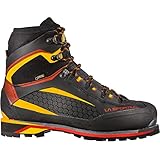
Cost performance: SCARPA Triolet Pro GTX
The first thing to note about hiking boots for winter mountain climbing is that, unlike summer hiking boots, they contain insulation. On top of that, there are a variety of types, from models for serious winter traverses to models for ice climbing, but for now, it's a good idea to choose winter mountain trekking shoes that are positioned as an introduction to snowy mountains. In fact, I don't actually wear the model I chose as my Musou, but the summer mountain version of this model is so well made that I decided to use it in the winter. Of course, ultimately, the best hiking boots are those that fit your feet, so I always recommend trying them on ( more details here ).
socks
Unrivaled: SmartWool PhD Outdoor Heavy Crew

COSPA: Workman Mountain Pile Long Socks (2-Pair Set)
[Official Online Store] Workman Mountain Pile Long Socks (2-Pair Set)
The thicker the material, the more secure it is, but it's also best to choose something that fits well and has good grip. So, just like in summer, I recommend Smartwool's PhD series . This class is still sufficient for low-lying mountains in winter.
hat
Musou: Finetrack Balaclava Beanie

COSPA: Phenix Snowy Mountains Watch Cap
In the summer, it's a matter of personal preference, but in the winter, knit hats are a must-have item. They come in wool, synthetic fibers, fleece, and other materials, so you don't need to be too picky; just choose one based on the design and you'll be fine. Personally, I like and often use balaclavas and neck gaiters to protect against the cold wind on ridges
Gloves
Unrivaled: MAMMUT Meron Thermo 2-in-1 Gloves
COSPA: Black Diamond Soloist Finger

We recommend separate inner and outer layers for their ease of use, such as adjustable warmth and quick drying. Mammut's model features Primaloft for the inner layer and GORE-TEX Plus Warm technology for the outer layer, providing excellent warmth. The inner layer is also smartphone-operable, offering a high-end and convenient design. The Soloist Finger, chosen for its cost-effectiveness, also offers ample functionality. There are also five-finger types, but once you get used to them, three-finger types are warmer than five-finger types, so they're not a bad choice
Towels and change of clothes
Musou: PackTowl personal L

Cost performance: Towels and hand towels used every day
Winter is the season when a hot spring after descending the mountain is most appreciated. A versatile outdoor towel is convenient for wiping away sweat while on the move and for use as a towel after descending the mountain
What to bring depending on the situation: "Clothing"
Additional winter clothing
Unrivaled: Mountain Hardwear Ghost Whisperer Down Jacket
COSPA: Mont-Bell Superior Down Parka
If you expect it to be cold enough that a mid-layer alone won't be enough, or if you're sensitive to the cold and don't want to suffer, keep a compact, highly insulating down jacket or other insulated garment in your pack. Personally, I chose something that was light and unobtrusive, yet still had good insulation. In terms of heat retention, the Superior Down may be better than the Ghost Whisperer. Depending on the size and characteristics of the garment, you can wear it as an inner layer or over an outer layer, depending on the occasion
Gaiters (spats)
Unrivaled: OUTDOOR RESEARCH Crocogator

Cost performance: ISUKA Gore-Tex long gaiters

Gaiters completely seal the gap between your shoes and pants, preventing your pants from bunching up, making them truly valuable when walking in deep snow or with crampons. In fact, you don't need them when hiking in low mountains in winter, but they can also help keep you out of the mud when walking on melted snow during the day, so it's very handy to have them
Balaclavas and neck warmers
Unrivaled: OUTDOOR RESEARCH Ascendant Balaclava

Cost performance: Mont-Bell Super Merino Wool Balaclava
[Official Online Store]mont-bell Super Merino Wool Balaclava
The cold may not be a big deal in the forest, but when you're confronted with a strong wind on a ridge, it can become extremely uncomfortable. In such situations, these balaclavas, which prevent wind from entering your face and neck, are far more effective than simply wearing a layer of clothing. Despite their small size, they are extremely effective cold weather gear. The unrivaled Ascendant Balaclava uses the much-talked-about Polartec Alpha lining, providing warmth and wind protection while remaining breathable and non-itchy, making it extremely comfortable in a variety of conditions. It's a product you've always wanted but never had
Inner Gloves
Unrivaled: Black Diamond Lightweight Grid Tech
COSPA: Mont-Bell Merino Wool Gloves Touch
[Official Online Store]mont-bell Merino Wool Gloves Touch
If you want extra warmth, bring multiple pairs of thin inner gloves just in case your main inner gloves get wet or are lost (and if possible, bring extra outer gloves as well)
Must-have "Tools"
backpack
Best Medium Size: OSPREY Kestrel 38

Best large: GREGORY Baltoro 65

Because winter tends to bring more luggage, I made the exception of choosing two backpacks: a "medium" designed specifically for day trips, and a "large" designed for versatility and durability, even with more gear. Basically, the same backpack I use in the summer is fine, but since I'll be carrying more gear, I'd like at least 40L of capacity even for day trips. My go-to is the Kestrel 38, winner of our website's Best Summer Award. It's also perfectly suited for winter hiking and trekking. Until last year, Osprey offered a model called the Variant, which I personally found to be ideal for all-around winter mountaineering, but for some reason it hasn't been released this season, which explains the results. I'm hoping for a redesign of the Variant next season
Trekking poles (temporary)
Unrivaled: Black Diamond Distance Carbon FLZ (with Z-Pole Snow Basket)
Cost performance: KOMPERDELL Wild Rambler
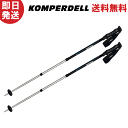
Winter footing is slippery, so carrying poles or an ice axe is essential in case of deep snow. In winter, poles are easier to use and recommended for low-lying mountains with fewer steep slopes, ice, or strong winds. While there are poles specifically for winter, models that allow you to replace your summer trekking poles with snow baskets for snowy trails are efficient and can be used all year round. The Black Diamond Distance Carbon FLZ , which I thought was the ultimate lightweight summer trekking pole, has now released the "Z Pole Snow Basket," which can also be used for snow hikes, so I've chosen it as my first choice for winter.
Crampons
Unrivaled: PETZL Leopard FL

Cost performance: Mont-Bell Snow Spikes 10
[Official Online Store]mont-bell Snow Spikes 10
Hike: CAMP Ice Master
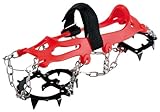
I bring crampons for walking on frozen slopes and mixed snow and rock terrain. Since I don't plan on using them frequently, I think a pair with only 10 spikes and made of lightweight aluminum will be fine. Among them, this PETZL model is particularly light and has a band closure, making it easy to match with any shoe. However, if you're serious about snowy mountain climbing, I recommend buying a 12-spike, chromoly crampon model from the start, rather than these simple crampons, as they're more versatile. Depending on the snow conditions and the steepness of the route, chain spikes, which are easy to attach, are also sufficient. Of course, be sure to try them on and adjust the size on the ground before bringing them
Sunglasses and goggles
Unrivaled: OAKLEY Holbrook Matte Black Tortoise Prizm Sapphire Polarized
Cost-effective: Sunglasses that cut glare and UV rays
During the winter and snowy seasons, sunlight reflecting off the snow can damage your eyes. Before you know it, your eyes can become inflamed (snow blindness), and in severe cases, you can become unable to move, so sunglasses are an essential winter accessory. Polarized lenses are also recommended, as they not only block UV rays but also reduce glare and scattered reflections, providing a clearer view. Furthermore, some manufacturers offer high-end lenses that are treated to enhance contrast
Water bottles and insulated bottles
Water bottle: Nalgene bottle

Insulated bottle: FLSK Bottle

In winter, plastic bottles such as Nalgene bottles are recommended over metal ones. Considering ease of use when making water from snow, a hard model is best rather than a foldable water carrier (although this isn't such a big concern for day trips). Also, in the winter mountains, a vacuum insulated bottle with excellent heat retention is essential to restore your energy and strength with a hot drink. If you pour it into a pot while it's still hot in the morning, it will last for half a day. Among them, the heat retention of the FLSK bottle is outstanding. However, you will need to bring a cup with you as it is too hot to drink directly. For portability, we recommend a capacity of around 500ml
Knives and multi-tools
Warriors: Leatherman Squirt PS4

COSPA: VICTORINOX Recruit
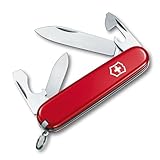
It is assumed that you have a knife, and if you also have pliers and scissors, they will come in handy in many ways. Currently, the Leatherman is the best choice as it is a little small but has a wide range of functions such as pliers and scissors
Cooker
Unrivaled: SOTO Thermostack SOD-520

COSPA: PRIMUS Easy Cook Solo Set S

It's a great item to have on hand when carrying food that requires eating with tableware, and also a great item to keep on hand for emergencies. SOTO's Thermostack is a double-walled container with a detachable titanium lightweight mug and stainless steel mug, so you can use it as a thermal cup in the winter, or just use the titanium mug as a UL-equipped container. It's a great item that can be used flexibly for different purposes. I've had my eye on it since it was released this season, and I've been using it constantly
Stoves and fuel
Unrivaled: SOTO Windmaster SOD-310

Cost performance: SOTO AMICUS SOD-320

In winter, when being able to start a fire is a serious issue, fire equipment is essential. It's something you'll want to have on hand, not only when carrying food to heat, but also in case of an emergency evacuation. In winter, the low temperatures make it difficult for fuel to vaporize, and the wind is often strong, so the Windmaster, with its stable heat even in low temperatures and strong winds, is currently the most powerful stove. By the way, be sure to bring a high-power gas cartridge for winter
Cutlery
When bringing food that requires eating with tableware, you can use a spoon, fork, or disposable chopsticks, but a "spork" that can be used as both a spoon and a fork is relatively convenient. However, I have yet to find the perfect tool that combines the optimal length for a deep cooker, storage, and ease of eating
compass
In winter, it is common for the summer roads to become covered in snow and become invisible, so map reading skills are essential, and a compass of some kind is a must
Maps and course materials
The map you take should not be a simple one like a guidebook, but a 1:25,000 topographical map from the Geospatial Information Authority of Japan that contains detailed topography and has magnetic north lines drawn in . Furthermore, any up-to-date records or guides for the course , bringing copies of these will help you travel safely.
headlamp
Unrivaled: PETZL Reactic Plus

Cost performance: Black Diamond Spot

Just like in the summer mountains, I bring a headlamp just in case. If I'm not planning on using it for a day trip, I can choose a compact model at my own discretion
Spare batteries (mobile batteries)
Just in case, I bring spare batteries for my headlamp and other electronic devices. In winter, batteries drain surprisingly quickly due to the cold, so it's important to be even more careful than in summer.
medicine
Prepare for any injuries you may have, such as cuts, scrapes, insect bites, sprains, etc. For more information on first aid kits, please see here.
sunscreen
In winter, when the glare from the snow is intense and UV rays are particularly strong, sunscreen, including UV-blocking lip balm, is a must
Lighters and matches
Of course, if you plan to use firearms, you probably don't want to think about it, but if you have to stay overnight, you'll need it to start a fire
Mobile phones and smartphones
Recently, there are many convenient apps available, so the number of situations where it is used is increasing. Also, depending on the carrier, it may be possible to connect on the ridge line, so there are stories of people being able to contact others in the event of an emergency and being saved
roll paper
A moderate amount of toilet paper to use in the toilet and to wipe dishes, etc
Snacks
Bring only the amount of food you will need for lunch and rations (snacks containing salt, sugar, etc.) during your hike. It's best to take small amounts of food every few minutes while resting in the mountains, so it's best to pack food in small portions
Emergency food
In my case, I always keep a box of Calbee Calorie Mate in my pack
plastic bags
There are many times when you will need bags, such as for garbage bags or wet clothes, so they are useful for a variety of things
Spare shoelaces (thin string)
Just in case your shoelaces break, I always keep a 3mm x 10m piece of thin rope at the bottom of my pack instead of shoelaces. This is more versatile and can be used in a variety of situations, including when your shoelaces break, when you don't have enough guy ropes for a tent or tarp, and more
clock
You can usually check the time on your smartphone, but it's always a good idea to have some kind of watch with you so you can check it in case of an emergency. Models with a barometer and altimeter are very convenient
duct tape
Made from cloth, duct tape can be used for repairs, as a substitute for bandages, as a lid for opened bags of food, and even as a kindling for a bonfire, making it a very useful item in emergencies
Emergency seat
Recommendation 1: Grabber All-Weather Blanket

Recommendation 2: SOL Heat Sheet Survival Blanket

This thermal sheet for emergency bivouacs will keep you warm just by putting it on. It can also be used as a ground sheet to place under your tent
"Tools" to take depending on the situation
GPS Map (Watch)
Recommendation 1: GARMIN fenix 5X Plus
Recommendation 2: CASIO Smart Outdoor Watch Pro Trek Smart WSD-F30
GPS is still useful for finding your current location more safely and quickly. Now that this can be easily confirmed with a smartwatch, I personally can't live without a smartwatch with built-in GPS and offline maps. If you want more precise data recording, I recommend GARMIN, and if you prioritize clearer maps and smartphone app integration like YAMAP, I recommend CASIO
bivouac
Arai Tent Super Light Zelt 1
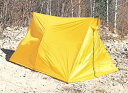
In any case, the danger of unexpected events in winter is far greater than in summer, so it's important to be fully prepared. A tent can be used to shut out rain, snow, and the outside air when bivouacing (camping for emergency evacuation), but it can also be used to block the wind during short breaks in non-emergencies. Even if you don't have one for each person, it's a good idea to have one with enough capacity for everyone in your party as shared equipment
Ice axe (ice axe band/cover)
Although we are not planning on any mountain ranges or courses where an ice axe is essential, there are cases where it is a good idea to bring one just in case. However, if you do bring one, be sure to practice using it before using it in the actual event
Wakan and snowshoes
This was also something that was not anticipated in the first place, but there have certainly been cases where people have been saved by unexpected snowfall when they got there. However, it is important to make sure that this fits your feet and that you become familiar with how to use it in advance
camera
Depending on your preference and physical strength
whistle
I don't think I'll need to use this when hiking, but I keep it as a talisman in case I need to make a loud noise if I get separated from my friends in the mountains. Incidentally, when rock climbing or mountain climbing, it's useful for signaling to others when they can't see you, even when you're up or down a waterfall or wall
Sewing and repair kit
It's reassuring to have the bare minimum of thread, needles, and patches to be able to repair things in case of an emergency. However, it's also important to be flexible and be able to manage even if you don't have them
Pocket Wet Wipes
Water is a precious commodity in the mountains, so it's nice to have something to wipe your hands with quickly. It's also convenient for wiping your hands when putting in contact lenses
summary
I've put together this list all at once, but it's current as of January 2019, so it may change again by next season. Looking back, to be honest, all of the models I chose for Musou are a bit over-specced for low-mountain hiking. I'm a little regretful that my adrenaline rush while choosing may have led to my choices being too biased, as I do a fair amount of serious winter mountain climbing and backcountry skiing
However, it's honestly impossible to draw a line that says "this is enough," so each person has to try out different gear and find the line that satisfies and is comfortable for them. However, that's not a hassle at all, and the process of finding your own irreplaceable favorite and forming your own view of equipment is the most enjoyable thing of all
As always, this packing list and each choice of item are solely the opinion of our editorial team, based on their research and experience. We cannot guarantee the completeness, accuracy, or safety of the information provided. Opinions will vary based on individual physical strength, experience, and aspirations, so please use this information at your own discretion. Also, even for low mountains, winter mountaineering requires different knowledge than summer mountaineering, as well as the appropriate techniques, experience, and physical strength. So, be careful, and of course, accompany an experienced person to gain experience at first, but also make sure you are thoroughly prepared and planned before attempting the climb
 [Package List] Considering the best choice of summer mountain climbing equipment [Updated regularly]
 Revealing my regular backcountry skiing gear list for this season (Part 1) [How to avoid being accused of reckless behavior]
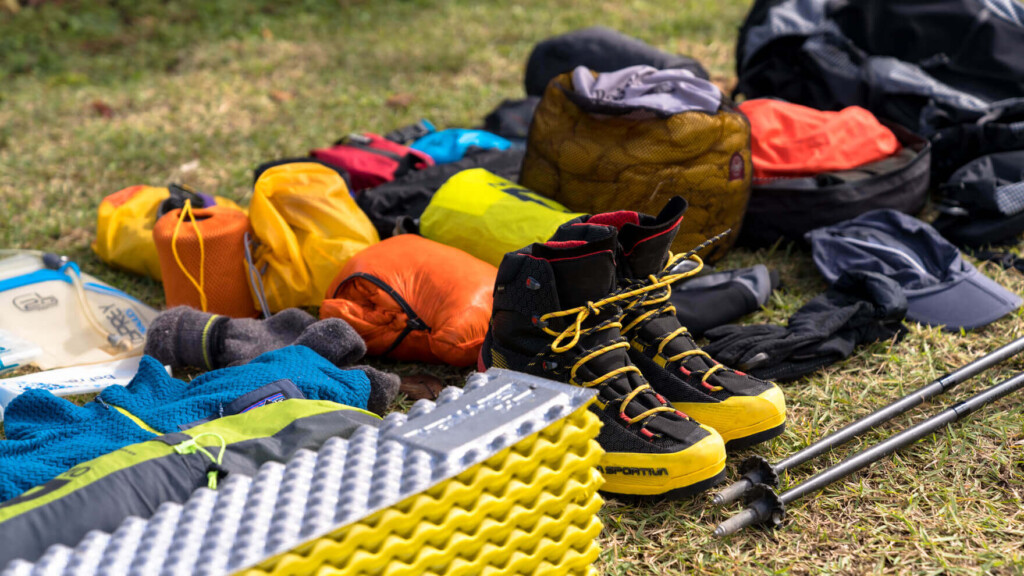 [My Unbiased Gear List] A compilation of the "ideal equipment list" recommended for autumn and winter tent hiking
 Revealing the backcountry skiing gear list I've been using a lot this season [Part 2]