



Review:karrimor intrepid 40 定番パックの良さそのままに収納力大幅UPの新鋭

written by Yasushi Hisatomi
これでホントに40L?八ヶ岳テント泊も可能な圧倒的収納力
日本ではその安定した使い心地とこなれたデザイン・カラーリングでユーザーも多いカリマー。今年までは、40L前後の一般縦走向けバックパックといえば ridge シリーズがド定番の人気を誇っていましたが、2015年、使い勝手を含めてさまざまな改良を加え新たに登場したのがこの intrepidです。発売後すぐに手に入れ、残雪~夏山テント泊まで一通り使ってみましたが、ひょっとするとridge安泰かと思われた定番の座を脅かすほどの使い易さ。それでは早速レビューしていきましょう。
なお、intrepid 40 を含めたバックパックの比較評価についてはこちらのページで紹介しています。
詳細レビュー
アイテム名(価格)
karrimor(カリマー)intrepid(イントレピッド)40 (参考価格:24,840円)
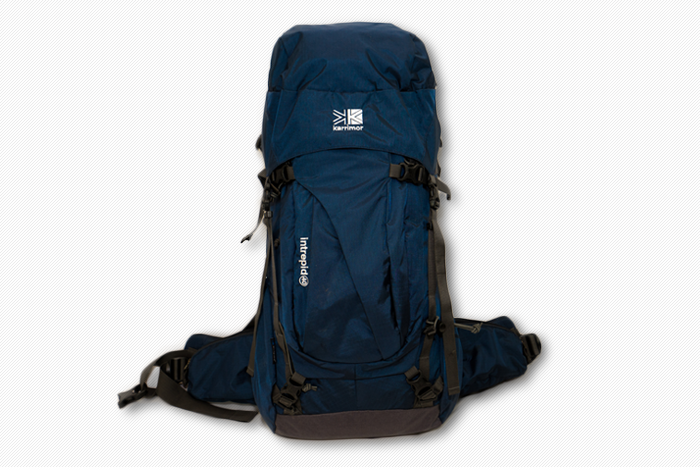
前面

背面
主なスペックと評価
| 項目 | スペック・評価 |
|---|---|
| Fabric | KS-N210RS silvagaurd /KS-N420 |
| Color | ice D.Airforce Terra |
| size/背面長 | Type1=42cm、Type2=47cm、Type3=50cm |
| 容量 | 40L |
| 重量 | Type1=1.43kg、Type2=1.6kg、Type3=1.7kg |
| バリエーション | 40Lのみ |
| アクセス | トップ・フロントアクセス |
| ハイドレーション | ◯ |
| レインカバー | × |
| ポケット | フロントにスラッシュジップポケット 両サイドポケット 天蓋裏ポケット ヒップベルトポケット |
| 快適性 | ★★★★ |
| 安定性 | ★★★★★ |
| 収納性 | ★★★★ |
| 使い易さ | ★★★★ |
| 汎用性 | ★★★★ |
| デザイン | ★★★★★ |
| 価格 | ★★ |
| 総合点 | ★★★★★ |
ここがスゴイ!
本当に40Lかと疑うほどの圧倒的収納力
大体において、バックパックの容量表示はメーカー毎の測定のため、決して間違ってはないと思いますがあまり細かく信用はできないものです。そんななか、これは良い意味でがっつりと裏切られました。メインの収納(1気室)だけでも40Lはゆうにあると実感できますが、驚きなのはその他のコンポーネント(天蓋・付属のフロントポケット・サイドポケット)も大きく余裕をもった大きさになっているため、想像よりも容量的に相当余裕があると感じるはずです(下写真)。ただ逆に日帰りでは若干持て余すかも・・・。
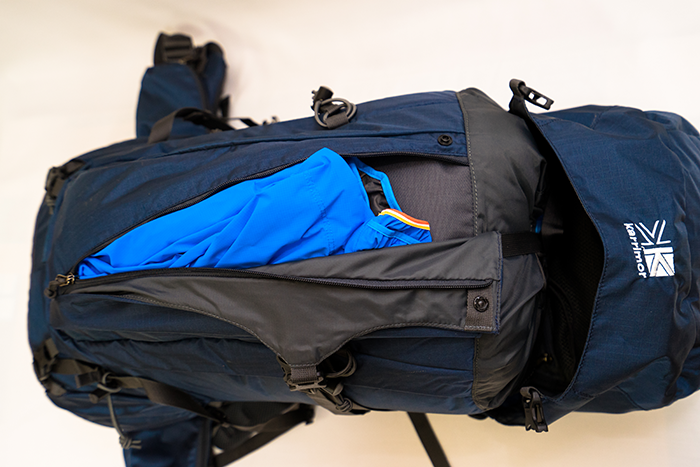
ジッパーが斜めに大きく開閉する「スラッシュジップポケット」 ギア類やジャケットの収納に超便利。
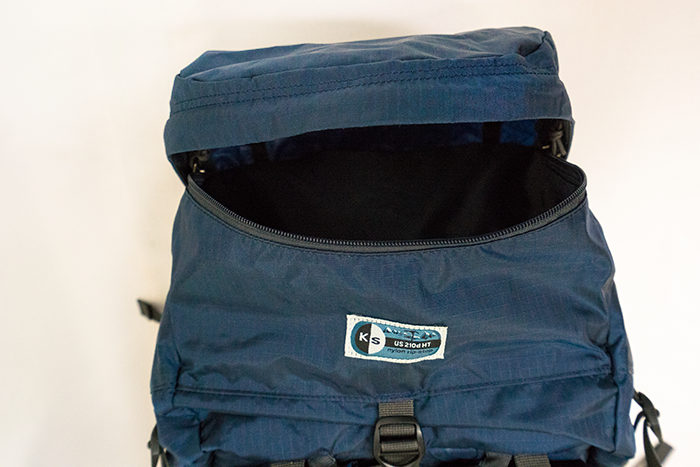
写真では分かりにくいかも知れませんが、天蓋のポケットは笑えるくらいに大きい。
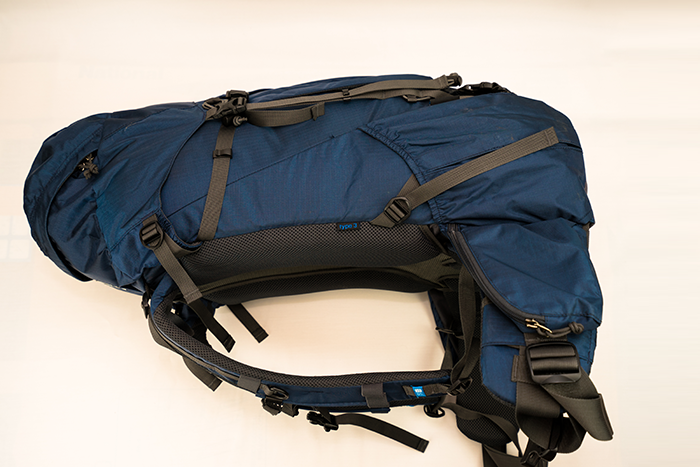
サイドポケット・ヒップベルトポケットも両サイドに標準装備。基本的には問題なく使えますが、ヒップベルトポケットはもう少し大きくてもよかったかも。
さらにそれら潤沢な収納をストレス無く活用させてくれる嬉しい機能がこのU字型に開くフロントアクセス(下写真)。50L以上の大型パックになるとこれくらいは多くのパックで見受けられてくるのですが、このサイズでここまで思い切ってやってくれるところが嬉しい。上下に収納が分かれた2気室モデルが好きな人も、これだけ下部からがばっと開いてくれるフロントアクセスがあれば1気室で満足なのではないでしょうか。
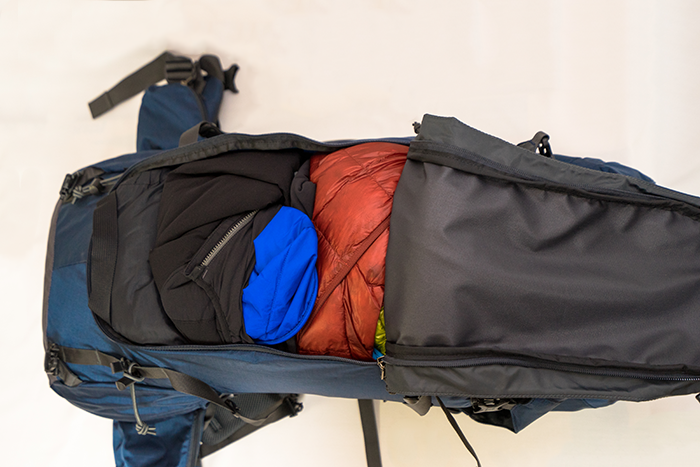
何だかんだいってここまで大胆にフロントアクセスを付けてくれる40Lバックパックって少ないんです。
しっかりした作りの安定した背負い心地
このクラス(~40L)のバックパックによく見られる悩ましい問題として、ちょうど重量的に「軽さを優先して簡易なベルトにするか、背負い心地を優先してしっかりとしたベルトにするか」モデルによって千差万別であることが挙げられます。それぞれのコンセプトは認めつつも、やはり背負い心地に妥協したくないぼくとしては、このモデルのバックパネル・ショルダーハーネス・ヒップベルトの盤石の作りは素晴らしいと言いたい。少し他のモデルも背負い比べてみれば一目瞭然に実感できると思いますが、身体に当たる部分のクッションの厚みや、当たる面積の広さ、しっかりと体重を腰に伝えるためのプレート(PEプレート)構造など、大型パックを背負うときの気遣いと同じものを感じます。きっと上の収納性の高さとも関係していいると思いますが、こうしたポイントを総合するに、このパックは実際のところはデイハイクよりも小屋~コンパクトなテント泊トレッキングをメインコンセプトとしているに違いありません。
意外と登攀系もイケる?さまざまな機能群
下のように機能を列挙してみると、実はバリエーションルートや沢登りなどにも使えそうな機能が揃っているのではないかと思えてきます。
- ギア類をすぐ取り出せる位置に収納可能な(上で紹介した)フロントの大きなポケット。
- トップと天蓋の間にはザイルを取り付けられるアタッチメントも装備。
- しっかりフィットするポールキャリア2本。
- 天蓋位置はヘルメット着用時に頭の邪魔にならないよう、後ろに調整可能。
- 通常のリップストップナイロンからさらに耐摩耗性・耐久性に優れた生地の採用。
ここがイマイチ
若干堅いハーネス部の当たり
そこまで重荷でなければ問題ないかもしれませんが、先日八ヶ岳のテント1泊縦走で(かなりの重荷行動でしたが)肩・腰の身体に常時当たっていた部分の擦れが若干あり、その意味でこいつのショルダーとヒップのベルトはぼくにとってちょっと当たりが堅い気がしました。実際に背負っているときの余計な部分への疲労という意味では問題なかったわけなので、荷重の安定性としては問題無いと思われますが、要は身体に当たる部分の材質の問題なんじゃないかと(なんなら柔らかい当て布などで対応できる範囲ではあります)。
重量
やはりここまでしっかりした作りのバックパックはどうしても重くなってしまうのは避けられない模様。
まとめ:どんな活動におすすめ?
「安定した背負い心地」と「高い収納性(充実した使い易いポケット類)」という、バックパックに必要な2つの基本的ポイントで高い実力を発揮しているこのモデルは、まず文句なしに山登りをこれからはじめるユーザーにおすすめです。シンプルすぎず、それでいて変なクセもなく使い易い、カリマーの良いところを伸ばしたような優等生パックであることは今回のテストで十分に感じられました。使いどころは一般的なトレイルから、山小屋泊、そしてテント泊でもイケます。ぼくの場合は6月の八ヶ岳でしたが、通常装備以外にテント、シュラフ、マット、コッヘル、ガス、水、酒といった幕営装備一揃えを(ギリギリ)パッキングできました(メンバーに完全に任せたのは食材くらい)。
そしてレビューでも触れましたが、多少テクニカルなアクティビティにも十分に活用できる素質も十分に備えていると思います。特に天蓋を後ろにスライドできる機能なんてあまり聞いたことがないので、(試したわけではないですが)沢登りにも使い易いのではないでしょうか(泳ぎの沢とかで頭が突っかかるパックって、結構地獄ですから笑)。




バックパックについてはこちらの記事もおすすめ
- 失敗しない登山用バックパックの選び方と初心者におすすめの10選
- これからファストパッキングをはじめる人におすすめの軽量バックパック10選
- 日帰りハイキングから普段使いまで、最新おすすめデイパック10選【定番&異色】
- 比較レビュー:これから登山をはじめる人に最適な入門バックパックを比べてみた
- 比較レビュー:身軽な山歩きやファストパッキングにピッタリな軽量バックパックを比べてみた
あわせて読みたい
 Review:GREGORY STOUT 35は背負うことの快感を教えてくれる(2015モデル)
 Review:OSPREY Stratos 36を今使わないでいつ使う?(2016モデル)
 Review:deuter Futura Pro 36 旅に,登山に幅広く活躍する入門パック
 Review:GREGORY STAUT 35 全面リニューアルに見る「新しいグレゴリー」の姿